Nasi goreng
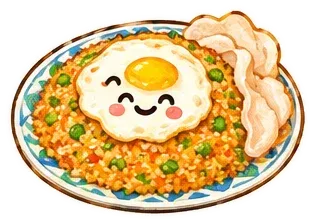
Nasi goreng means fried rice. It's brown, a little sweet and a little salty, and on top there's often a fried egg with a yellow yolk waiting to be poked.
- Taste
- sweet, salty, savoury
- Texture
- grainy, soft, crunchy




Read aloud to your child
Nasi goreng means fried rice in Indonesian, and comes from Indonesia and its neighbours. The rice is fried with onion, spices and a sweet soy sauce, so it turns dark brown and smells good. Often a fried egg sits on top, with the yolk like a little sun. Poke the yolk and see what happens.
Nasi goreng is often made from leftovers. Yesterday’s rice, cold from the fridge, is easier to fry than fresh, because the grains have dried a little and don’t clump. It goes into a hot pan with onion, garlic and spices, and then comes the sauce that makes the dish what it is.
The sweet soy sauce
In Indonesia they use kecap manis, a thick, almost syrupy soy sauce with a lot of sugar in it. It turns the rice dark brown and gives it a taste that’s sweet and salty at the same time. That’s usually what children notice first. Nasi goreng tastes less like plain rice and more like something that’s been in a pan and picked up colour.
The smell comes before the taste. Fry the rice while your child is nearby and ask what they can smell. Onion, maybe. Something browned and sweet.

The sun on top
Most often there’s a fried egg on top. Mumse calls the yolk a little sun, which is a good picture for a child. Poke it and watch it run into the rice, turning it yellow and glossy.
If your child already likes eggs, this is a good way in. The egg is familiar; the rice underneath is the new bit. They can take a forkful of just egg, then egg with a little rice, and let the rice slowly take up more of the fork.
If runny yolk is a no, fry the egg on both sides. It’s still nasi goreng.
On the side
Nasi goreng often comes with things around it:
- Krupuk, big, pale, airy crackers, often made with prawns. They crunch loudly and go soft on the tongue. Lots of children head straight for them.
- Cucumber and tomato slices, cool and fresh next to the hot rice.
- Sambal, a hot chilli sauce. That’s for the grown-ups, in its own dish.
The crackers are a good starting point. They taste lightly of prawn and salt, which makes a spoonful of rice afterwards less of a leap.
Without the heat
Many recipes put chilli straight into the rice. At home you can skip it and put sambal or chilli flakes on the table. Then your child gets the dish as it is underneath, sweet, salty and a little toasty from the pan, without any burn.
Not far from a stir-fry
Nasi goreng is a lot like Chinese fried rice, and like a stir-fry. Children who eat chicken and rice for dinner already know both the meat and the rice. The difference is the sauce. Make plain fried rice with ordinary soy sauce first. Next time, add kecap manis and let your child taste the difference.
The dish is eaten all over Indonesia and its neighbours, from street stalls and at home, and it’s well known in the Netherlands too. There are as many versions as cooks, with chicken, prawns, egg or just vegetables.
For children who like order
A child who likes everything kept apart on the plate may find fried rice hard going. It’s all mixed. It’s fine to pick out onion and bits they don’t want, and fine to let them sort it themselves. There’s more on that in the guide to picky eaters.
Poke the yolk
Nasi goreng is under Asia in Food World in Mumse. Read the short passage aloud, and let your child be the one to poke the yolk. That’s where it starts.
 Pad thai
 Potato hash
 Soy sauce
 Prawns
 Paella
 Chicken and rice