Trying new foods
No nagging, no bribes and no demands to finish. It takes a while, but it is simple, and it fits into an ordinary week.
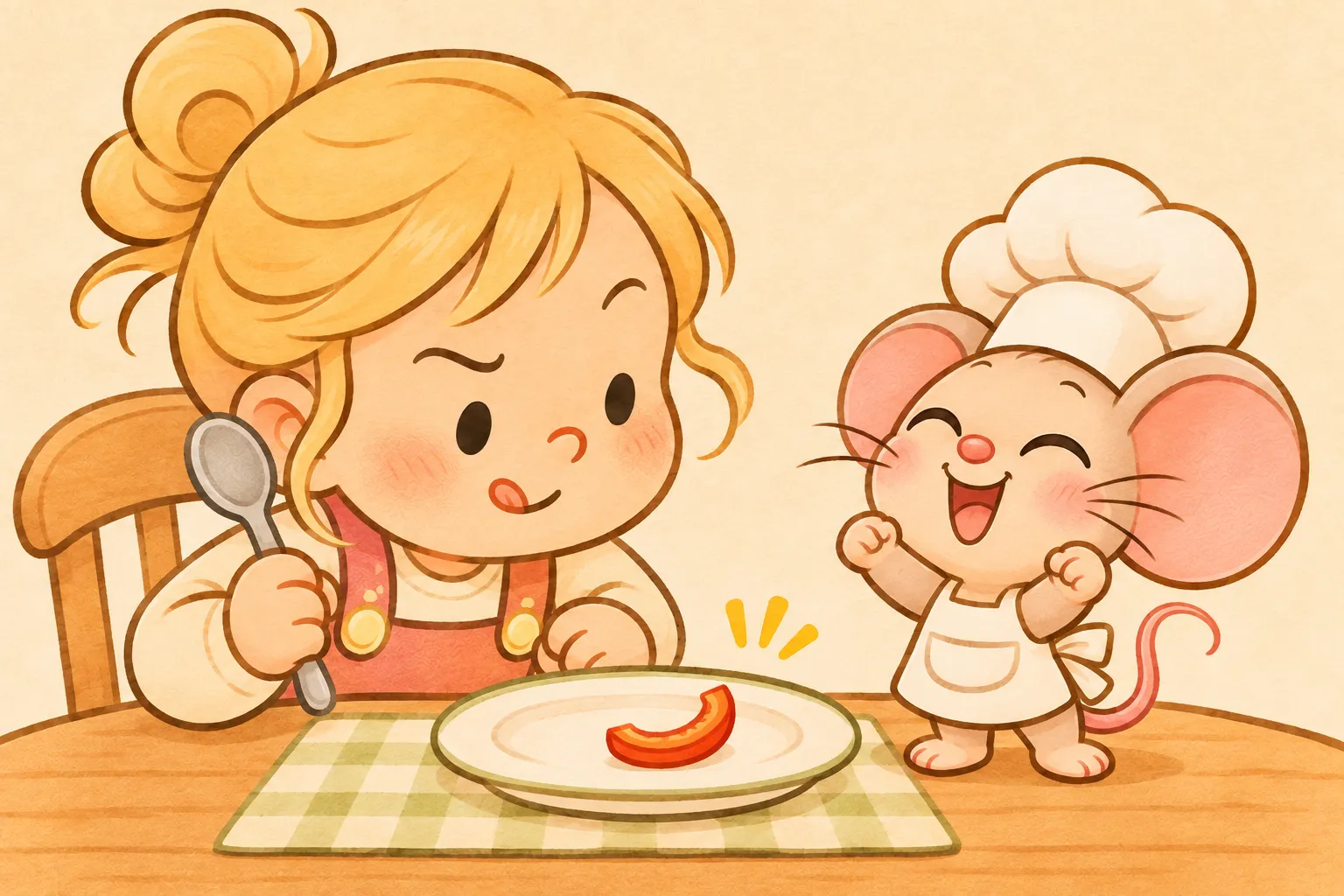
“Just one bite?” Most of us have said it, and every time the mouth on the other side of the table gets a little tighter.
That is not surprising. To a small child, new food is unknown, and at five o’clock on a Tuesday the unknown is not exciting. It is scary. There is a way that works better than nagging. It is slow, but it is simple, and it fits around packed lunches, nursery pick-ups and a dinner that has to be on the table before everyone gets hungry and cross.
Lower the bar until it is almost on the floor
The most important change is also the smallest. The goal is not for your child to eat the food. The goal is for them to know it a little better than yesterday.
That might mean looking at it. Touching it. Smelling it. Putting it on the tongue and spitting it into a napkin. All of that counts as tasting, and every bit of it is a step closer.
When saying no thank you afterwards is allowed, many children dare to do more. A child who has learnt that one bite leads to a demand for three will not take the first one. Which is fairly sensible of them.
The tasting ladder
Think of it as a ladder with six rungs. Your child climbs one rung at a time and is allowed to stay on the same rung for days.
- Look. The food sits on the table, ideally on its own small plate rather than mixed into dinner.
- Touch. Is it smooth, rough, cold, sticky? A kiwi in its skin is fuzzy. Peeled, it is slippery and wet.
- Smell. Does it smell sweet, sour, of the sea, of the forest?
- Kiss or lick. Feel the taste on the lips or the tip of the tongue.
- Bite and spit out. Feel the food in the mouth, then into the napkin. That is allowed.
- Bite and swallow. One small bite. No more is needed.
Next time, start where you left off, or one rung lower if it has been a long day. The ladder does not only go up, and that is fine.
Start close to something familiar
New food is easier when it resembles something your child already likes. If they eat carrot, sticks of red pepper are a short hop: just as crunchy, nearly as sweet. If they like cucumber, the next step might be cucumber with a little dill, or cut into sticks instead of rounds.
Fish works the same way. In Norway, fish cakes are a lunchbox regular, soft and pale and mild. A child who eats them has already tasted white fish in a shape they trust, and from there a flake of baked salmon is closer than it looks.
How the food is cooked matters a great deal. A child who refuses fried mushrooms, which go soft and slippery, may be perfectly happy with raw slices. Broccoli that has boiled too long smells of cabbage and turns grey. Steamed for three or four minutes, it stays green and has a bit of bite. Plenty of children who say no to one will say yes to the other.
Make the food familiar before it reaches the plate
Children taste more readily what they have met before, and that meeting can happen well before dinner.
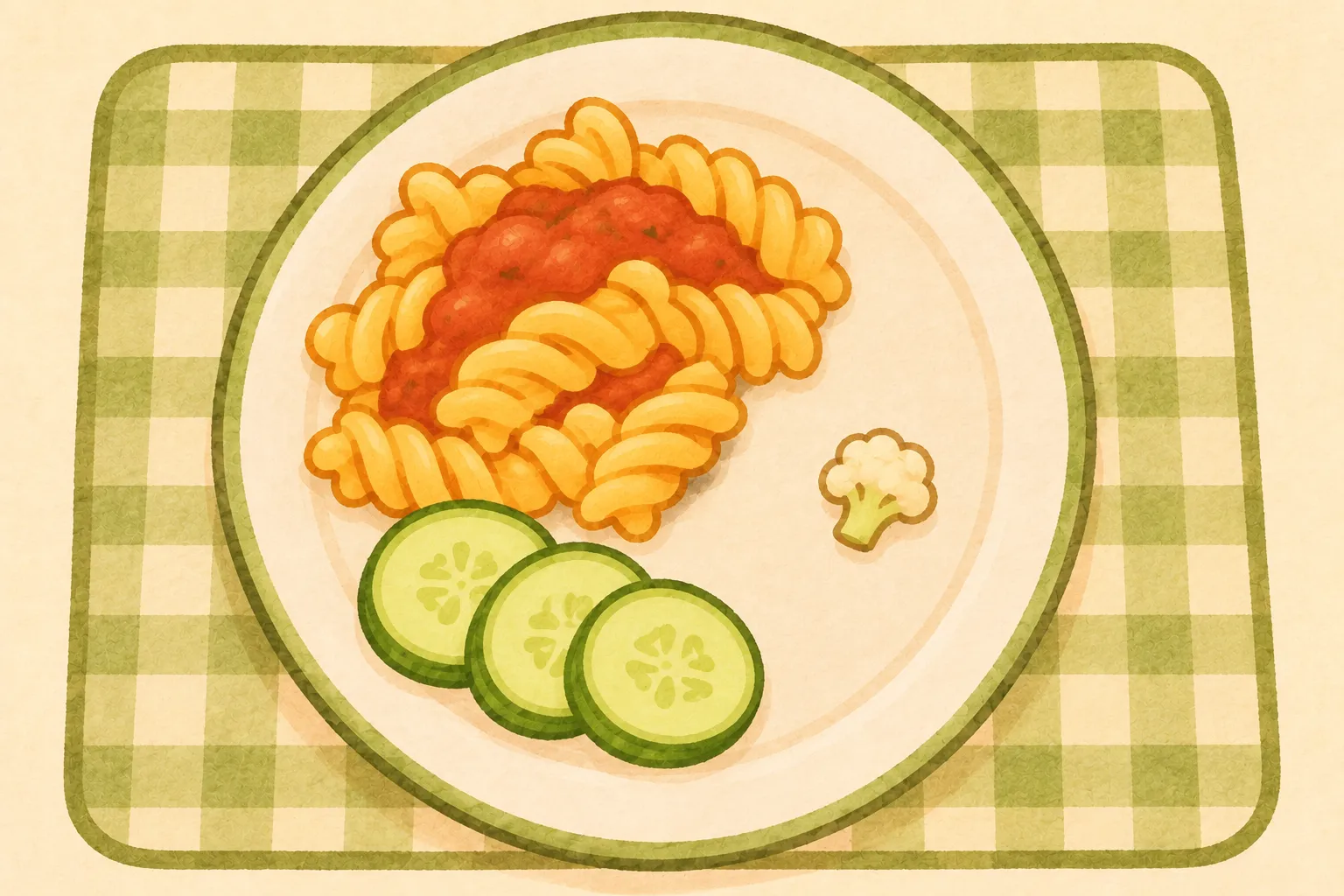
At the shop. Let your child pick one thing you have never tried and carry it home. A mango that has been chosen and carried is no longer a complete stranger.
In the kitchen. Rinsing, grating carrot, stirring the porridge, arranging cucumber slices in a circle on a plate. Food you have made yourself is food you want to show off, and sometimes taste.
In books and pictures. Talk about where the food comes from. A kiwi is less alarming once you know it was named after a bird, and salmon more interesting once you know it can leap up a waterfall.
Out and about. New food is easier with a bit of adventure around it. Maki sushi at a restaurant on a Saturday is a different thing from a mystery roll in the lunchbox on Monday.
Praise the courage, not the taste
It is tempting to say “See, it was nice”. But then the goal becomes liking the food, and that is not something a child can decide. Taste is not a choice.
What a child can decide is to be brave. Praise that. “You tried something new today.” “You smelled it. That was brave.” Keep it short. Children can tell the difference between praise and a lecture.
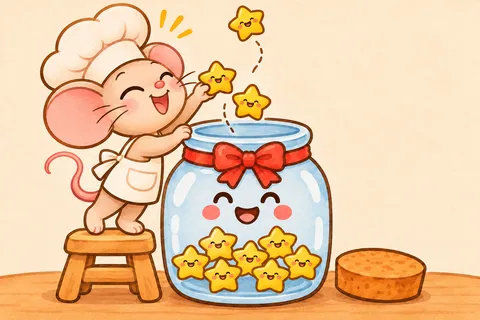
A small reward for tasting can help too, as long as it is for tasting and not for finishing, and as long as it is not food. A sticker, a mark on a sheet on the fridge. In our house it is stars in a jar.
What does not help is pudding as a prize for dinner. That teaches a child that dinner is something to get through, and pudding is the good part.
Eat it yourself
Children watch you far more than they listen to you. Eat the same food at the same table, and mention it without making a performance of it. “The salmon is saltier than last time.” “The pepper crunches.” You do not have to pretend to love everything. Tasting it is enough.
Grandparents and older siblings are often good at this. And plenty of children who refuse at home will taste at nursery because everyone else is. That is not a defeat for you. That is the pack doing its job.
Split the job
It helps to divide the work. You decide what goes on the table, and when. Your child decides whether to have some, and how much. It sounds like giving up control, but it is nearly the opposite: you no longer have to win every dinner, and your child no longer has to defend themselves.
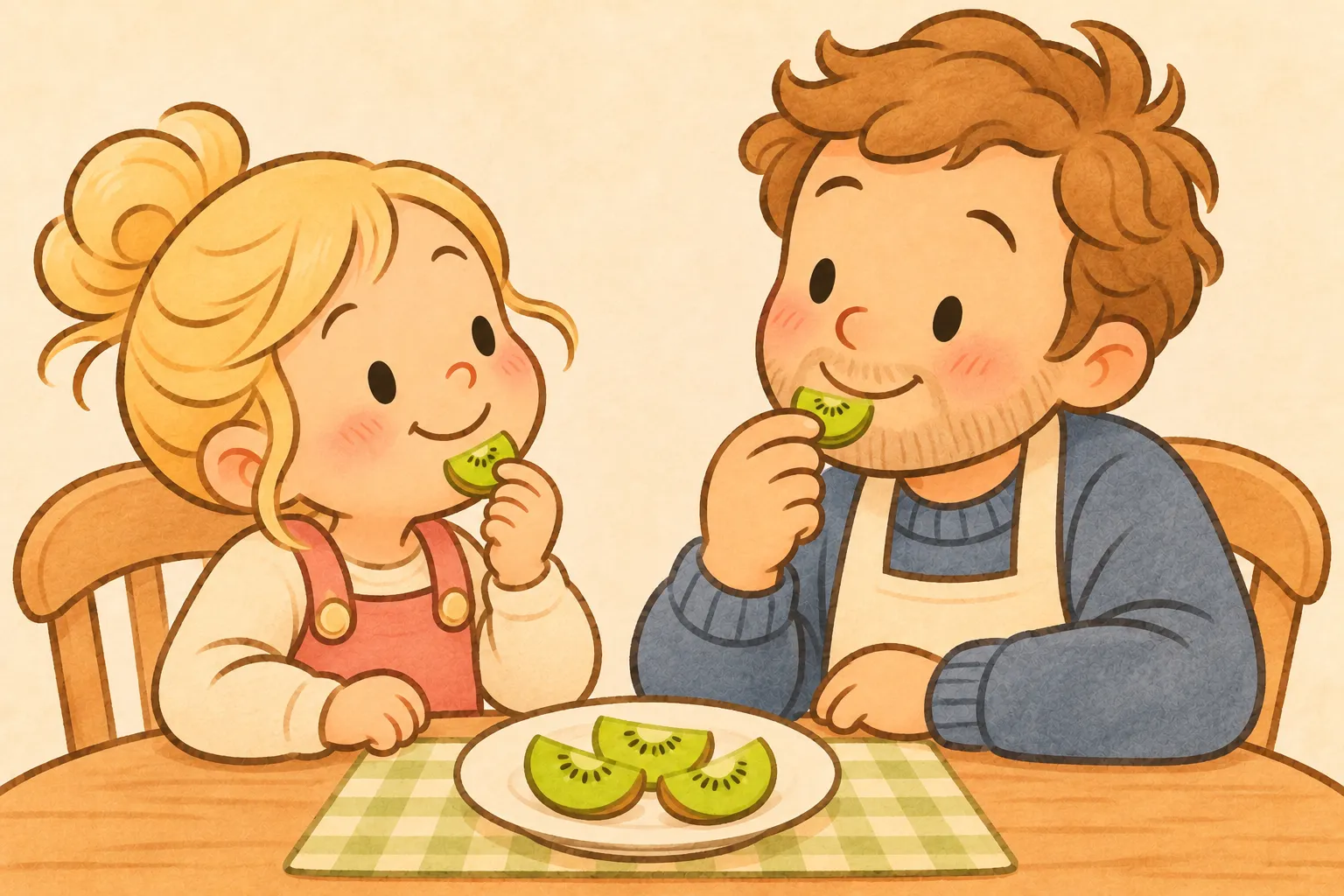
In practice it means there is always something familiar on the table next to the new thing. Potatoes, bread, rice. Then no dinner is a crisis, and the new food can sit there in peace.
What tends to make it worse
- Nagging and bargaining. “Just one more bite” turns food into a contest, and whoever lost the last one will not want the next.
- Clean-plate rules. They make it frightening to start at all.
- Hiding the food. Broccoli blended into a sauce may get eaten, but it does not become familiar. Your child still does not know they like broccoli.
- Calling a child picky. They hear it, and they believe it. Say instead that you have not got to know that food yet.
- Giving up after three tries. Many children need eight, ten or fifteen. More on that in How many times does a child need to taste?
When to ask for help
Plenty of children go through phases of being wary of new food, and it usually passes. If your child eats very few foods, if the list is getting shorter rather than longer, or if you are worried about how they are growing, talk to your child health clinic or your GP. In Norway that is the helsestasjon. The same goes if every meal has been a struggle for a long time, or if you are simply worn out by it.
With Mumse
We made Mumse to make this a little easier. You browse the food together, pick something to taste, and your child earns a star for every brave bite, however it tasted.
 Broccoli
 Carrot
 Red pepper
 Cucumber
 Kiwi
 Salmon
 Fish cakes
 Mushroom
 Maki sushi