Tasting games
New food is easier to taste when it is not dinner. These are games that turn tasting into something you do for fun.
At the dinner table there is a lot riding on things. Everyone is hungry, it is late, and the food is supposed to get eaten. On a Saturday morning on the kitchen floor, nothing is riding on anything. That is when a pickle can become an experiment rather than a chore.
Most of the games below need nothing more than what is already in your fridge. None of them are about finishing anything, and in all of them saying no thank you is allowed.
One safety note first: whole nuts, popcorn and whole grapes can get stuck in a small child’s throat. Cut grapes lengthways, and ask your health visitor or child health clinic if you are unsure what suits your child’s age.
Smell jars
You need: Four to six small jars or cups, and things that smell good or odd. Fresh dill, a bit of grated ginger, orange peel, cinnamon, a basil leaf rubbed between your fingers.
How it works: Put one thing in each jar and cover it with paper with a few holes poked in. Your child sniffs and guesses. Guessing right does not matter. Talking about the smell does: is it sharp, sweet, sour, does it smell like Christmas or summer?
Smell is a huge part of taste, and smelling is much safer than tasting. A child who has sniffed ginger five times will find it less strange when it turns up in dinner.
The crunch contest
You need: Things that crunch. Carrot, crispbread, apple, cucumber, a radish if you are feeling brave. Crispbread is a staple in Nordic kitchens, and it is the loudest thing in most cupboards.
How it works: Everyone takes a bite at the same moment, mouths closed, and listens. Who crunches loudest? Is the carrot louder than the apple? What about the crispbread? A grown-up can hold a phone close and record it.
This is a game where plenty of children taste things they would otherwise leave, because the point is the noise, not the flavour. Cucumber turns out to be almost silent, which is surprisingly funny.
The tasting tray
You need: A muffin tin or an ice cube tray, and five or six flavours in small pieces. Something sweet, something sour, something salty and something new. For example: apple, lingonberries, a cube of cheese, a slice of pickle, a piece of cucumber, and a bit of something your child has never tried.
How it works: Your child goes round the tray in whatever order they like. Skipping is allowed, and so is coming back. Talk about what is sour and what is sweet. Lingonberries, the tart red berries Scandinavians eat with meatballs, are sour enough on their own to make most people wrinkle their nose. That is part of the fun.
The tray works because the pieces are small and many, and because the new sits next to the familiar. No single piece is big enough to be frightening.
Blind tasting
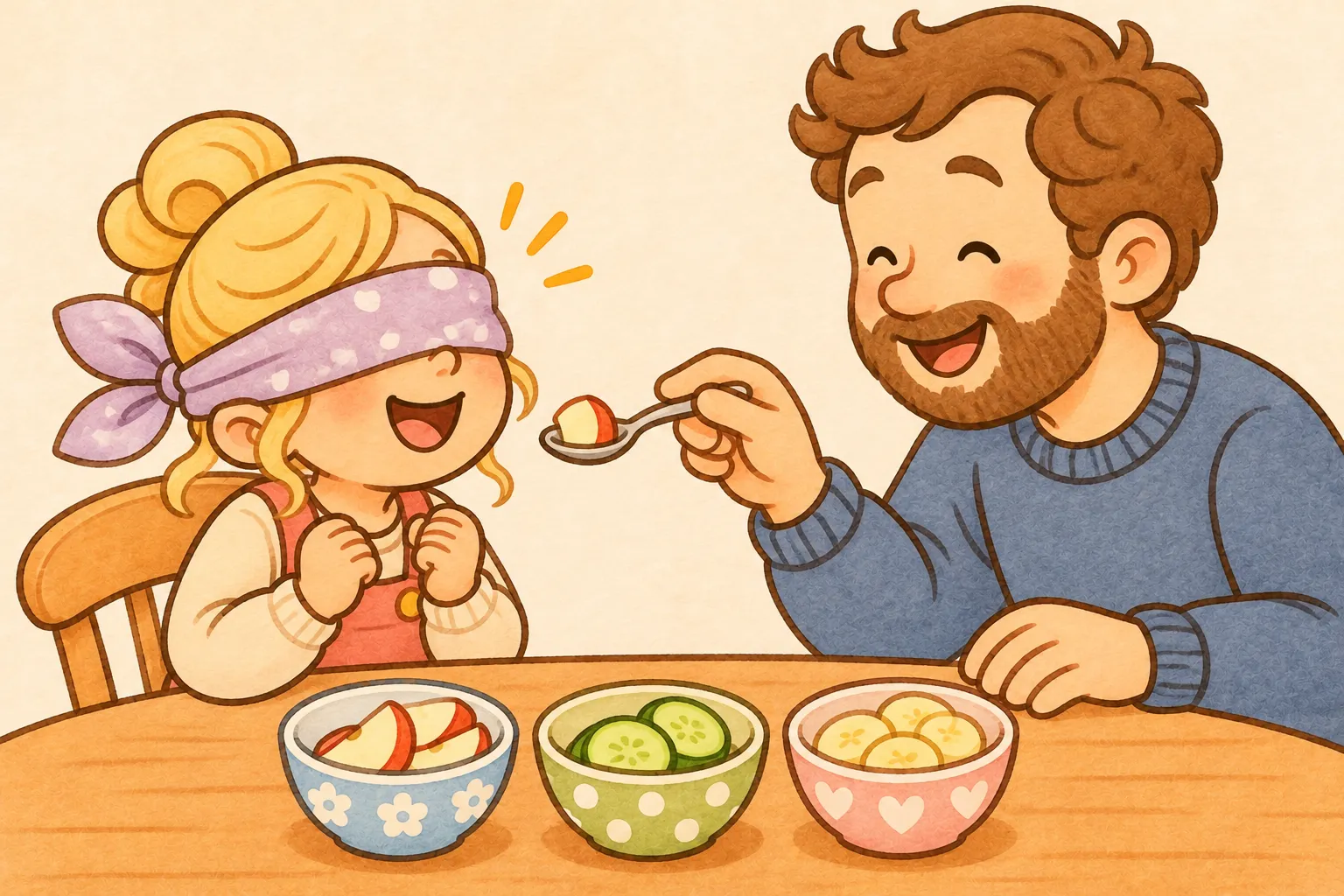
You need: Familiar foods in small pieces, and a scarf or simply closed eyes.
How it works: Your child closes their eyes, and a grown-up puts a piece in their hand or on a spoon. They smell, feel, taste and guess.
One rule matters: start with food your child knows and likes, and never sneak in something they do not want. The game is about trust. After a few rounds your child can decide for themselves whether to have a “secret” piece, and that is when something new can come in. Many children prefer to be the one doing the feeding, which is just as good.
The taste judge
You need: Three bits of paper with thumbs on them: up, sideways and down. Ideally drawn by your child.
How it works: Your child is the judge. Everyone at the table tastes the same thing, and everyone gives a thumb. Thumbs down is completely fine. It is actually rather a treat when a grown-up gives a thumbs down and explains why: “Too sour for me.”
What this teaches is that not liking things is allowed, and that tasting is not dangerous. There is no right or wrong answer.
The rainbow plate
You need: A big plate and food in lots of colours.
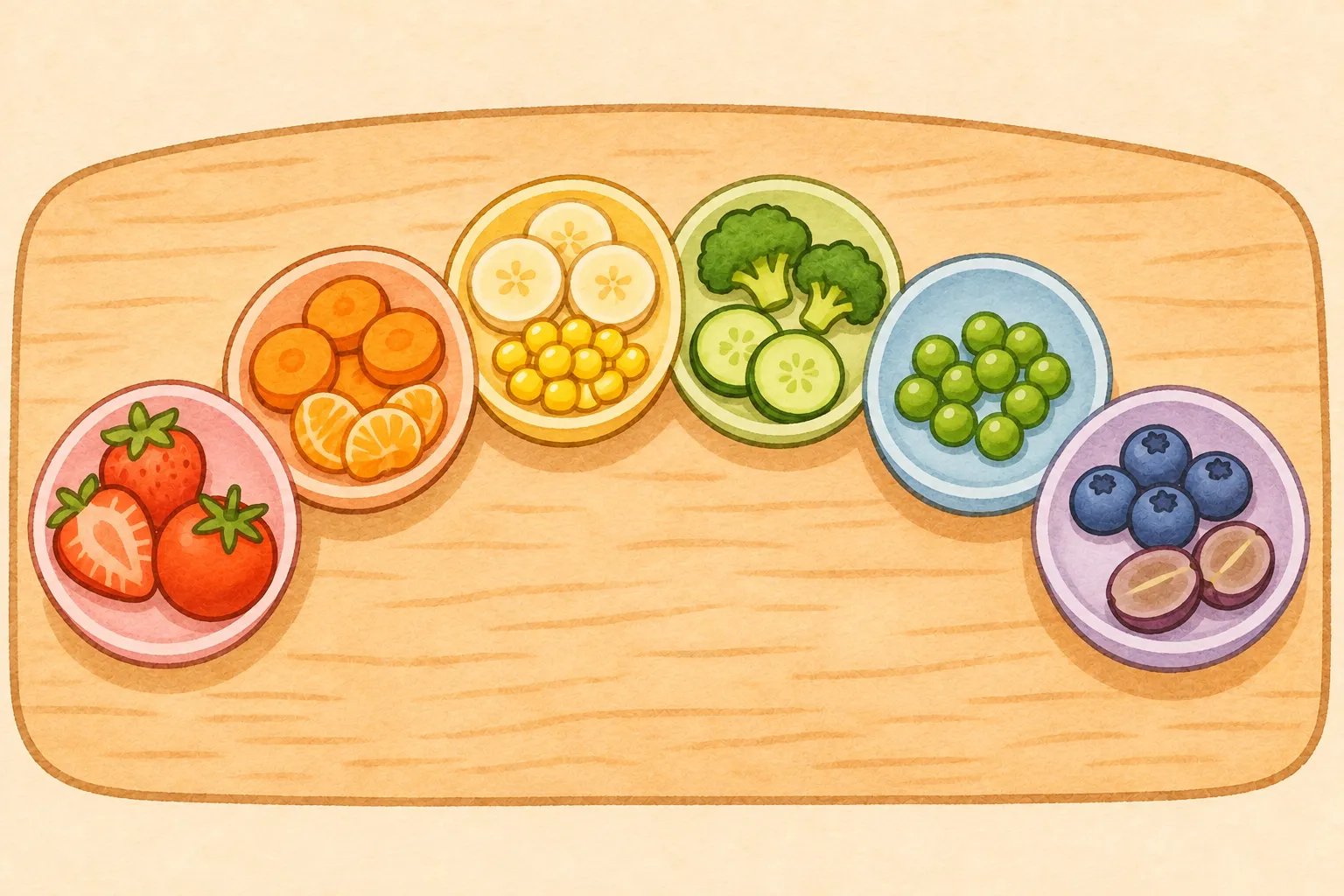
How it works: Lay the food out in arcs, like a rainbow. Red pepper, carrot, sweetcorn, cucumber, blueberries. Let your child arrange it. The question is not “do you want to taste it?” but “which colour do you want to taste first?”
It works the other way round too: pick one colour and find as much of it as you can in the fridge. An entirely green plate is a fairly brave plate.
Herbs on the windowsill
You need: A pot of basil, parsley or dill from the supermarket.
How it works: Your child waters it and looks after it. After a few days they can snip a leaf themselves, smell it and feel it. Lots of children will taste something they have grown, even if it is only a leaf.
It takes longer than the other games, but it has a nice side effect: your child wants the herbs to be used. Suddenly it is your child asking for basil on the pasta.
At nursery
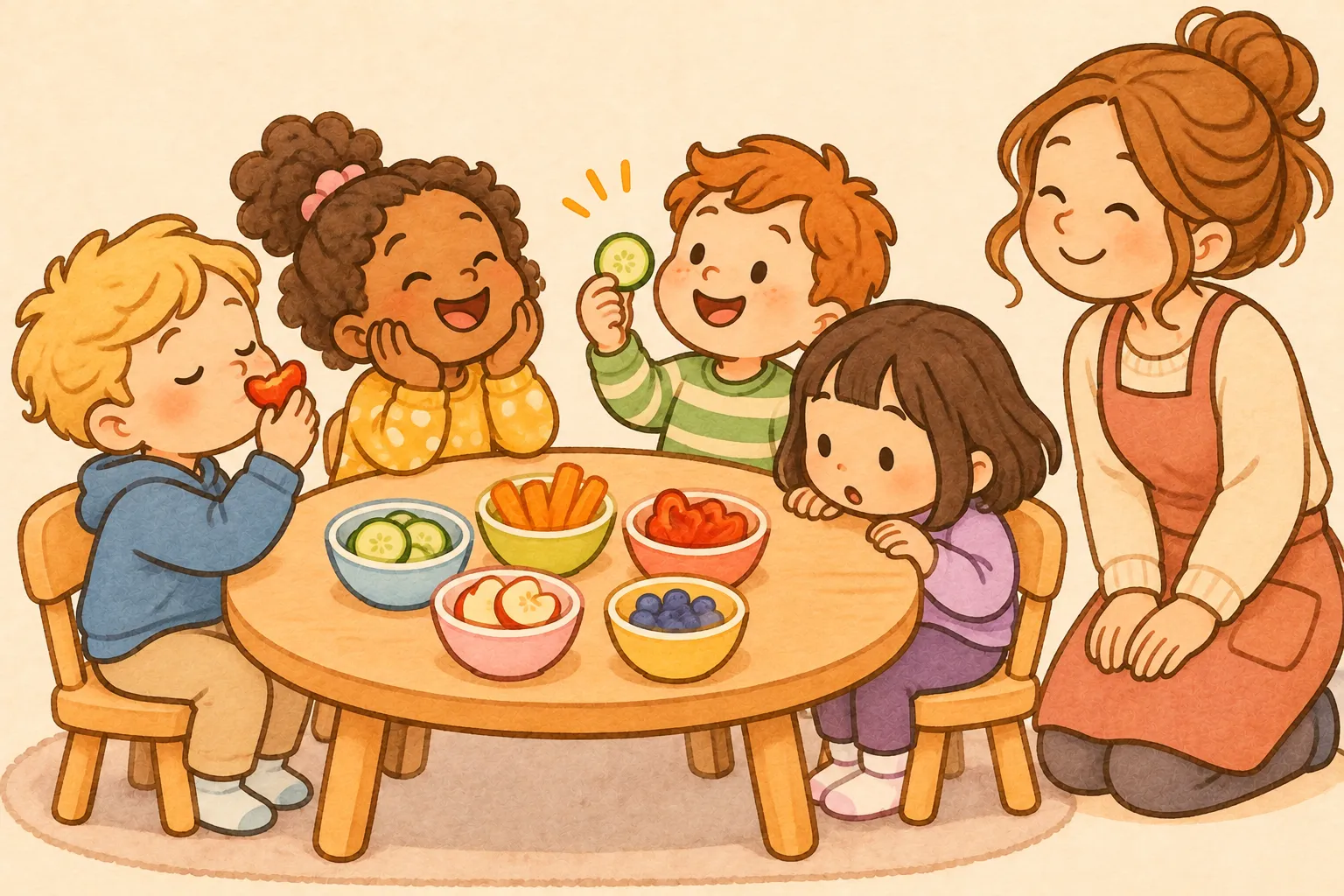
Many of these games suit a group well, and the group does much of the work. Children taste more readily when they see others doing it. A few things to bear in mind:
Keep it optional. Joining in and watching is enough.
Use few things at once. Three or four flavours is plenty for one session.
Check first which foods the children cannot have, with both the parents and the nursery.
Tell the parents. A note saying a child sniffed ginger or tasted lingonberries today means the parents can try the same at home.
At a birthday party
The tasting tray and the crunch contest work well at children’s parties. A tasting station with five small bowls and a few thumb cards can be as popular as the lucky dip. Keep it small and optional, and let the children be the judges.
When it is enough
The game is over when it stops being fun. Better to stop while your child still wants more than to push for one more round. There is always next Saturday.
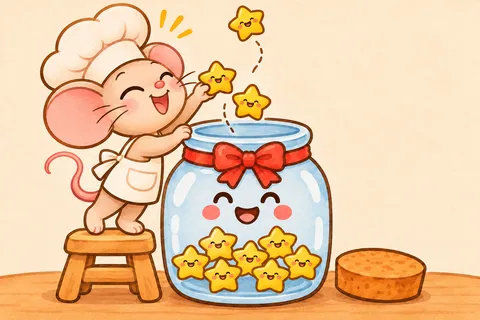
In Mumse your child uses the same three thumbs as the taste judge, only drawn. They taste something, give a thumb and watch the star fly into the jar, whichever thumb it was.
 Apple
 Carrot
 Cucumber
 Crispbread
 Lingonberry
 Pickled gherkin
 Basil
 Dill
 Ginger