Learn to taste
Most children refuse new food at some point. Here are guides to tasting without nagging, and pages on the food children actually meet, from the packed lunch to Friday tacos.
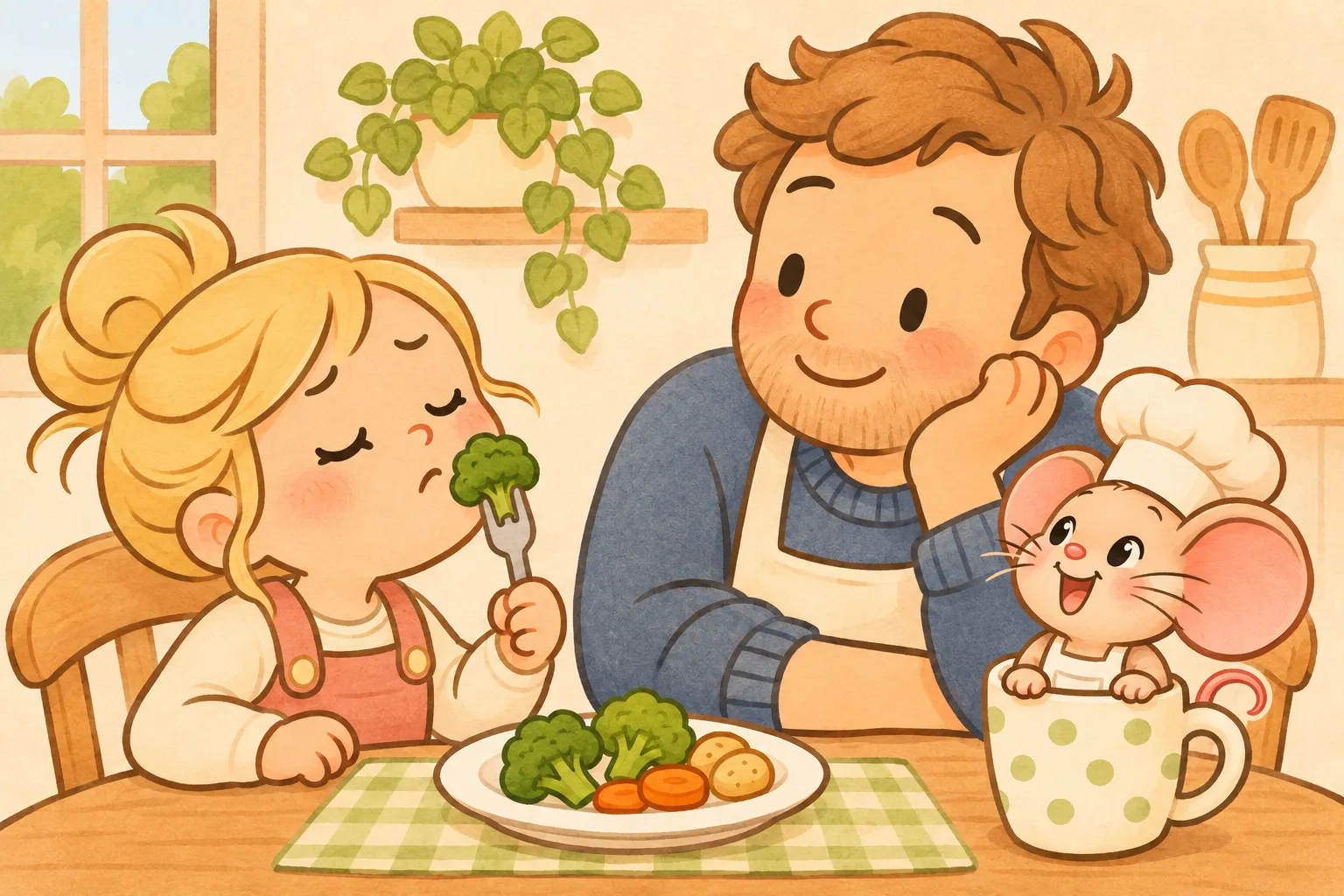
In our house it started with the grandparents. They had good tricks for getting our five-year-old to taste something new, and one day they said: “You really should make an app for this.” In the app, that became a star every time a child is brave and tastes. Not for finishing it. Not for liking it. Just for tasting.
It sounds almost too simple. What it does is move the goal at the table, away from how much is left on the plate and towards who dared to try.
Tasting is enough
Children learn to like food by getting to know it. They look at it, smell it, poke it and taste a little, again and again, often over weeks. It is rarely quick, and nagging almost never makes it quicker.
So these pages are about tasting rather than eating. A child who puts a piece of broccoli on their tongue and says “yuck” has done something brave. That counts as a good dinner, even if the broccoli ended up in a napkin.
The guides
If you want the practical part first, start with How to get children to try new foods. If the answer is mostly no at the moment, When your child says no was written for you. Wondering whether this is normal, or how long it lasts? Read Picky eaters and How many times does a child need to taste?. The tasting games are for rainy afternoons, birthday parties and nursery.
The food
The categories are the same shelves as in Mumse’s Food World. They start safely with fruit and berries, get braver as you go down, and end with a shelf of sour, spicy and strange tastes. A lot of the food is Norwegian, because so are we: brown cheese, fish cakes and cod roe in a tube sit next to pizza and pad thai. Each food has its own page on how it feels in the mouth, what makes it tricky for a child, and a small place to begin.
These pages are written by the people who make Mumse, the tasting app where a child earns a star for every brave bite, even when the thumb points down.
Guides for parents
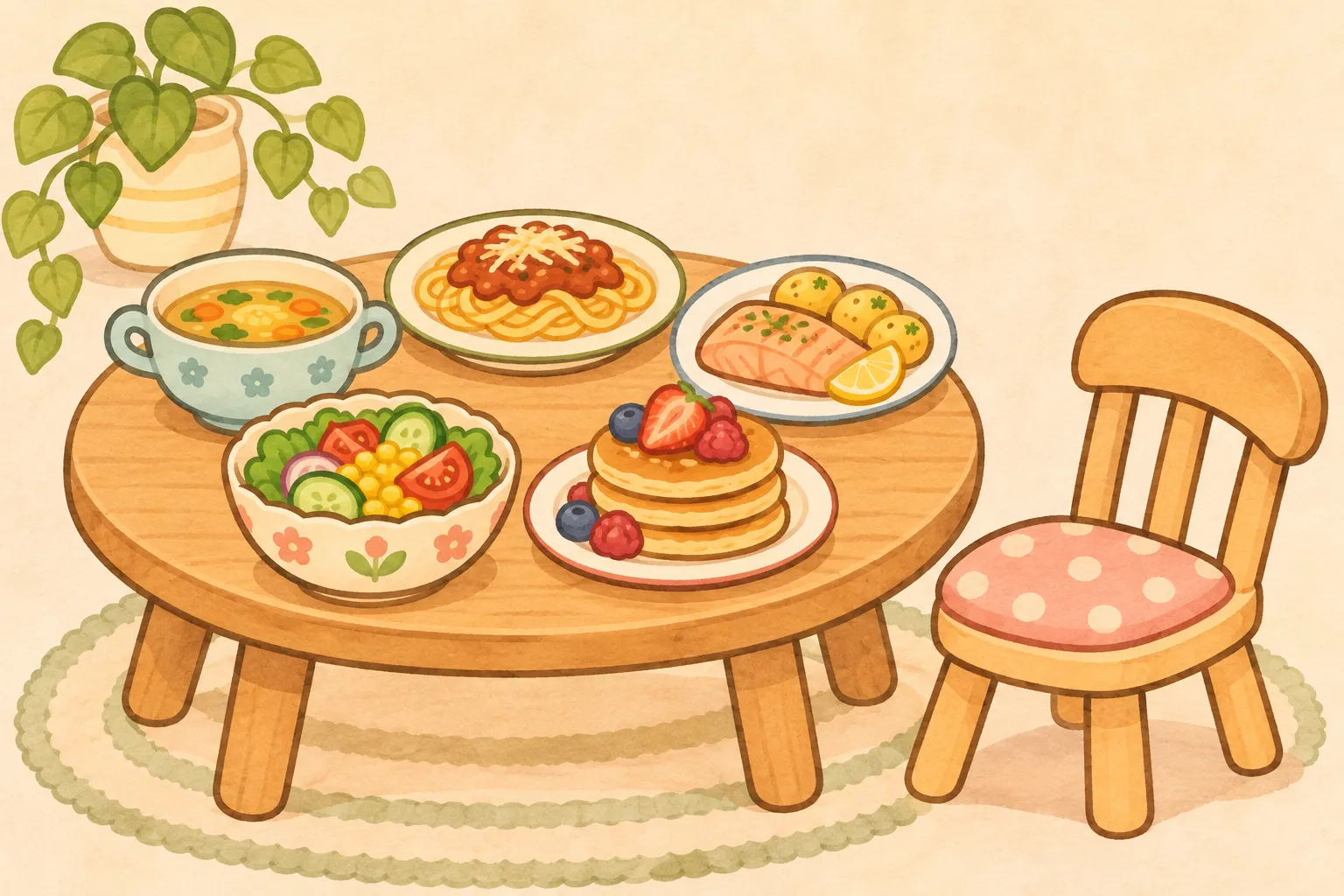

Trying new foods
Small steps, lots of tastes and praise for being brave. A practical guide to new food for children aged two to eight, without nagging or clean-plate rules.
Read the guide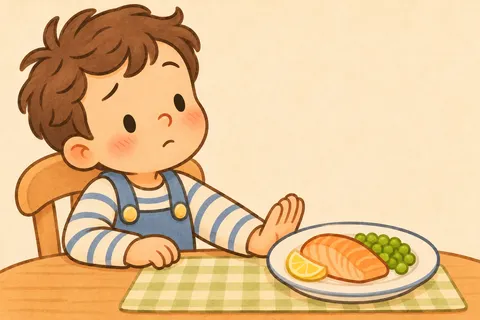
Picky eaters
Many children aged two to six say no to almost anything new. Why it happens, what it looks like from the child's side, and what actually helps at home.
Read the guide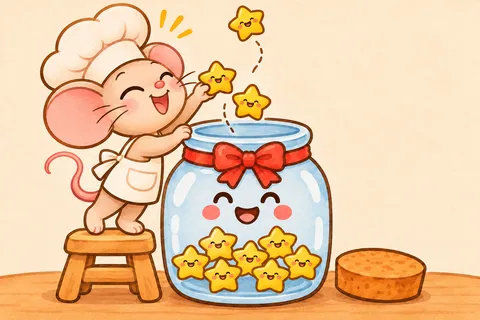
How many times
Many children need to taste a new food eight to fifteen times before it feels familiar. What counts as a taste, and how to keep going when nothing moves.
Read the guide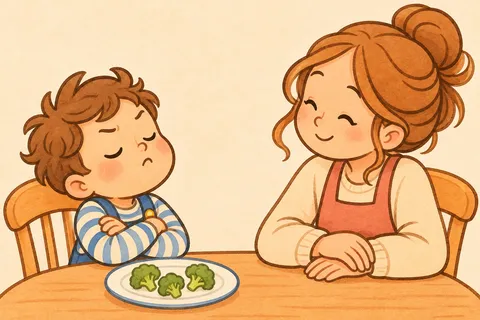
When your child says no
What to say instead of "just one bite", what a no at the dinner table often means, and when it is wiser to leave the food for another day.
Read the guide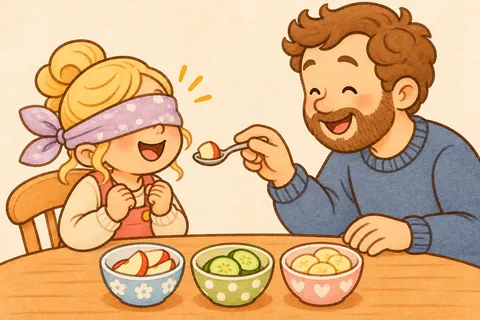
Tasting games
Smell jars, a crunch contest, tasting trays and blind tasting. Games that make new food less scary, for the kitchen, birthday parties and nursery.
Read the guide
All the shelves
 Fruit
 Berries
 Vegetables
 Mushrooms and herbs
 Nuts and seeds
 Fish and seafood
 Meat and poultry
 Eggs, milk and cheese
 Breakfast and spreads
 Bread and baking
 Pasta, rice and noodles
 Dinner (everyday Norwegian)
 Pizza, tacos and burgers
 Asia
 Europe
 The Americas
 Africa and the Middle East
 Soups
 Sauces and dips
 Snacks and small bites
 Cakes and sweet baking
 Ice cream and desserts
 Sweets
 Drinks
 Sour, spicy and strange tastes
Cook together
Want to make the food together? Little chef has twenty things to make with children, from waffles to vegetable soup, each with a recipe.
 Little chef


Taste together with Mumse
Mumse is a tasting app for iPad and iPhone. Your child browses nearly 3,000 foods from around the world, you read aloud, and together you pick something to taste. Every brave bite earns a star, however it tasted, and the stars fill a jar towards a prize you do together.

A tasting app for iPad and iPhone. Free to try.