How many times
Usually far more than we expect. And most of us give up long before our children do.
Eight to fifteen. That is the range you hear again and again when people who study children and food talk about how many times a child needs to meet a new food before it feels familiar. Some children need fewer. Some need twenty, or more.
That is a lot. It is probably why so many parents stop after three to five attempts. No on Monday, no on Thursday, no again the week after, and it is easy to reach a verdict: she doesn’t like tomatoes. But three noes are not an answer. They are a start.
Why so many?
Taste is learnt. The first time a child has a new food in their mouth, everything about it is new at once: the flavour, the smell, how it feels against the teeth and tongue. There is nothing to compare it with, and the unknown is by definition a bit unsafe.
The second time is slightly less new. By the tenth, your child knows what is coming. That is not the same as liking it, but it is what has to happen first. Familiar comes before nice.
It also has to do with the fact that many children between two and six are especially wary of new food. There is more about that in Picky eaters.
What counts as a time?
Lots of parents count too strictly. A taste is not a finished portion. A taste is the food having been in the mouth.
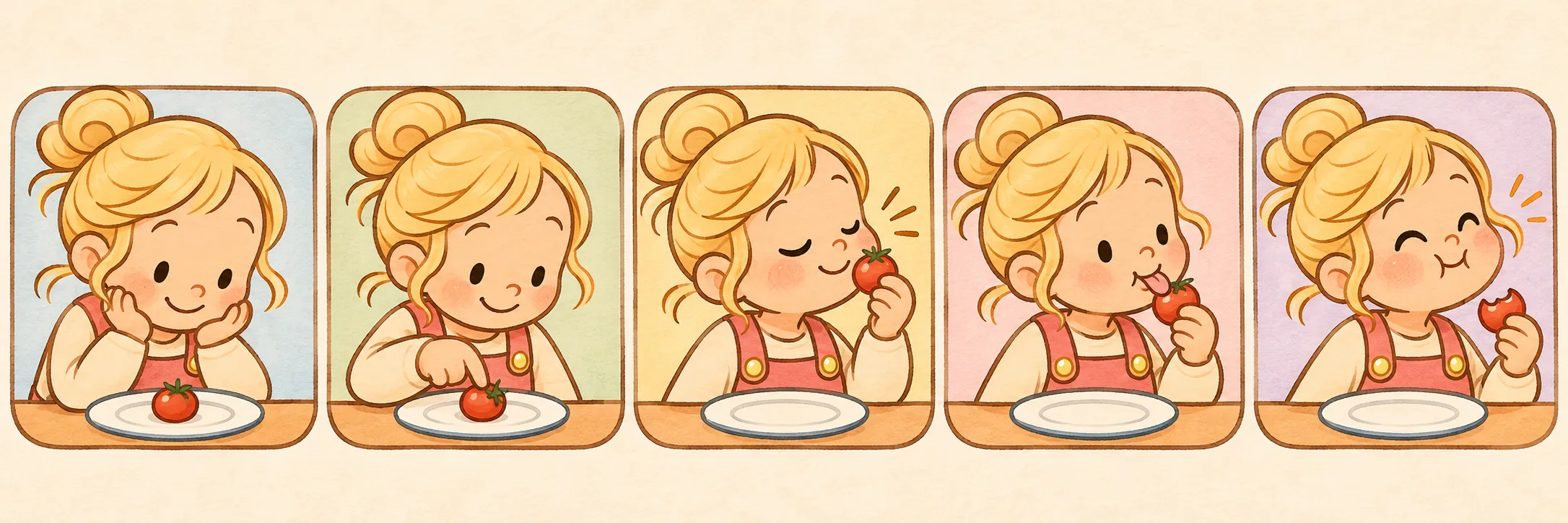
Licking a piece of olive counts. Putting a bit of red pepper on the tongue, chewing twice and spitting it out counts. Looking and smelling are not quite tastes, but they are useful steps, and they make the next taste easier.
It is better to count tastes than days, and better to offer a small piece often than a large portion now and then. When parents have given children a tiny taste of the same vegetable every day for a couple of weeks, the children have ended up liking it more and eating more of it. The pieces were small. The repetition did the work.
A fortnight of red pepper
Say the goal is red pepper. Here is how it might go, with nobody doing anything wrong:
- Monday. A plate of pepper sticks in the middle of the table. Nobody mentions it. Your child looks.
- Tuesday. You eat a stick and say it crunches. Your child says “yuck” without trying it.
- Wednesday. Your child holds a stick, notices how smooth it is, and puts it down.
- Thursday. A day off from pepper.
- Friday. Taco night, which in Norway is practically a national institution. The pepper sits in a bowl with everything else. Your child takes a bite, chews and spits it out. That is a taste.
- Saturday. A stick in the lunchbox for a walk in the woods. It comes home with a single tooth mark.
- Monday. Your child licks a stick and announces that it is sweet.
- Wednesday. Two bites. One gets swallowed.
- Friday. “It’s all right.”
That is five tastes in two weeks, with lots of small steps in between. None of it is dramatic. For most children “all right” and “yum” come much later, and not in a straight line. Up, down, up again. That is what it is supposed to look like.
When nothing moves
Sometimes there are weeks when a child will not go near a particular food. It can help to give it a rest and try something nearby. If tomato is stuck, cherry tomatoes can be a different experience from big slices, and tomato soup something else again. If broccoli is stuck, cauliflower is a step to the side.
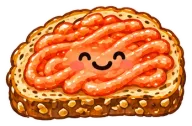
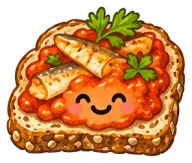
You can also find a different way in. Sandwich toppings are underrated. Norwegian children grow up on cod roe spread squeezed from a tube, salty and pink, and for some it is the first fish they like. Mackerel in tomato sauce on bread can be the next step, because the sauce makes the fish sweeter and more familiar.
What keeps you going
It is rarely the child who gives up first. It is us. We are the ones standing in the shop thinking there is no point buying another mango when the last one ended up in the bin.
A few things help:
Buy small. One mango, not three. One punnet of blueberries. Then it matters less if it gets left.
Share. It does not need to be a separate portion. A bite from your plate is a taste, and far less of an event.
Write it down. It sounds dull, but it is easy to forget that your child licked the pepper last Tuesday. A mark on a sheet on the fridge shows progress even when it feels like there is none.
Do not count it as a loss. A no today is not a no for ever. It is a no today.
Some foods never become favourites
It is worth saying plainly: even after fifteen tastes, your child might not like the food. Adults have foods they do not like too. The aim is not for your child to love olives. The aim is for olives to stop being frightening, and for your child to know they can taste something new and the world does not end.
That is why the courage is what gets praised. A child cannot choose what tastes good. They can choose to be brave.
If you are worried
If your child eats very few foods, if the number is shrinking rather than growing, or if you are worried about how they are growing, talk to your child health clinic or GP. That is not giving up. It is getting help with something that might be harder than usual.
Five stars
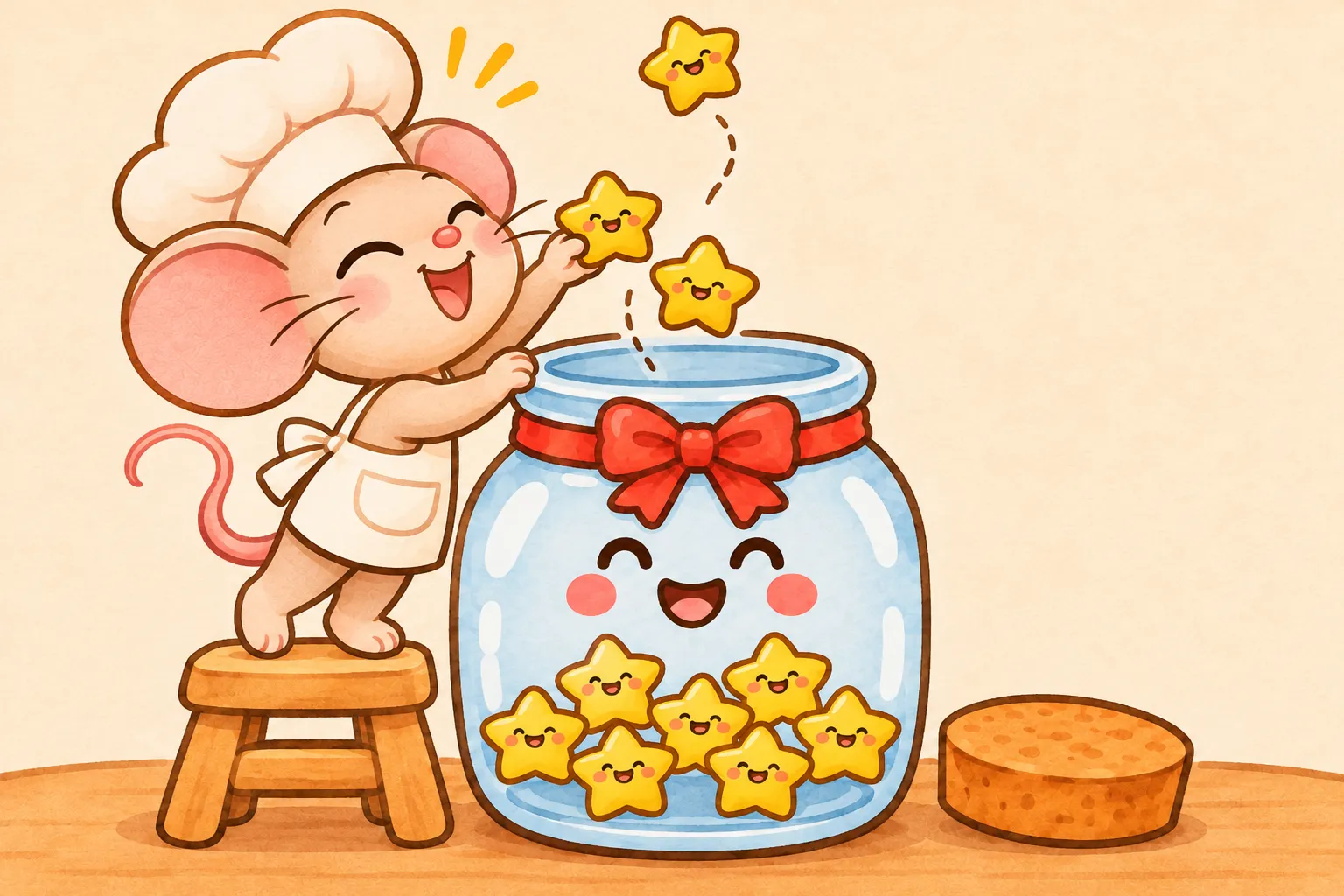
In Mumse we count tastes, not portions. Every food on the shelf has five star spaces, one for each taste, and the fifth turns it into gold food. Five is not fifteen. But it is a place to start, and after gold food your child can keep tasting.
 Red pepper
 Tomato
 Broccoli
 Olives
 Mango
 Blueberry
 Bread with cod roe spread
 Bread with mackerel in tomato sauce