Olives
Small round fruits from olive trees around the Mediterranean, green or black, salty and a little bitter. Most children say no. A few are hooked for life.
- Taste
- salty, bitter
- Texture
- soft, juicy




Read aloud to your child
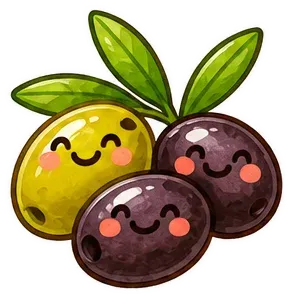
Olives are small, round fruits that grow on olive trees in countries around the Mediterranean. They can be green or black and taste salty and a little bitter. They are firm to bite, and there may be a little stone inside. Did you know the oil in the kitchen is pressed from olives?
An olive branch looks like something you could pick from and eat. You cannot. Raw olives are so bitter they are inedible. The olives we eat have been treated before reaching the jar, most of them by spending weeks or months in salty brine. That is why they taste the way they do.
From bitter to salty
Olives grow on trees around the Mediterranean, and the trees can live for hundreds of years. The fruit is full of a bitter compound that has to be drawn out before it can be eaten. That usually takes salt, water and time. When the olives are ready, they are still a little bitter, but mostly salty.
Green olives are picked before they are fully ripe and tend to be firm and sharp. Black olives are riper and often milder. Many tinned black olives are actually green ones that turned dark during processing. They are the mildest of the lot.

A grown-up taste some children adore
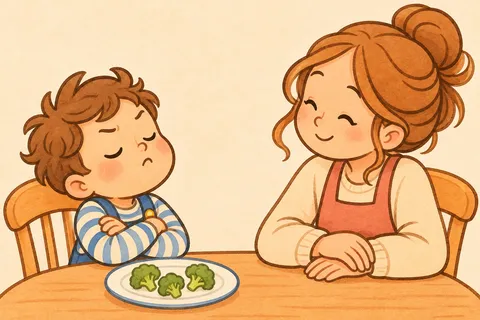
Salty and bitter together is a flavour many adults take years to enjoy. Most children say no at first meeting. But olives have a knack for splitting children down the middle. A few eat them like sweets, one after another from the bowl, and cannot understand why everyone else does not.
There is no way of knowing in advance which kind of child you have. That is why olives are worth offering, without expectations.
Black slices on pizza
For many children the first encounter is the black slices on a pizza. Mild, thin and mixed in with cheese and tomato. Children who pick them off have still seen them, smelt them and probably caught a little of the taste. That is a step.
The next step might be a whole pitted black olive, cut in half. Then a green one. Each is a new taste, and there is no reason to skip any.
The stone
Olives with stones are a challenge of their own. The stone is hard and slippery and can get stuck in a small child’s throat. Choose pitted olives, cut them into pieces for the youngest, and check with your health visitor about age.
For older children the stone can be part of the fun. How do you eat around it? Where did it go? It gives them something to do, and for some that makes tasting easier.
Stuffed olives
Olives also come stuffed with pepper, garlic, cheese or almonds. That can be a way in for a child who likes what is inside. An olive stuffed with red pepper is milder and sweeter than a plain green one. Fine to start there.
Further on
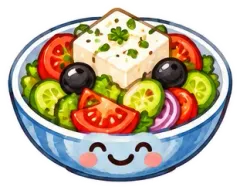
Pizza is where many children meet olives first. Greek salad puts olives with feta, cucumber and tomato. And a pickled gherkin has the same salty, tangy character in a crunchier form.
Sour, spicy and strange tastes have their own category in Mumse, for the brave. Half an olive earns as much of a star as a whole one.
 Greek salad
 Pickled gherkin
 Bruschetta
 Salami
 Pickled beetroot
 Pizza