When your child says no
No is not the end of the conversation. But it is not the start of a negotiation either.
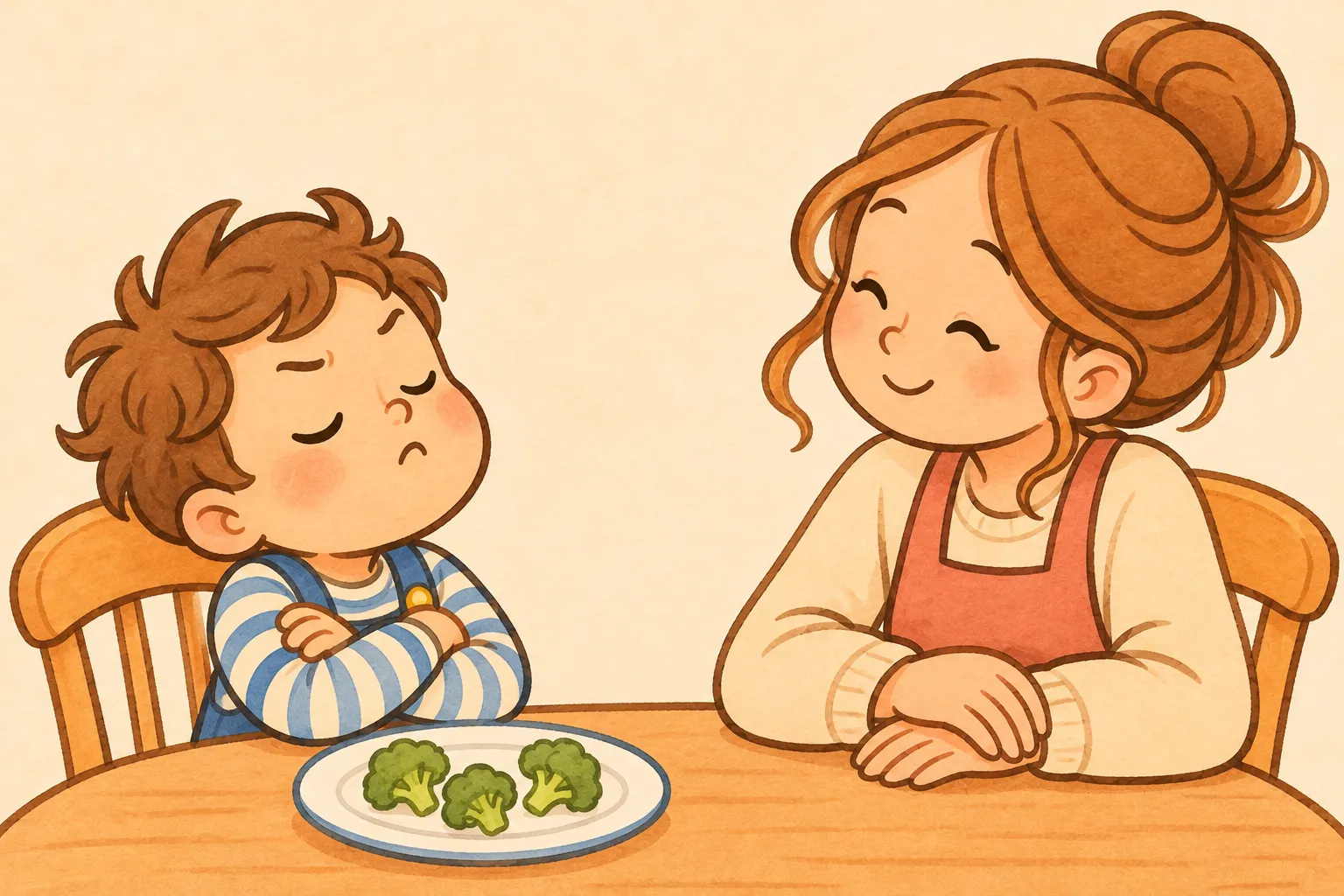
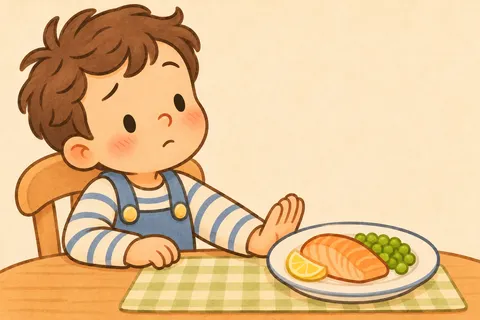
The fish gratin is on the table. Golden on top, smelling lovely, and it took you forty-five minutes. Your child looks at it for about one second and says: “No.”
This is the moment. What you say next will not decide whether fish gratin gets eaten tonight. But it will decide, a little, whether your child dares to try it next time.
No is allowed
The hardest part comes first: letting no be a real answer. Not because children should decide everything, but because a child who is not allowed to say no cannot really say yes either. And a yes they chose is exactly what we are after.
It helps to remember who is responsible for what. You decide what goes on the table. Your child decides whether to have some, and how much. Once that line is clear, there is nothing to negotiate, and a no is simply a no.
What a no can mean
A no at dinner is rarely a considered position on fish gratin. It can mean all sorts of things:
- I don’t know it. The most common one. The food is new, or it looks different from last time.
- I’m tired. After a long day at nursery there is not much courage left.
- It looks wrong. The sauce has run into the potatoes. Something green is sticking out.
- I want to decide something. A three-year-old does not get to decide much, and the dinner table is one place they can.
- I’m not hungry. It happens, especially after a late snack.
None of these go away with nagging. Most of them shrink with calm, time and a parent eating the food themselves.
What to say instead
Much of what we say at the table we say out of habit. Here are some swaps worth trying:
| Instead of | Try |
|---|---|
| “Just one bite?” | “You don’t have to eat it. It can just sit there.” |
| “But it’s nice.” | “It’s a bit salty and a bit soft. I like it.” |
| “You haven’t even tried it.” | “Do you want to smell it first?” |
| “Finish it and you can have pudding.” | Nothing. Pudding is not a prize. |
| “You’re so fussy.” | “You haven’t got to know it yet.” |
| “Look, your sister’s eating it.” | Nothing. Your child can see that already. |
| “Why don’t you like it?” | “How did it feel in your mouth?” |
Notice how many of the answers involve saying less. That is often the hardest bit. But a child who is left in peace with the food comes back to it more often.
What to do
Make the new thing smaller. A teaspoon of fish gratin at the edge of the plate is less daunting than a big ladleful in the middle. More is always available.
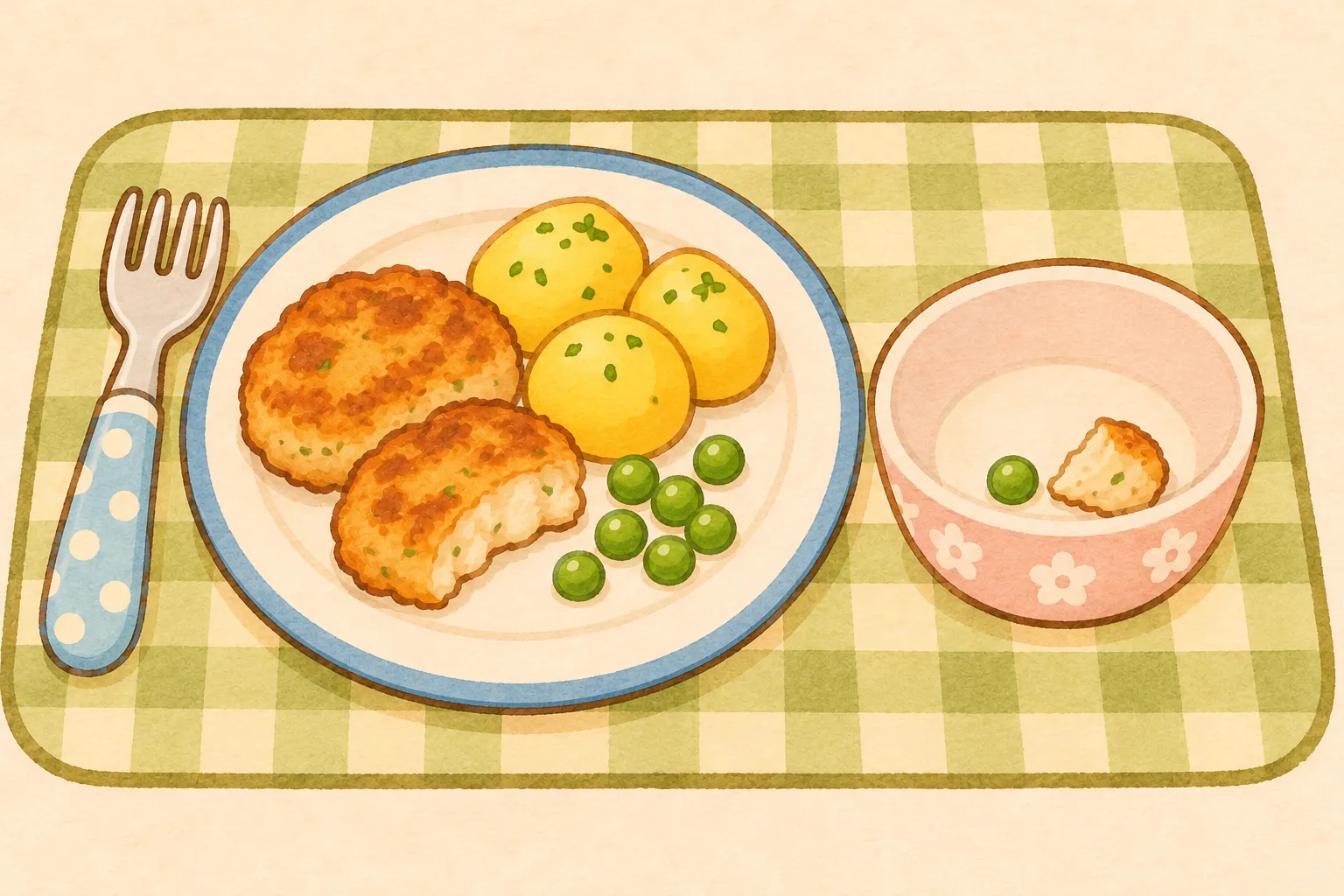
Separate it. Poached fish with potatoes, a Norwegian weekday staple, is easier than a gratin where everything is mixed together. Fish on one side, potatoes on the other, melted butter in a small dish.
Offer a napkin. When spitting out is allowed, putting it in the mouth is safer. Say so before dinner, not halfway through.
Eat it yourself. Say something about the food, briefly and without selling it. “The fish is soft today.” Children can hear when we are trying to persuade them.
Have something familiar on the table. Potatoes, bread, a bowl of cheese cubes. Your child should be able to fill up without the new food having to be eaten.
Let it go. Some days the best move is to stop. Not as a punishment, not with a sigh. Just leave it, and try again on Thursday.
When the no comes from a child who used to eat it
It is especially maddening when a child suddenly refuses something they happily ate last week. Bread with liver pâté, a fixture of Norwegian packed lunches, has gone down fine for two years, and then one day it is yuck.
This is common, and it usually passes. Sometimes something has changed: a different brand, a different bread, a sandwich that sat in the lunchbox too long. Sometimes it is just a phase. Serve it again without comment, and let your child come back to it without losing face.
When the no is to nearly everything
Some phases are heavier than others. No to stew, no to fish, no to anything except pasta and apple. It is easy to get stuck in a loop where every dinner is a test, and both child and grown-ups arrive at the table with their shoulders up.
Lower the bar further. It is enough that the food is on the table. It is enough that your child is sitting there. Have some dinners where everyone serves themselves, like tacos, where you can build your own and leave out the peppers. That freedom often means a child takes a bit more than you expected.
It can also help to move new things away from dinner altogether. Try something odd on a Saturday morning, when nobody is hungry and nothing is at stake. A pickle on the kitchen counter is a small adventure. The same pickle at dinner is a task.
When other grown-ups have opinions
Grandparents, neighbours and other parents often have views. “In our day, you ate what was put in front of you.” They are allowed to think that. You do not have to defend yourself.
“In our house, tasting is enough” is usually all that needs saying. Many grandparents are glad to be given a role, such as being the one who tastes the strange thing first, with great seriousness.
If you are worried
Most children who say no a lot still eat enough of what they like and grow braver as they get older. If your child eats very few foods, if the list gets shorter over time, or if you are worried about how they are growing, talk to your child health clinic or GP. The same goes if every meal is a battle and you have run out of energy for it.
Thumbs down is brave too
In Mumse your child gives a thumb after every taste, and thumbs down earns exactly the same star as thumbs up. Not liking it is allowed. Tasting it was the brave part.
 Fish gratin
 Poached fish with potatoes
 Meat and potato stew
 Bread with liver pâté
 Tacos
 Cheese
 Apple
 Pickled gherkin