Meat and potato stew
Lapskaus is meat, potatoes and root vegetables cooked together until almost everything is soft. For a child who wants to know what they are eating, a lot has become one thing.
- Taste
- mild, salty, savoury
- Texture
- soft, juicy



Read aloud to your child
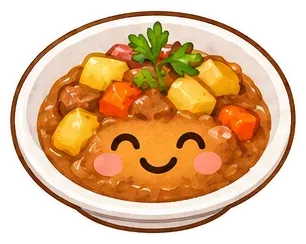
Lapskaus is a thick, warm stew with meat and vegetables, like carrot, swede and potatoes. Everything is cooked soft in broth until it almost melts on your tongue. It is old Norwegian everyday food that warms you up on cold days. Can you find an orange piece of carrot on your spoon?
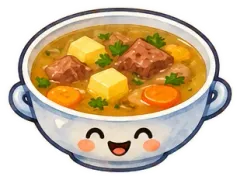
A sailor’s stew
The word lapskaus comes from lobscouse, a stew sailors ate on ships centuries ago, made from whatever was on board: salted meat, potatoes, onions. The same dish lives on in Liverpool as scouse, which is why people from Liverpool are called Scousers. Norway has its own version, and it is ordinary weekday food.
That is a good story to tell a child. This dinner has sailed across the sea.
Everything becomes one
Lapskaus is a pot where everything cooks until it nearly falls apart. Cubed meat, potatoes, carrot, swede and onion, simmered in stock for a long time, until the potatoes half dissolve and thicken the whole thing.
What comes out is warm, soft and mild, and everything looks a bit like everything else.
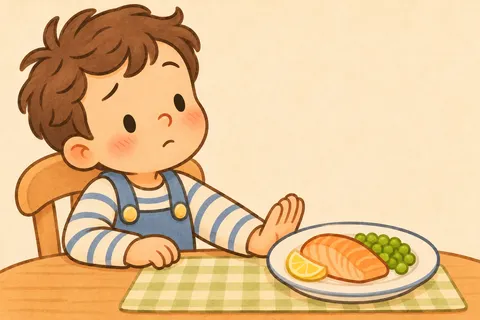
For many adults that is the point. The flavours have become one. For a child it can be the opposite. It is hard to see what is what. A piece that looks like potato might be swede. A piece that looks like meat might be onion. Children who like to know what they are eating often struggle with mixed food, and lapskaus is mixed all the way through.
Find the carrot
The easiest thing in lapskaus is often the carrot. It is orange, so it is easy to spot, and it is soft and sweet after a long simmer.
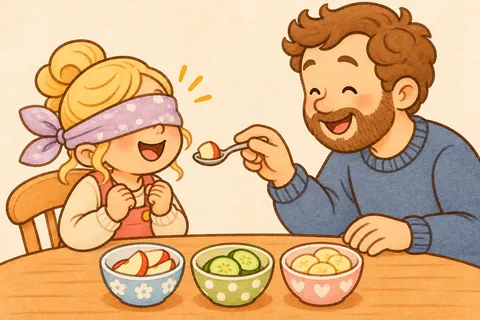
Give your child a spoon and ask: can you find a piece of carrot? They search, they find, maybe they taste. It is a game, and they are looking at the food.
Next time, the potato. Then the meat.
Let them sort
Plenty of children pick lapskaus apart. Meat on one side, potato on the other, carrot by itself. To an adult that can look like playing with food. It isn’t.
A child who separates things sees what is in the pot and gets to know each part. A child who knows what is in their food is braver.
The broth
Lapskaus has plenty of broth, the brown or pale liquid everything cooked in. It tastes of salt, meat and vegetables, and it is the most flavourful part of the pot.
Your child can dip a piece of bread in the broth. It is often easier than a spoonful of the whole stew, and the taste is the same.
Brown and pale
There are two main kinds. Brown lapskaus uses meat browned in the pan first, so the broth is dark and rich. Pale lapskaus simmers the meat without browning, often salted meat, and is lighter and milder.
Every family has its own. Some use leftovers from Sunday dinner. Some add sausage.
With flatbread
Lapskaus is often served with flatbrød, a paper-thin, crisp Norwegian flatbread, plus pickled beetroot or gherkins. The flatbread crunches, and your child can break it into pieces and dunk them.
Pots and pans
Lapskaus is close to Norwegian meat patties, also meat in brown gravy. Pea soup is another thick, warm pot, and potato hash is meat and potato in cubes, fried instead of stewed.
In Mumse your child can find lapskaus among the dinners in Food World and look at it with you before you taste. A piece of carrot from the pot earns a star. About Mumse.
 Flatbread
 Fårikål
 Potato hash
 Lingonberry
 Pickled beetroot