Pea soup
In Sweden plenty of people still have pea soup and pancakes every Thursday. In Norway it's less fixed, but the soup is just as old, and the texture is what children remember.
- Taste
- mild, salty, sweet
- Texture
- grainy, creamy, soft



Read aloud to your child
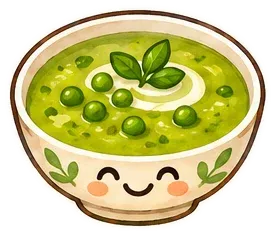
Pea soup is a thick, green or yellow soup made from peas. It tastes mild and a little sweet, and feels soft and slightly grainy on your tongue. In Norway and Sweden it has been everyday food for a very long time. See if you can find a whole pea hiding in there.
Nordic pea soup is yellow or green, and it’s thick. Not thick like tomato soup, but almost like porridge. It stands up on the spoon. And when you taste it, it feels slightly grainy on the tongue, as if it were made of sand that had melted.
That texture is what many children react to. The taste is mild, a little sweet and salty. But the tongue notices it isn’t a smooth soup.
Yellow peas
The old Norwegian and Swedish pea soup is made from dried yellow peas. They’re soaked overnight and simmered for hours until they fall apart into a thick soup. Usually a piece of lightly salted pork, bacon or a sausage cooks with it, along with onion and carrot. It’s seasoned with salt, pepper and sometimes thyme.
It’s one of the oldest everyday dishes in the Nordics. Dried peas kept all winter, and the soup was cheap and filling.
In Sweden, pea soup and pancakes on Thursdays is an old tradition. It lives on in schools, the armed forces and many homes. Soup first, then pancakes with jam and cream. That’s a good story to tell a child: in some places pancakes are what comes after pea soup.

Green pea soup
There’s also a green pea soup, made from frozen green peas. It’s smoother, sweeter and fresher. For a child who likes peas from the freezer, the green one is often easier than the yellow. It can be a way in.
Sausage first
Plenty of children start with what’s in the soup, not the soup itself. Pieces of sausage. Bits of pork. Carrot. Fish out a piece of sausage with the spoon. It has been sitting in the soup and tastes a little of it. Your child has tasted pea soup without taking a spoonful.
The next spoon can have a piece of sausage and a little soup. Then a little more soup.
Smooth or coarse
If it’s the graininess your child dislikes, blend the soup completely smooth with a stick blender. It turns creamy and even, more like a thick sauce. Many children who won’t have it coarse will eat it smooth.
You can also go the other way. Some children like finding a whole pea that survived the cooking. It’s soft and almost melts. Who can find the most?
Bread and butter
Pea soup is usually eaten with wholemeal bread, which is good for dipping. For an uncertain child, the bread is something familiar to hold. A dipped corner is enough for today.
A knob of butter melting into the soup is an old habit too. It makes the soup milder and smoother.
Relatives
Mushy peas, the green mash served with British fish and chips, are a distant cousin of pea soup. Indian dal, made from lentils or split peas, is another. All over the world people have cooked dried pulses into a thick, warm soup. Lentil soup is close, in taste and texture.
Thursday or not
A piece of sausage fished out of the soup is a real tasting, and a star in Mumse. If there are pancakes afterwards, it’s a good day either way.
 Pancakes
 Norwegian beef soup
 Lentil soup
 Flatbread
 Bacon
 Meat and potato stew