Fish and chips
The fish in British fish and chips has often swum in the seas off Norway. A good thing to know when your child wonders what's inside the batter.
- Taste
- salty, mild, tangy
- Texture
- crunchy, soft





Read aloud to your child
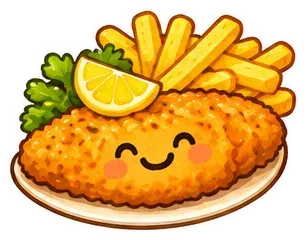
Fish and chips is fish in a crispy, golden coat, served with thick fries. It comes from England, and many people eat it outside from a paper bag with a little salt and vinegar. The fish is white and soft inside. Listen to the crunch when you bite into the coat.
Fish and chips is one of the few dishes where a child nearly always says yes to half of it. Chips are familiar. The question is what happens with the fish.
In Britain fish and chips is an everyday dish from the chippy. The fish is dipped in thick batter and deep-fried until the coat is golden and puffed, with fat, soft chips alongside. It used to be wrapped in newspaper. Today it’s plain paper, but it’s still often eaten outside, on a bench by the sea, straight from the paper with fingers or a little wooden fork.
Under the batter
The batter is what makes this easy. It’s crisp, salty and crunches loudly. Plenty of children eat the batter and leave the fish. That’s a good start, and no reason to step in.
Break a piece of fish open together. Inside it’s white and moist, falling apart in big, glossy flakes. It steams. Show your child the flakes. Fish flakes in a way almost no other food does, and it can be fun to see how easily it comes apart.
Then there’s the smell. Fried fish smells stronger than it tastes. Many children react to the smell before they get anywhere near the flavour, and it’s worth saying out loud: “It smells big, but it tastes mild.”

Cod from the north
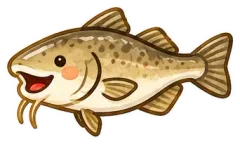
Much of the cod in British fish and chips is caught in the Barents Sea, where Norwegian and Russian boats fish, or around Iceland. So the fish a child eats at a seaside chippy in England may well come from the same sea as the cod served with boiled potatoes at a Norwegian dinner table. That can be a handy bridge: “This might be cod from our sea, wearing a coat.”
Haddock is the other common choice, and it’s milder still.
Salt, vinegar and mushy peas
The British shake on salt and malt vinegar, which is brown and sour. Vinegar can be too much for a child. Let it wait. A bite without first, and then your child can try one chip with vinegar, if they want. Sour can be its own small challenge.
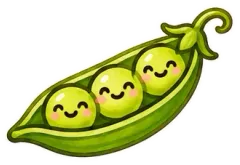
On the side there are often mushy peas, a green mash of cooked marrowfat peas. They look odd but taste sweet and mild. For a child who likes pea soup, they’re not far away. Tartare sauce and ketchup are usually on the table too.
Make it at home
Homemade fish and chips is easier than it sounds. Cut cod fillet into large pieces, dip them in a batter of flour and cold sparkling water, and fry them in hot oil until golden. Oven chips will do on the side. Your child can roll the fish in flour before the batter and watch it get its coat.
Fish with a crisp outside is familiar from plenty of everyday Nordic food. Fish fingers and fried Norwegian fish cakes are close relatives. If those go down well, fish and chips is a natural next step.
Just the batter
If your child only ate the batter today, there was still fish on the tongue. In Mumse that earns the star.
 Fish fingers
 Chips
 Cod
 Peas
 Fish taco
 Saithe