Pancakes
Pancakes are a yes-food in most homes. That makes them a good wrapping for something new, as long as your child knows what is in there.
- Taste
- mild, sweet
- Texture
- soft, chewy



Read aloud to your child
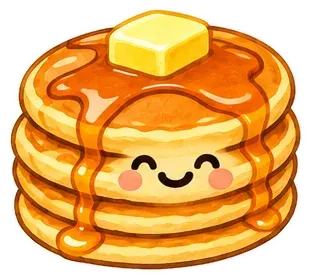
Pancakes are thin, round and golden, and you can roll them up like a tiny blanket. They are made from eggs, milk and flour, fried in a hot pan. Feel how soft and a little chewy they are. Many people eat them with sugar, jam or berries. Did you know a cook can toss the pancake into the air and flip it?
In plenty of Norwegian homes, one dinner a week is pancakes. Not pudding: dinner. With blueberry jam and sugar, or with strips of bacon fried right into the batter. Hardly anyone says no.
Why pancakes are easy
Norwegian pancakes are thin and wide, made from egg, milk and flour. They are golden and soft with slightly crisp edges, and they taste mildly of egg and butter. A little chewy, but not hard work.
They are also predictable. A pancake looks like a pancake and tastes like last time. For a child who is unsure about food, that is worth a great deal.
Which is why this page is mostly about the pancake as a way to something else.

Roll something new inside
A pancake can be rolled around almost anything, like a small blanket. Your child sees what goes in and decides how much.
Jam and berries. Blueberries are the Norwegian favourite. Blueberry jam is sweet; whole berries are tart and pop. A child who eats the jam can try one whole berry.
Ham and cheese. A pancake with ham and cheese is an ordinary lunch in many homes. The pancake is familiar; the ham is a guest.
Something green. Spinach, broccoli, grated courgette. A pancake with spinach in the batter turns green. That is no secret, and it tastes almost like a normal pancake.
What matters is that your child knows what is inside. A pancake that hides things teaches a child not to trust pancakes.
Cook them together
Pancakes are good to make together. Your child can crack the eggs, pour the milk and whisk. Frying needs an adult at the hob, but your child can watch the batter set and bubble and say when to flip. The first one always comes out odd. That one can be theirs.
Chefs in films toss pancakes into the air. With a small pan and a thin pancake it is possible. So is getting one on the ceiling.
Thin and thick
Norwegian pancakes are thin. The thick ones, lapper, are smaller and slightly sweeter. American pancakes are thick and fluffy with baking powder. French crêpes are thinner still.
A child who likes one kind can try another. Nearly the same batter, a different feeling in the mouth.
Soup and pancakes
In Sweden there is an old tradition of yellow pea soup for dinner on Thursdays, with pancakes afterwards. The soup is thick and tastes of peas, and the pancakes follow on the same evening, every week.
It is worth noticing how that works. Nobody says “eat your soup and you get pancakes”. They simply belong together, and the child knows both are coming. It is easier to taste something new next to something familiar than when the familiar thing is a prize.
If your child doesn’t like pancakes
Some children don’t. It is often the chewiness, or the smell of egg. Thin, crisp pancakes taste less eggy than thick soft ones. Try one cooked a little longer.
Thin breads from other places
Pancakes are a good bridge to French crêpes, and to other thin, round breads such as lefse and the tortilla. A child who rolls pancakes can roll those too.
Pancakes are on the bread and baking shelf in Mumse. A child who tastes something new rolled inside a pancake earns a star for the new thing. More about Mumse.
 Waffle
 Crepe
 Blueberry
 Pea soup
 Bacon
 Bread with jam