Crepe
Most children say yes to a crepe with chocolate. The interesting part starts when the pancake gets egg, cheese and ham instead.
- Taste
- sweet, mild, salty
- Texture
- soft, crunchy



Read aloud to your child
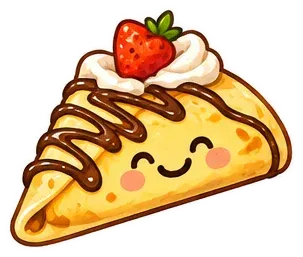
A crepe is a thin, soft pancake from France, cooked in a hot pan. It can be folded or rolled with something sweet inside, like chocolate or jam. The edge is a little crisp and the middle is soft and warm. Did you know crêpe is just the French word for pancake?
This is not the food children hesitate over most. A chocolate crepe from a stall in Paris, or jam on a Sunday at home, is hard to refuse. For a Norwegian child raised on thin pancakes with blueberry jam, a French crepe is very nearly the same thing.
So why write about it? Because a crepe makes an unusually good wrapper. It’s thin, mild and familiar, and it folds around almost anything.
Sweet and savoury
France has two kinds. The sweet crepe is made with wheat flour, pale and soft, and filled with butter and sugar, jam, chocolate spread, banana or lemon. The savoury one is a galette, from Brittany in the north-west, made with buckwheat flour. It’s darker with a slightly nutty flavour, and it’s filled with egg, cheese and ham, folded so the yolk sits in the middle like a window.
The galette is the brave step. It looks like a pancake but tastes like dinner. Plenty of children find that odd. Pancakes are meant to be sweet.

Sweet to savoury, one step at a time
Make crepes at home and put the fillings in bowls. Let your child choose the first one from the familiar: jam, sugar or banana. Then the next:
Try one with only grated cheese, melting inside. Cheese and pancake isn’t far from cheese on bread.
Then one with cheese and a slice of ham, which your child knows from sandwiches.
Finally one with egg. Crack it straight onto the crepe in the pan, let it set, and fold the edges in so the yolk shows. That’s the galette way. Your child can decide whether the yolk is soft or firm.
None of these steps has to happen on the same day. Crepes are good for weekends, again and again, and each time there can be one new thing in the bowls.
Flip it
In France, 2 February is Chandeleur, Candlemas, and that’s crepe day. An old custom says you flip the first crepe with the pan in one hand and a coin in the other. If it lands back in the pan, you’ll have luck for the rest of the year.
Children love trying. Let the crepe be nearly done and not too big, and keep your hand over theirs on the handle. It doesn’t always work. But a crepe that has flown and landed on the hob is a crepe your child will want to taste anyway.
Thin as paper
What makes a crepe special is how thin it is. The batter is runnier than for ordinary pancakes, and it cooks fast in a wide, flat pan. The edge goes crisp and lacy, the middle stays soft. Hold one up to the window. Can you see light through it?
A little game like that is enough to get a child really looking at the food, which is most of the point.
From crepes to other things
A child who likes crepes is close to other thin, soft breads with something inside. A tortilla or a quesadilla isn’t so different. And a filling of strawberries with a little crème fraîche is a nice way to taste berries that usually get left on the plate.
The first one with egg
A sweet crepe is rarely brave. The first one with egg and cheese might be. In Mumse your child chooses the thumb, and the star comes either way.
 Pancakes
 Waffle
 Lemon juice
 Omelette
 Lefse
 Grilled banana with chocolate