Bread with liver pâté
Plenty of Norwegian children love liver pâté until they work out what the word means. That is still no reason to hide it from them.
- Taste
- mild, salty, savoury
- Texture
- creamy, smooth, soft




Read aloud to your child
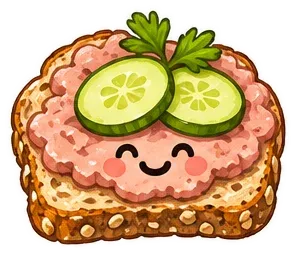
Liver pâté is a soft, smooth spread that goes on the slice of bread. It is light brown and tastes mild and a little salty. Many people put a slice of cucumber on top for something crunchy. Feel how easily it spreads. Liver pâté is a common lunchbox topping in Norway.
The taste comes first
Norwegian leverpostei is brown, soft and smooth. It spreads easily, and it tastes mild, slightly salty and gently spiced, with a full, round flavour at the back of the mouth. It is not strong and it is not bitter. For many Norwegian children it is one of the first things they have on bread, simply because it is soft and easy to swallow.
It has been in Norwegian lunchboxes for generations. The Norwegian lunch is a packed one, a few open sandwiches wrapped in paper, and liver pâté on wholemeal bread is one of the most common things in it.

Then comes the word
Leverpostei means what it says: pâté made from liver. Usually pork liver, finely ground with fat, flour and milk, seasoned and baked in a tin.
Plenty of children eat it for years and then suddenly stop. They have heard the word liver somewhere and worked out it is part of an animal. That can be enough to make a familiar taste feel strange.
It is tempting to say nothing, or to call it “the brown spread”. But children notice when they have been fooled, and it makes food harder to trust later on. Say it as it is. Liver is part of the pig, the same way ham is part of the pig. It has been ground and baked into something you can spread.
Some children need time with this. The pâté can sit on the table for weeks without being eaten and still become more familiar.
Cucumber on top
Liver pâté on its own is very soft. A slice of cucumber on top adds something cold and crunchy to chew, and its freshness suits the rich spread. Many Norwegians never eat it without.
Gherkins and pickled beetroot are common too. Beetroot stains the edges of the pâté pink, and the sharpness gives each bite an edge. A child who likes pickles can use them as a way in.
Let them spread it
Liver pâté is the easiest topping there is to spread. Give your child a butter knife and let them make their own. Thick or thin, to the edges or just in the middle. It is their slice.
A thin layer tastes of less. A thick one tastes of more. Your child can try both and say what they notice.
Warm pâté
In Denmark liver pâté is often eaten warm, straight from the oven, topped with bacon and mushrooms. It has caught on in Norway too. Warm pâté is softer, smells stronger and tastes more spiced. It is almost a different food, and might suit a child who finds the cold version dull.
When the answer is no
If your child won’t have liver pâté, it can still sit on the table. It doesn’t need to go on their bread. They can sniff it, look at the colour, or just watch other people eat it. That counts too. There is more on this in when they say no.
It is common for a child to eat liver pâté happily, find out what it is, and refuse it for months. Many come back to it on a day when they are hungry after a long time outdoors, without anyone saying a word. Best not to say one then either.
From the pig to brown cheese
Liver pâté sits next to ham among the toppings. Both come from the pig, and both are mild. The next slice could just as well be brown cheese, which is sweet and nothing alike.
Bread with liver pâté is on the breakfast shelf in Mumse. Your child earns a star for tasting it, even after they know what liver is. Read about Mumse.
 Pickled gherkin
 Packed lunch
 Pickled beetroot
 Bread with mackerel in tomato sauce
 Bacon
 Smørrebrød