Smørrebrød
Norwegian children already know the main thing about smørrebrød. They eat open sandwiches almost every day. The Danes have simply turned it into something you decorate.
- Taste
- salty, tangy, mild
- Texture
- grainy, soft, juicy



Read aloud to your child
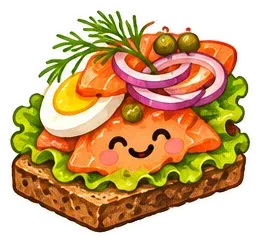
Smørrebrød are Denmark's pretty open sandwiches, often on dark rye bread, decorated with things like shrimp, egg, herring, cold meats or cucumber. Each slice is like a little work of art. People often eat them with a knife and fork. What would you put on your own slice?
In Norway, a packed lunch is a stack of open sandwiches: a slice of bread, butter, something on top, and a sheet of paper between each one. Children eat them nearly every day. That’s worth remembering, because it means smørrebrød is mostly familiar.
The word means butter and bread. In Denmark it covers every open sandwich, from a plain slice with liver pâté to the tall, decorated ones you get for lunch in a restaurant. Those decorated ones are where children tend to stop.
The bread is different
Smørrebrød is usually made on Danish rye bread. It’s dense, dark and moist, often full of whole grains, and it tastes a little sour. It’s heavier than most bread children know, and the slices are thin because the loaf is so compact.
That can be the first new thing. Give your child a piece of rye with just butter and ask what it feels like. It’s softer than it looks, and the grains have a bit of bite. If they like wholemeal bread, it isn’t far off.

Liver pâté, Danish style
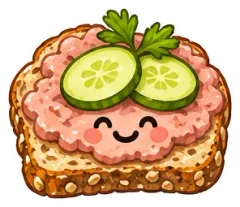
The classic Danish liver pâté sandwich has pickled beetroot or pickled cucumber on top. In a restaurant the pâté is often served warm. For a Norwegian child who eats bread with liver pâté in their lunchbox, it’s the same topping in new clothes.
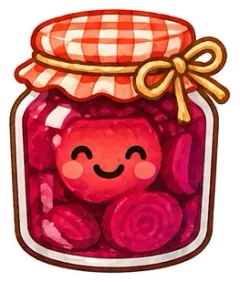
The beetroot is the new bit. It’s deep purple, sweet and sour at once, and it stains the bread. Put a slice of pickled beetroot to one side so your child can taste it alone before it lands on the bread.
Egg and prawns
Another classic is egg and prawns: slices of boiled egg and a heap of prawns, often with mayonnaise and a little dill or lemon. Children who like prawns will know most of this. The only new thing is that it’s all on one slice.
There are lots of others. Herring, roast beef with remoulade and crispy onions, warm fried fish fillet, roast pork with red cabbage. Some are probably for the adults. Leave those be.
Build your own
Smørrebrød makes a good game at home, because it’s about making something look nice. Put out rye or wholemeal bread and a few bowls of toppings: sliced egg, prawns, liver pâté, cucumber, beetroot, cress, tomato. Let your child build and decorate their own slice.
Mumse asks what your child would put on their own slice. That’s a good question to bring to the table. A child who decorated a slice with beetroot because the colour was nice wants to see how it tastes. Sometimes they take one bite and put the rest down. That’s a tasting too.
Knife and fork
The decorated kind is usually eaten with a knife and fork. That can be fun for a child used to holding a sandwich in their hand. An ordinary slice becomes a bit of an occasion, and on a Saturday lunchtime that might be enough to get them to try something they’d normally refuse.
On a trip to Copenhagen, smørrebrød is on plenty of menus. It’s a good chance to taste while your child still finds it exciting to be somewhere new.
From lunchbox to smørrebrød
In Food World in Mumse, smørrebrød is under Europe. Read the passage aloud and ask your child what they’d put on their slice. The answer might become next Saturday’s lunch.
 Bread with liver pâté
 Danish pastry
 Pickled beetroot
 Bruschetta
 Bread with mackerel in tomato sauce
 Mayonnaise