Mayonnaise
Mayonnaise tastes of very little that is strong. Mild, a bit tangy, a bit salty. For many children it is the feel of it, thick, rich and smooth, that decides.
- Taste
- mild, tangy
- Texture
- creamy, smooth



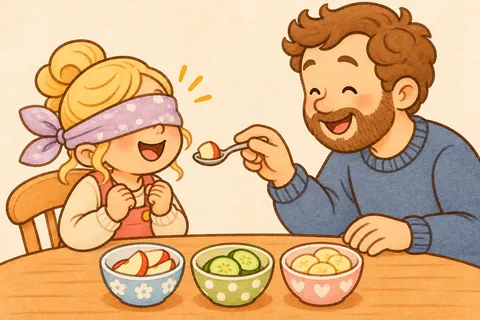
Read aloud to your child
Mayonnaise is a soft, pale, creamy sauce made from egg and oil whisked together until thick. It tastes mild and a little tangy, and feels smooth on your tongue. People dip chips in it or spread it on bread. It was invented a long time ago in Europe.
Whisk egg yolk and oil together slowly, and something happens that feels like a small magic trick. The oil breaks into tiny droplets held in the yolk, and two runny things turn into a thick, glossy, white sauce that stands up in peaks on the spoon. Add a little vinegar or lemon, salt and often mustard, and that is mayonnaise.
A disputed name
Mayonnaise is counted as French, but no one knows for sure where it began. A well-known story says the name comes from Mahón on Menorca, which the French captured in 1756. Many on Menorca say the sauce was there first. Other explanations point to old French words. In print, the word first turns up in the early 1800s.
In Norway it is an old friend. It sits in a squeeze tube in the fridge door, it is the base of remoulade and potato salad, and it belongs on an open prawn sandwich.
The taste is not the problem
When children refuse mayonnaise, it is often not the taste they are refusing. Mayonnaise is mild, a little sharp, a little salty. It is the texture. It is thick and rich, it coats the mouth and lingers a moment. It is white, and it can look like something other than food.
Saying that out loud helps. It does not taste strong. It just feels different.
A dot on something familiar
The easiest way in is a dot on something your child already likes. Chips are the obvious choice. In much of Europe, especially Belgium and the Netherlands, chips are dipped in mayonnaise as readily as in ketchup.
Squeeze a tiny dot onto the plate. Your child dips one chip at the very edge, so there is only a little on the tip. How did that feel? How did it taste? Next time the dip can go a bit deeper.
A slice of boiled egg with a dot of mayonnaise is another route. Egg on egg, and the flavours already know each other.
Mayonnaise and ketchup
A child who likes ketchup may enjoy a dot of each side by side on the plate. Red and white. Which is sweeter? Which is thicker? What happens if you stir them together? The pink sauce that comes out is not far from the one used in some prawn cocktails.
That is a tasting game, and it works because it is not about liking anything, only about looking and noticing. There are more ideas like it in tasting games.
Further on
Once mayonnaise is familiar, a lot opens up. Prawns on bread with mayonnaise and lemon. Potato salad. Danish smørrebrød, where mayonnaise and remoulade turn up on several of the toppings. It does not matter whether your child comes to love mayonnaise. A child who has tasted it simply has one thing fewer that feels strange.
A dot on a chip
A dot on the tip of a chip is a taste. In Mumse it earns a star, whatever your child thought of it.
 Ketchup
 Tuna
 Mustard
 Fish and chips
 Chicken burger
 Smørrebrød