Mustard
A yellow line on a hot dog or a brown dab beside the Christmas pork. Mustard comes in many strengths, and a child cannot tell in advance which one they are getting.
- Taste
- tangy, spicy
- Texture
- smooth, creamy


Read aloud to your child
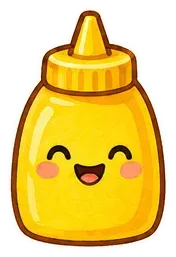
Mustard is a yellow or brown sauce made from tiny mustard seeds. It tastes sharp and a little tangy, so just a small dab is enough. Many people have it on a hot dog. Try just a tiny taste first, because it can tickle your nose.
Norwegian children usually meet mustard on a hot dog. A sausage wrapped in a soft potato flatbread, with a squiggle of sweet yellow mustard and ketchup, is the standard food at football matches and on Constitution Day. That mustard is mild and sugary, and most children barely notice it. The trouble starts with the next jar.
One seed, a dozen strengths
Mustard is made from small round seeds of a plant in the cabbage family. The seeds are crushed or ground and mixed with vinegar, water, salt and often sugar. Yellow mustard gets its colour from turmeric.
Strength varies enormously. Scandinavian hot dog mustard is sweet and round. Dijon is smooth and sharp. Wholegrain has whole seeds that pop between the teeth. English mustard, the bright yellow powder or jar, is the hottest of the common ones. The sweet brown mustard Norwegians eat with Christmas pork sits somewhere in the middle. For a child, a dab of each is a very different experience.
It goes up, not in
What makes mustard unusual is where the heat lands. Chilli burns on the tongue and stays there. Mustard shoots up into the nose, prickles for a few seconds and disappears. Crushed mustard seeds release a compound that evaporates and travels upwards. Horseradish and wasabi work the same way.
That is useful to know when your child reacts. It stings, but it passes quickly. Tell them beforehand that mustard can tickle your nose and that this is part of the fun. A child who is expecting a fizzy feeling is far less alarmed than one who is caught off guard.
A dot at a time
Start with the mildest mustard you have. Squeeze a tiny dot onto a plate rather than onto their food. Let your child dip a fingertip or a piece of bread. A dot the size of a grain of rice is a real taste.
Older children often enjoy a little line-up: yellow, wholegrain and brown side by side. Look at them, smell them, perhaps taste the mildest. Which one has whole seeds? Which smells strongest? It turns mustard into something to look at and talk about, rather than something that just happens to you.
Never sneak mustard onto a hot dog for a child who did not ask for it. A nasty surprise can stick for a long time and make the next voluntary try much harder.
Once it is familiar
Mustard belongs with hot dogs, and with burgers and pickled gherkins, which share the same sharp, tangy edge. If your child likes the tingle, ginger is another sharp taste that does something quite different in the mouth. It usually takes several goes, and how many times explains why.
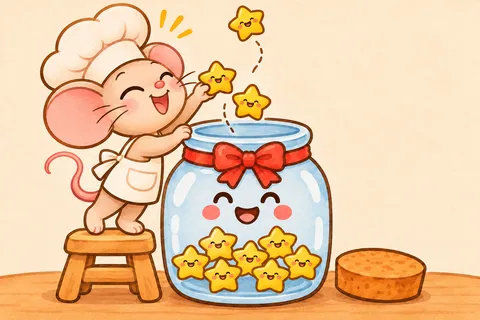
A dot on a fingertip is a taste too. In Mumse it puts a star in the jar, and after five tastes mustard turns into gold food.
 Ketchup
 Sausage
 Mayonnaise
 Lompe
 Pickled gherkin
 Sausage and mash