Ginger
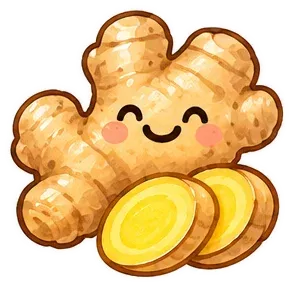
A knobbly, pale brown root that is yellow and fibrous inside. It smells fresh and tastes sharp, and it tingles on the tongue. Many children have eaten it in gingerbread without knowing.
- Taste
- spicy, sweet
- Texture
- stringy, juicy




Read aloud to your child
Ginger is a knobbly, light brown root that is yellow inside. It smells fresh and tastes sharp and a little warm, so it tingles on your tongue. It grows in warm countries and is used in both baking and cooking. Feel the root, it looks like a little hand with lots of fingers.
There is a good chance your child has already eaten ginger. It is in gingerbread. It gives those biscuits their warm, slightly sharp taste behind the sugar and syrup. That is a good place to start, because it means ginger is not completely new.
A root that looks like a hand
Ginger is the underground stem of a plant that grows in warm countries. It is knobbly and pale brown, with little bumps branching off to the sides. Lots of children think it looks like a hand with too many fingers. Inside it is pale yellow, juicy and fibrous.
Peel a piece with the edge of a teaspoon. It is easy and a good job for a child. Smell the peeled piece. It smells fresh, almost lemony, and sharp.
Many forms
Ginger comes in many forms, and each tastes different. Dried ground ginger is warm and goes into gingerbread and cakes, where sugar and syrup soften it. Fresh ginger is sharp and juicy and goes into stir-fries, soups and tea. Pickled ginger is pink, sweet and tangy and sits beside sushi. Ginger beer and ginger shots are strong and catch the back of the nose.
That makes ginger a good flavour to take in steps. From the mild dried kind in a biscuit to the sharp fresh piece is a long way, but there are plenty of stops along the route.

From gingerbread to a fresh piece
Start with the biscuit. In Norway, December means pepperkaker, thin gingerbread biscuits that children cut out and decorate. Tell your child there is ginger in them, and show the jar of ground ginger. Smell the powder. Then make a mild ginger tea with a few thin slices of fresh ginger in hot water, cooled to lukewarm. It tastes a little warm and a little sweet.
The next step might be the pink pickled ginger from sushi. It is sweet and tangy and much milder than fresh. And finally a tiny piece of fresh ginger. It tingles on the tongue and may make your child gasp. It passes quickly.
Tingling, not burning
Ginger is sharp, but not like chilli. It tingles and warms, and the feeling fades within seconds. Chilli burns and lingers. That is useful to explain to a child who tried chilli and got a fright. Ginger is a different kind of heat.
The fibres in fresh ginger can be a problem. They lodge between the teeth and are tough to chew. Grate the ginger finely and most of them disappear.
Other sharp tastes
Maki sushi often comes with the pink ginger on the side. Tea with ginger is a gentle place to begin. Chilli has a different kind of heat, and mustard tickles the nose in yet another way.
A small gasp after a piece of fresh ginger earns a star in Mumse.
 Maki sushi
 Tea
 Nigiri
 Chilli
 Hot blackcurrant