Maki sushi
A piece of maki is three tastes in one: mild rice, chewy seaweed and something in the middle. Your child doesn't have to take on all three at once.
- Taste
- mild, tangy, salty
- Texture
- chewy, soft, smooth



Read aloud to your child
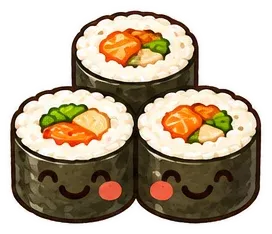
Maki sushi is a roll of rice wrapped in a thin, dark sheet of seaweed, with filling in the middle. It comes from Japan. The roll is cut into neat round pieces, so you can see the filling like a little picture in the centre. The rice is sticky and a bit chewy, and the filling can be cucumber, salmon or avocado.
Look at a piece of maki from the side and it’s a round slice with a little picture in the middle. A green strip of cucumber, an orange patch of salmon, a yellow square of omelette. Around the picture is white rice, and right at the edge a thin, dark ring. That ring is what children wonder about.
Maki means roll in Japanese. The rice is cooked and seasoned with a little rice vinegar, sugar and salt, then rolled around the filling in a sheet of dried seaweed called nori. The roll is cut into pieces sized for one adult mouthful. For a child, that’s often two.
The seaweed is the odd bit
The rice is rarely the issue. It’s mild and a bit sticky, with a faint sweet and sour edge. The filling can be chosen. But the seaweed is completely new. Straight from the packet it’s dry and crisp; after sitting against damp rice it turns chewy, almost rubbery. It tastes of the sea and salt. And it’s black, which very little food is.
So plenty of children want to take the piece apart. That’s a good idea, not a problem.
Taste it in parts
Take a piece and unroll it together. Rice in one pile, filling in another, seaweed on its own. That’s three small tastings on the plate.
Start with the rice, because it’s familiar. Then the filling, ideally one your child picked. The seaweed last: tear off a small bit, put it on the tongue and feel it go soft. Ask what it reminds them of. The answer is often “the sea” or “swimming”, which is exactly right.
If you have a packet of nori in the cupboard, a dry sheet is a different thing altogether. It crackles like a crisp and melts on the tongue. Some children enjoy dry nori as a snack long before they’ll accept it round a piece of sushi.
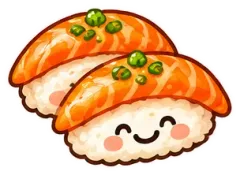
Fillings that are easy to say yes to
Not all sushi is raw fish. A typical sushi platter in Norway has maki with cucumber, avocado or cooked prawns, and tamago, a sweet, thick omelette. Cooked salmon and chicken turn up too. On raw fish and young children, follow your national food safety advice and ask your health visitor.
Wasabi and pink pickled ginger come on the same platter. Wasabi is very hot; the ginger is sour and sharp. Leave them until your child asks, and feel free to mention that plenty of adults can’t handle much wasabi either.
Salmon from Norway
Salmon sushi is so common now that it’s easy to assume it was always there. It wasn’t. For a long time salmon wasn’t eaten raw in Japan. That changed in the 1980s and 90s, when Norwegian salmon farmers and exporters persuaded Japanese chefs to try farmed Norwegian salmon in sushi. Today salmon is one of the most common sushi fish in the world, which is a nice thing for a Nordic child to know about the orange bit in the middle.
Roll your own
Homemade sushi is messy and fun. Cook sushi rice, let it cool to lukewarm, and put a sheet of nori on a bamboo mat or a piece of baking paper. Your child spreads the rice with damp fingers, lays a strip of filling and rolls. The rolls are rarely tidy. But when you slice them the picture appears, and for a child who placed the cucumber strip, that’s a small piece of magic.
Chopsticks are fun, and fingers are fine. In Japan it’s perfectly normal to eat sushi with your fingers.
Read about the roll first
In Food World in Mumse, maki sushi sits under Asia, next to ramen and dumplings. Read the short passage about the roll aloud together before you go out. A bit of seaweed on its own counts as a tasting.
 Soy sauce
 Salmon
 Miso soup
 Sesame seeds
 Tuna