Nigiri
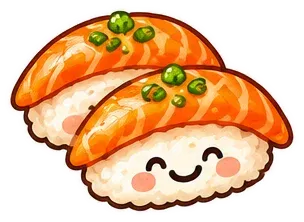
Nigiri is sushi without the seaweed wrapper. Just an oval of rice shaped by hand, with a slice of something on top. You can see exactly what you're eating.
- Taste
- mild, tangy, savoury
- Texture
- smooth, soft, grainy



Read aloud to your child
Nigiri is a small, oval ball of rice with a thin slice of fish or something else on top. It comes from Japan. The rice is sticky and holds together nicely, and the slice on top is smooth and soft. It is made to be eaten in one bite. Try lifting it gently.
The word nigiri comes from a Japanese verb meaning to grip or squeeze in the hand. That’s what the chef does: takes a little rice, presses it into a small oval, and lays a slice on top. The whole thing is meant to be one adult mouthful.
That makes nigiri simpler than people think. There’s no roll to puzzle over and nothing hidden inside. Your child can see the rice and see the topping.
Street food from Tokyo
Nigiri as we know it took off in Edo, today’s Tokyo, in the 1800s. It was sold from small stalls as quick food you ate standing up. Before that, sushi was often pressed in moulds and left to sit. Nigiri was the new thing: made on the spot and eaten straight away.
That’s worth telling a child who thinks sushi is something grand. Nigiri started out as something you bought in the street.

What goes on top
On a Norwegian sushi platter, salmon is the most common topping. But nigiri comes with plenty of other things:
- Cooked prawn, laid flat and opened out like a butterfly. Sweet and firm, and the same prawn your child may know from a bowl of shell-on prawns, just arranged differently.
- Tamago, a thick, sweet omelette, often held in place with a thin strip of seaweed. Yellow, soft and almost like pudding.
- Avocado, slices of soft green avocado. Mild and creamy.
On raw fish: young children cope less well with food-borne infections than adults, so ask your health visitor before the little ones try raw salmon or tuna. Prawn, omelette and avocado are a good place to start either way.
The rice is half of it
Sushi rice is cooked and seasoned with rice vinegar, sugar and salt. It’s sticky, a bit sweet and a bit sour. Under a piece of nigiri it’s lukewarm or room temperature, not hot.
Plenty of children who are wary of the topping like the rice. Start there. Lift the topping off and let your child taste the rice on its own. Then the topping on its own. Then, if they want, both together. Three tastings from one piece.
Soy sauce and green blobs
Lots of people dip nigiri in soy sauce. If you do, here’s the trick: turn the piece over and dip the topping, not the rice. Rice soaks up the sauce and crumbles. For a child who likes getting things right, that’s a nice challenge.
Between the rice and the fish there’s often a dab of wasabi. It’s hot. Order pieces without it, or scrape it off together. The pink ginger on the side is sour and sharp and can wait.
Make your own
Nigiri is easier to make at home than maki, because nothing needs rolling. Cook sushi rice and let it cool to lukewarm. Wet your hands, take a small lump of rice and squeeze it gently into an oval. Top it with a cooked prawn, a strip of omelette or a slice of avocado.
The pieces will be uneven. Some will fall apart. That’s part of it. A child who shaped their own rice is usually curious how it tastes.
A piece at a time
Nigiri sits under Asia in Food World in Mumse. Read the passage aloud together before you have sushi, and let your child choose the topping. If they only taste the rice this time, that’s a star too.
 Maki sushi
 Salmon
 Soy sauce
 Prawns
 Miso soup
 Tuna