Salmon
"Why is it pink?" is a good question to start with. Salmon is often the first fish children get curious about, because it doesn't look like fish. It's mild, soft and has hardly any bones.
- Taste
- mild, savoury
- Texture
- soft, juicy


Read aloud to your child
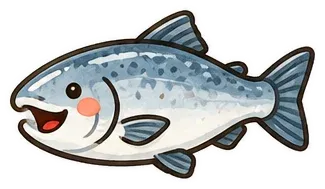
Salmon swim in the sea, but go up rivers to lay their eggs. They can even leap over little waterfalls. The inside is pink or orange, and the flesh is soft with a mild, rich flavour. Feel how it falls apart in big flakes.
Pink, not grey
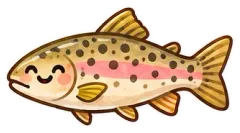
Lots of children think they don’t like fish. Often they’ve met a white boiled fish with bones that smelled strongly. Salmon is something else. It’s pink or orange, with pale stripes across it. It barely smells when fresh. And when you push a fork into a cooked piece, it falls apart into big, soft flakes.
The colour comes from what salmon eat. Wild salmon eat tiny crustaceans with a red pigment in them. Farmed salmon get the same pigment in their feed. That’s an easy explanation for a child, and it makes the fish less strange: salmon are pink from their dinner.
What makes children wary
With fish it’s rarely the taste children react to first. It’s the smell, the thought of bones, and the fact that fish was an animal with eyes. Salmon has an advantage on all three:
- The smell is mild, especially pan-fried or oven-baked. Boiled fish smells more.
- The bones are few. There’s a row of small pin bones along the middle of the fillet, easy to feel and pull out.
- The fillet doesn’t look like a fish. It looks like a pink piece of something.
The taste is mild and rich, almost buttery. Salted and pan-fried, it gets bolder.
From dish to mouth
There’s a lot you can do with a piece of salmon before anyone tastes it:
- Look at the stripes. The pale lines are fat. Count them.
- Cook it together. Let your child put the salmon in the dish, sprinkle the salt and lay lemon slices on top.
- Poke the flakes. Once it’s cooked, your child can split it into flakes with a fork.
- One flake on the tongue. Just one. Let it sit a moment before chewing.
- A flake on a piece of potato. With something they like, but so they know what they’re tasting.
Some children prefer the crispy skin. Fry the salmon skin side down until the skin is golden and crisp. It crunches like a crisp.
Smoked, cured and raw
Smoked salmon on bread and gravlaks with mustard sauce are Norwegian classics. They’re saltier and stronger than cooked salmon, and the texture is silky. Lots of children find them too much at first.
Salmon is also eaten raw in sushi. Gravlaks, cold-smoked salmon and raw salmon aren’t cooked, and your health visitor can tell you what suits young children. Cooked salmon is the easiest start anyway.
Salmon in Norway
Norway produces more salmon than any other country, and most of the fish farms sit along the coast from the far south to the far north. Salmon is an ordinary weeknight dinner for many families, often oven-baked with potatoes, cucumber salad and a spoonful of sour cream. It also goes into tacos, stir-fries and onto pizza.
A salmon is born in a river, swims out to sea, and years later comes back to the very same river to spawn. It finds the way by smell: every river smells slightly different. Children love that story.
When your child says no to fish
Start with fish your child knows. If they like fish cakes, salmon is a small step further. Don’t mention bones or smell before your child does. And let salmon come back another week, perhaps cooked a different way.
In Mumse one brave flake earns a star, however it tasted. The passage about salmon leaping up waterfalls is often enough to make a child look a little closer.
 Nigiri
 Dill
 Saithe
 Lemon juice
 Potato