Dill
Dill is the herb of a Norwegian summer. It goes on prawns, new potatoes and salmon. It's feathery and green, and for some children that's exactly the problem: it tickles the tongue.
- Taste
- mild, sweet
- Texture
- soft, stringy



Read aloud to your child
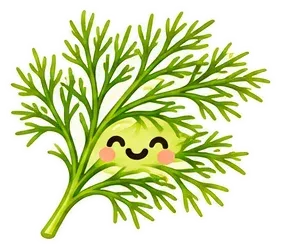
Dill is a herb with thin, feathery leaves that look like a green tuft. It smells fresh and a little sweet, and the taste is mild and a bit like liquorice. Many people put dill on fish and potatoes. It also grows little yellow flowers in the shape of an umbrella.
Summer on the jetty
It’s a summer evening, and someone has bought a bag of boiled prawns. Newspaper is spread on the table, with white bread, mayonnaise, lemon and a bunch of dill. The prawns get peeled and piled on bread, and a sprig of dill goes on top.
That’s how lots of Norwegian children first meet dill. Often without wanting to. The dill is on the prawns, and it has to be picked off.

Why the fronds are tricky
Dill has thin, feathery leaves that look like a little green cloud. Pretty to look at, but strange in the mouth. The fine fronds stick to the tongue and the roof of the mouth, and some children say it feels like hair.
The taste isn’t the big problem. Dill is fresh, a little sweet, with a faint hint of aniseed or liquorice. It’s milder than it smells.
So the way dill is served matters a lot:
- Chopped very finely. Tiny pieces don’t stick.
- In a sauce. Dill stirred into sour cream or yoghurt makes a fresh green dressing with no fronds.
- On the side. A sprig on the table, not on the food. Your child can hold it, sniff it and put it down.
- Just the stalk. The thick stalk is crunchy and tastes the same, minus the feathers.
Dill in Norwegian food
In Norway, dill goes on buttered new potatoes in June, on prawns and crab, on gravlaks and poached cod. It’s in fish soup and cucumber salad. And in many pickled cucumbers, much of the flavour comes from dill seeds and flower heads in the brine.
If your child likes dill pickles, they’ve tasted dill. The same goes for herby sour cream dressing. It can help to say so: “There’s dill in that. You like dill.”
The umbrella
Leave dill to grow long enough and it puts out little yellow flowers on stems arranged like an umbrella. The flower heads are what go into pickles. After the flowers come flat brown seeds. Crush one between your fingers and sniff: it’s dill, only stronger, with a hint of caraway.
Dill is easy to sow in a planter or pot outdoors in spring, and it grows fast. Your child can follow it from seedling to feathery tuft to umbrella in a single summer, then snip their own dill for the prawns.
Small tasting steps
- Smell the dill. Does it smell of summer? Liquorice?
- Dip a cucumber stick in sour cream with chopped dill.
- Taste a new potato with butter and a little fine dill.
- Taste a prawn with one tiny sprig on top.
Each step is a whole thing in itself. There’s no reason to move on the same day.
Picked off, again
Leave the dill on the table and let your child pick it off their food. That’s fine. Over many summers the green sprig becomes part of what goes with prawns and potatoes, and one day it may stay put.
Yes, a herb earns a star too in Mumse. A sprig of dill on a prawn is as much courage as a whole plateful.
 Chives
 Fish soup
 Pickled gherkin
 Tzatziki
 Trout
 Salmon