Tzatziki
Tzatziki is made of two things many children already eat, yoghurt and cucumber. The garlic is what makes it new, and that can be anything from a hint to a lot.
- Taste
- tangy, mild
- Texture
- creamy, juicy




Read aloud to your child
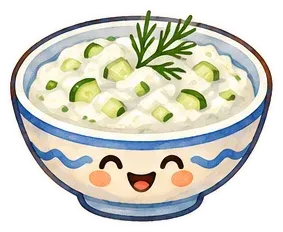
Tzatziki is a cold, white, creamy sauce from Greece. It is made from thick yoghurt, cucumber and a little garlic, so it tastes fresh and a bit tangy. You can see tiny green bits of cucumber in it. It is good for dipping or served next to grilled food.
Grate a cucumber, squeeze the water out in a clean tea towel and stir it into thick yoghurt. That is nearly tzatziki. Add garlic, olive oil, salt and maybe some dill or mint, and you are there. It is cold, white and thick, flecked green with cucumber skin.
Tzatziki is Greek, and in Greece it sits on the table beside grilled meat, bread and salad. Turkey has a thinner relative called cacık, and similar yoghurt and cucumber sauces are eaten all around the eastern Mediterranean.

Two familiar things and one new one
For a child who eats yoghurt and cucumber, tzatziki is almost familiar food. The yoghurt is thicker and sharper than usual, and it is not sweet. The cucumber is grated instead of sliced. But they are the same things.
The yoghurt in tzatziki is strained, meaning the whey has been drained off so it is thick enough to stand on a spoon. Greek yoghurt from the shop is about as thick. Your child can compare a spoonful of ordinary yoghurt with a spoonful of Greek. Which is thicker? Which is sourer?
The garlic is what is new. Raw garlic is sharp, and how much goes in varies a great deal from tub to tub and kitchen to kitchen. Taste it yourself first.
Make it in two steps
Tzatziki is easy to make with a child, and it gives a natural chance to taste along the way. Your child can grate the cucumber, or at least squeeze the water out. There is a surprising amount of water in a cucumber, and watching it run out is satisfying.
Stir the cucumber into the yoghurt. Taste. Now it is just yoghurt and cucumber. How is it? Then the garlic goes in, a little at a time. Taste again. Can you tell the difference?
That is two tastes, and your child decides whether to take the second.
Cold sauce, warm food
Tzatziki is often a cold sauce for warm, spiced food. Grilled meat, kofta, gyro, pitta straight from the oven. The contrast is part of the point. The cool, sharp sauce takes the edge off the hot and salty.
A child may find a cold sauce odd. It is the same thing as soured cream on a taco, which your child may have eaten many times without giving it a thought.
As a dip
Tzatziki also works as a dip for vegetable sticks, bread or crackers. That makes for an easy taste. Your child dips a carrot stick or a piece of cucumber and finds out what the sauce tastes like without it covering anything else.
Cucumber dipped in tzatziki is especially easy. Cucumber in cucumber, and it turns into a small game: can you find the cucumber in the sauce?
There are more ideas like that in tasting games.
A little on a cucumber stick
Tzatziki on a cucumber stick counts as a taste in Mumse. The garlic can come on stronger another day.
 Hummus
 Yoghurt
 Kofta
 Veggie sticks
 Cucumber