Hummus
A smooth, pale cream made from chickpeas. To an adult it is a dip. To a four-year-old it is a paste with no clue about what went into it.
- Taste
- mild, tangy
- Texture
- smooth, creamy



Read aloud to your child
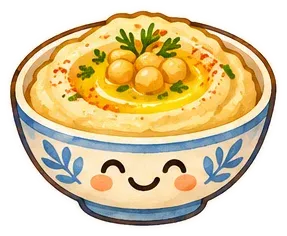
Hummus is a thick, soft cream made from chickpeas, sesame paste and lemon. It comes from the Middle East around the Mediterranean. It tastes mild and a little nutty and is as smooth as a cloud. You dip bread or vegetable sticks in it.
Most children who refuse hummus have never actually tasted it. They have looked at it, and that was enough. A pale paste with no lumps, no colours and no way of telling what is inside is a hard sell to someone who likes to know what they are putting in their mouth.
Chickpeas, mostly
Hummus is cooked chickpeas blended smooth with tahini, a thick paste of ground sesame seeds, plus lemon juice, olive oil, salt and usually garlic. It comes from the Middle East, where it turns up at almost every meal and bread does the job of a spoon. In Norway it has gone from something you bought for a party to a fridge staple, sitting next to the sour cream dips in the chilled aisle.
The taste is mild and a little nutty. What catches children out is the edges. Lemon makes it tangy, tahini has a faint bitterness behind it, and garlic arrives last. Shop-bought tubs are usually gentler than homemade.
Smooth cuts both ways
There are no skins, strings or lumps in hummus. Children who pick bits out of mixed food often like that. Others are put off by exactly the same thing: a paste thicker than yoghurt that clings a little to the roof of the mouth and looks like nothing they know.
So show them what it is made of. Put a few whole chickpeas in a small bowl next to the hummus. They look like little nuts with beaks, and children tend to enjoy rolling them around the table. Taste one chickpea, then the hummus. The bowl stops being a mystery and becomes chickpeas that got squashed.
Something familiar on the end
Hummus is easier when it arrives on something your child already eats: a cucumber stick, a carrot, a bit of pitta. Let them do the dipping and decide how much comes along. Barely touching the surface is fine. A thin film on a carrot is still a taste, and in our house that is what counts.
A lot of children react to the colour more than anything. A pinch of paprika and a few drops of olive oil on top make it look like it came from a restaurant. Same hummus, but now it looks deliberate.
Make a batch together
This is one of the easiest things to cook with a small child. They tip the chickpeas into the blender, squeeze the lemon and press the button. Taste as you go, once before the lemon goes in and once after, so they feel the tang arrive on their own tongue. Leave the garlic out of a small portion if that is the sticking point.
Supermarkets sell beetroot, sun-dried tomato and coriander versions. A bright pink beetroot hummus is sometimes an easier yes than the beige one, simply because it looks like a different food. That is a perfectly good back door.
Where to go next
Once hummus feels familiar, falafel is the obvious neighbour: the same chickpeas, fried crisp on the outside. Veggie sticks are good for dipping, and guacamole is another smooth dip in a completely different colour. For more ways to turn tasting into play, see tasting games.
Hummus is with the sauces and dips in Mumse. Your child gets a star for tasting it, even if all that happened was a smear on a carrot.
 Sesame seeds
 Veggie sticks
 Crackers
 Tabbouleh
 Baked beans