Baked beans
To British readers, baked beans need no introduction. To many Nordic children they're new, and the sauce feels familiar long before the beans do.
- Taste
- sweet, salty, mild
- Texture
- soft, creamy, grainy




Read aloud to your child
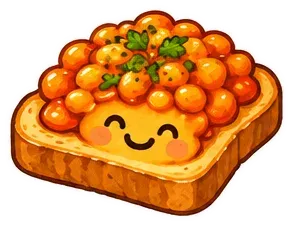
Baked beans are small, white beans in a red, slightly sweet tomato sauce. They are soft and a little mealy, and go well on a piece of toast. It is a common breakfast in England. Try catching a bean on your fork without it sliding off.
Heat a tin in a pan and the kitchen smells faintly of ketchup. That’s a good sign. The sauce in baked beans is sweet, mild and made from tomatoes, and for a child who eats ketchup it’s not far away at all.
It’s the beans that can be the problem.
What the beans do in your mouth
The beans are small, white and round. They’re smooth on the outside, but when your child chews they go soft and slightly floury, almost like mashed potato. Some children love that. Others find it odd that something that looks slippery feels grainy and dry inside.
It helps to say so before they taste. “It’s smooth outside and soft inside, a bit like potato.” Then the surprise doesn’t arrive halfway through a mouthful. Children who know what to expect are more willing to notice.
Sauce first
A child who’s unsure about beans can start with the sauce. Dip a corner of toast in it, no beans. It tastes of tomato and something sweet. Then one bean with sauce on. Then two.
There’s a game in the Mumse text that suits this well: try to catch one bean on your fork without it sliding off. The beans are slippery and roll away, and it’s harder than it looks. A child hunting a single bean is busy with something other than whether they want to eat it.
Beans on toast
In Britain, baked beans are everyday food. The most common way to eat them is simply on toast. The bread goes soft where the sauce soaks in and stays crisp at the edges. It’s plain food plenty of British children grow up with.
They’re also part of the full English breakfast, with fried egg, sausages, bacon, mushrooms and grilled tomato. If you’ve stayed in a British hotel, you’ve probably seen them steaming on the breakfast buffet next to the scrambled egg.
In a Nordic kitchen
Tinned baked beans are on the shelves in many Norwegian supermarkets and only need warming. That makes them easy to try without turning it into a project. Put a small bowl next to an ordinary dinner, or serve them on white bread or wholemeal at a Saturday lunch.
They’re good with sausages too, a pairing lots of children like because the sausage is familiar. Sausage, beans and a slice of bread is nearly a full English, just without everything else.
Small steps towards other beans
Beans are a food group many children are wary of. There’s something about the shape and the texture. Baked beans are one of the gentlest ways in, because the sauce is sweet and familiar. A child who’s got used to them may find it easier to try beans in chili con carne or a stew later on.
It can take a while. Little tastes many times beat a lot in one go. The guide to picky eaters has more on why some children need longer with new textures.
One bean on the fork
Baked beans sit under Europe in Food World in Mumse. Give your child a fork and a single bean. If they can catch it, they’ve tasted it.
 Scrambled eggs
 White bread
 Tomato soup
 Bacon
 Lentil soup