White bread
Squeeze a slice of white bread and let go. It springs almost all the way back. That says a lot about why small children like it: it puts up no fight.
- Taste
- mild, sweet
- Texture
- soft



Read aloud to your child
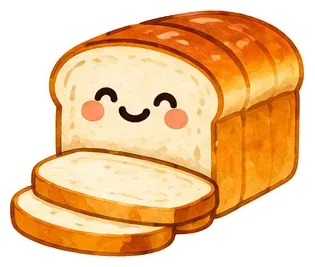
White bread is pale, soft bread that is airy and light, almost like a cloud you can eat. It tastes mild and a little sweet, and the crust is thin. It often comes in a long, square shape and is cut into slices. Squish a slice together and see how quickly it springs back.
Norwegians eat a lot of dark, dense bread, and the pale, soft loaf has a name of its own: loff. It is the white sandwich loaf, sliced, with a thin brown crust. In a country that takes its wholemeal seriously, loff is often the bread small children ask for.
Pale flour
White bread is made from fine, pale wheat flour. Most of the outer layers of the grain have been sifted away, and those are what make wholemeal dark, heavy and chewy. Without them the bread is white inside, soft and mild. Many people find it tastes slightly sweet.
That is why so many small children prefer it. There is little to chew and little that can surprise. No grains that crunch, no seeds stuck between teeth.
Squeeze a slice and let go, and it springs back almost to where it was. Children like that experiment. It tells you what the bread is: air, held together by a little dough.
The crust
Even white bread has a crust, and it is often the first thing left on the plate. It is thin, but browner and firmer than the rest. Some children eat around it, like a frame. Some ask for it to be cut off.
You can cut it off. You can also leave it and see what happens. Some children start eating the crust in their own time, without anybody asking.
Toasted
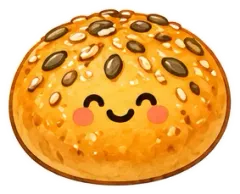
Toast a slice and it becomes another food. The outside goes crisp and brown, the inside stays soft, and the smell fills the kitchen. Butter melts into it.
For a child who only wants soft bread, toast is a small step towards something crunchy. For a child who finds white bread boring, it is something new.
With cheese and ham inside and pressed in a toaster, it becomes a toastie. Fried in a pan with cheese, it becomes a grilled cheese. Same bread, three different things.
Eggy bread
Eggy bread gives old slices a second life. Dip them in egg beaten with milk and fry them until golden. Inside they go soft, almost like pudding. Norwegians call it arme riddere, poor knights, and often eat it with sugar and cinnamon, or jam.
It is a good thing to cook together. Your child can beat the eggs, dip the slices and watch them soak it up. It is also a way to egg for a child who otherwise refuses it, because the egg almost disappears into the bread.
From white to wholemeal
Plenty of parents would like their child to eat darker bread in time. White bread can help along the way rather than stand in it.
Some steps to try:
One white, one dark. Put the filling between a slice of white and a slice of wholemeal bread. Your child sees both, and the white side feels safe.
Halfway loaves. Many bakeries sell bread somewhere between white and wholemeal. That can be a natural middle step.
Toasted wholemeal. Toasting makes darker bread crisper too, and the crust less chewy.
This can take months. Tasting darker bread many times without liking it is fine. More in how many times.
When it is the only bread
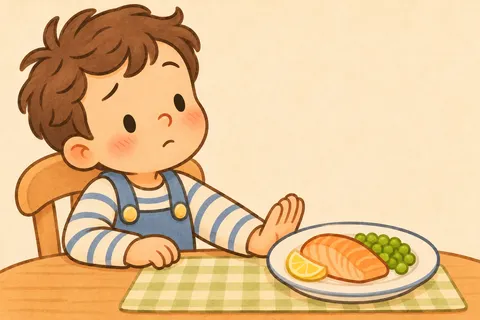
Some children eat almost nothing but white bread for a while. It can feel like a problem, but it is often a phase. The white bread can stay on the table. The darker bread can sit beside it, with no pressure. Your child sees it every day, and that is a kind of tasting too.
There is more on this in picky eaters.
In Mumse, white bread sits among the bread and baking. Plenty of children have tasted it long before they meet the app, and it can easily be one of the first stars. About Mumse.
 Prawns
 Grilled cheese
 Wholemeal bread
 Bread with jam
 Bruschetta