Wholemeal bread
Coarse, dark bread is the base of almost every Norwegian packed lunch. It is also the thing children most often pick the crust off, or leave with one bite out of the corner.
- Taste
- mild, sweet, bitter
- Texture
- grainy, dry, chewy




Read aloud to your child
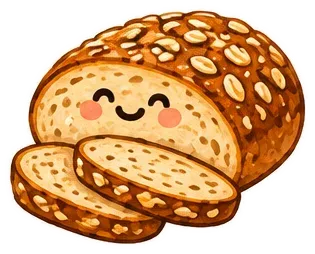
Wholemeal bread is bread with lots of grain in it, often with seeds and small kernels that you can see and feel. It is brown and firm, and it tastes hearty and a little nutty. It needs a bit more chewing than white bread, so give your chewing muscles a workout. See if you can find the seeds in the slice.
A country of open sandwiches
Norwegians eat bread two or three times a day: breakfast, the packed lunch, and often a light evening meal. It is usually dark wholemeal bread, sliced, with butter and a single topping, wrapped in greaseproof paper. Few countries do it quite like that.
So a Norwegian child meets coarse bread very often, and a child who dislikes it can find a lot of meals hard going.

What coarse means
Grovbrød, coarse bread, is baked with flour that keeps much of the grain, bran included. That makes it darker, denser and more flavourful. It often has whole grains, seeds and cracked kernels that your child can see and feel.
Norwegian bread bags carry a little scale with four boxes. The more boxes filled in, the coarser the bread. One box is not far from white bread. Four is heavy and packed with grain.
How it feels
Wholemeal bread needs chewing. White bread turns into a soft ball in the mouth almost at once. Coarse bread doesn’t. It is chewier, and whole grains and seeds can lodge between the teeth.
The taste is mild and a little sweet, nutty with grain. The crust is darker and can be slightly bitter, especially on a loaf baked long and hot.
It is often the crust children object to. It is hard, it is dark, and it takes ages to chew.
Small steps towards coarse
If your child only wants white bread, go one step at a time.
Halfway first. A loaf with one or two boxes filled is a small step from white.
Crusts off. Cutting them off is not giving in. It is removing one thing at a time. The crust can come later.
Toasted. Toasted wholemeal is crisp outside and soft inside, and the grain flavour comes forward. Plenty of children who refuse wholemeal bread eat it toasted.
Small pieces. A whole slice is a lot. Four small squares are less.
Hunt for seeds
Many coarse loaves have sunflower seeds, linseed or pumpkin seeds. Let your child hunt for them in the slice. How many sunflower seeds can they find? Can they pick out a single linseed? It is a reason to look closely at the bread, and to taste a seed on its own.
A child who has tasted sunflower seeds by themselves will recognise them in the bread.
The heel
The end of the loaf has a Norwegian name, skalk. It has crust on one side and is often the slice nobody wants. But some children love it: it is crisper and has more to chew. Ask whether your child wants the heel. The answer may surprise you.
Bake together
Coarse bread is not hard to bake. A child can measure flour, pour water and knead. The dough is sticky and warm. It rises and doubles. When the bread comes out of the oven the whole kitchen smells of it, and a child who baked the loaf usually wants to taste it.
When it takes time
Getting used to wholemeal bread can take a long while. There is a lot of chewing and a lot of flavour. It is fine for your child to have a mix of white and coarse for a long time. More in how many times.
Everything that goes on top
Once coarse bread is fine, the Norwegian toppings are within reach. Liver pâté and cheese are the most common. Crispbread is its dry, crunchy cousin, and often a step children take without hesitating.
Wholemeal bread is on the bread and baking shelf in Mumse. Your child earns a star for tasting it, even if it was only a bite off the corner. About Mumse.
 Bread roll
 Bread with cheese
 Butter
 Packed lunch
 White bread
 Pumpkin seeds