Veggie sticks
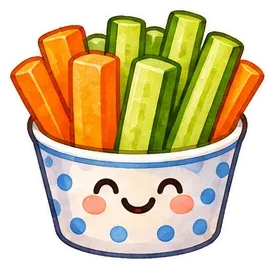
Raw vegetables cut into sticks: carrot, cucumber, pepper, maybe swede. Each colour has its own taste and its own sound when you bite.
- Taste
- mild, sweet
- Texture
- crunchy, juicy


Read aloud to your child
Veggie sticks are raw vegetables cut into long sticks, for example carrot, cucumber and pepper. They are crisp, cold and juicy, and each kind has its own colour and taste. Carrot is sweet, cucumber is fresh, and pepper is a little sweet and juicy. You can dip them in a dip. Which stick makes the loudest crunch?
Half past four. Dinner is not ready, the children are hungry and grumpy, and someone has already found the biscuit tin. This is the moment veggie sticks earn their keep. Not as part of dinner, but as something sitting on the table while you cook.
The hungry hour
A hungry child is more willing to try things. That is not a trick, it is just how it works. A plate of sticks put out without a word while you are busy at the hob often gets eaten by children who would never touch the same vegetables in a stew.
There is another reason too. Raw sticks are simple. Your child can see exactly what it is, pick it up and put it down again. No sauce, no mixing, no surprises. Vegetables do not get more honest than this.

Every colour tastes different
Carrot is sweet and very crunchy. Cucumber is cold, mild and mostly water. Red pepper is sweeter than green and crunches juicily. Swede, which a lot of people forget about, is slightly sweet and peppery. Sugar snaps can be split open and the peas eaten one at a time.
A plate with five colours is a small tasting session on its own. Your child can start with the one they know and just look at the rest. If carrot is familiar and pepper is new, put them side by side. Bite both and listen to which crunches louder.
Cold and thin
Vegetables straight from the fridge are crisper and fresher than ones that have been sitting out, so cut them just before they go on the table. Thin sticks are easier to bite than thick ones, and a stick a bit longer than a finger is easy for small hands to hold.
Hard raw vegetables such as carrot can get stuck in a small child’s throat. For the youngest, cut them thin or steam them briefly, and ask your health visitor about what suits your child’s age.
Something to dip into
A small bowl of dip makes the plate more interesting. Hummus works well, as does a sour cream dip or yoghurt with a pinch of salt. The dip can be the new thing and the stick the familiar one. Or the other way round: a dip they know makes a new vegetable easier to try.
Let your child help cut or arrange the sticks. Many children will taste what they made themselves, and they usually want to show off the pattern.
One at a time
Once the plate has become normal, look closer at each vegetable. Carrot, cucumber and red pepper each have their own page about the taste and how children can get to know them.
Each vegetable has its own picture in Mumse, so your child can find the exact stick they dared to bite.
 Hummus
 Red pepper
 Cauliflower
 Carrot
 Packed lunch
 Pretzel sticks