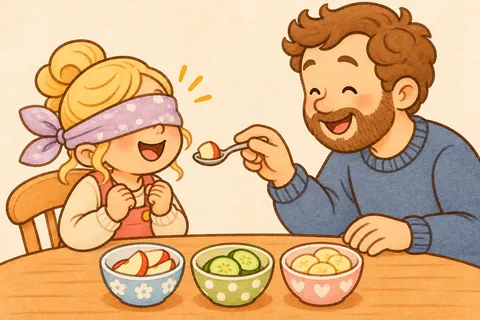
Red pepper
Red pepper is one of the sweetest vegetables in the shop. Plenty of children still assume it's hot, perhaps because of the word pepper, or because it looks a lot like a chilli.
- Taste
- sweet, mild
- Texture
- crunchy, juicy



Read aloud to your child
A red pepper is a big, shiny, hollow vegetable with thick, juicy walls. It grows on a plant in warm countries or in greenhouses. The taste is sweet and mild, not spicy, and it is crunchy like an apple. Inside are small seeds around a pale core. Did you know a green pepper is one that was picked before it had time to turn red or yellow?
It isn’t hot
That’s the first thing to say, and worth saying out loud. Plenty of children have tasted something spicy and remember it. When they see something red and shiny that looks like a chilli, they say no immediately. That is sensible.
Red pepper is related to chilli, but it has been bred to be completely mild. Nothing in it burns. It tastes sweet, almost like fruit, and it crunches like an apple. Tell your child that, and eat a piece yourself while they watch. No sweating, no reaching for water.

Green turns red
Peppers start out green. Left on the plant, they turn red, yellow or orange, depending on the variety. So a green pepper isn’t a separate kind, just one that was picked before it was done. It tastes fresher and a bit bitter. Red is usually the sweetest.
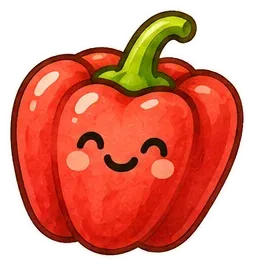
That makes peppers a good tasting game. Cut one stick of each colour and taste them in order, green to red. Which is sweetest? Which is most bitter? Your child is the judge, not the one being tested.
A lantern with seeds inside
Cut a red pepper across and it’s hollow, like a little lantern. Inside is a white knob packed with small flat seeds, and pale ribs down the walls. It’s fascinating to look at, and also a bit odd. The seeds taste of little but feel strange, and the ribs can be slightly bitter.
Clean the pepper out together. Your child can pull out the seed knob with their fingers, like treasure. Afterwards there are just thick, glossy red walls, easy to cut into sticks.
You can also fill a pepper half with something your child likes, such as rice or a mince sauce, and bake it. Then it’s both bowl and food.
Raw or cooked
Many children like raw pepper and not cooked. The reason is the skin. When pepper is fried or boiled, the thin skin separates from the flesh and stays in the mouth like a scrap of plastic. Not dangerous, just unpleasant.
Some fixes:
- Raw sticks. Cold, crunchy, sweet. The easiest.
- Roasted and peeled. Roast the pepper whole until the skin blackens in patches, put it in a covered bowl for ten minutes, then slip off the skin. You’re left with soft, sweet, silky pepper and no film.
- Tiny cubes in a sauce. The smaller the pieces, the less you notice the skin.
Taco Friday
In a lot of Norwegian homes, Friday means tacos, and diced pepper sits on the table every week next to cucumber, sweetcorn and tomato. That’s a good opportunity: everything is in its own bowl, and your child decides what goes in the tortilla or shell. Nobody needs to say a thing. A teaspoon of pepper in your child’s bowl may be enough to begin.
The spice paprika, by the way, is made from dried, ground peppers. Sweet paprika has the same mild taste as red pepper, and some children recognise it when they sniff the jar.
Afraid it will burn
If they’re afraid it’s hot, it often helps to eat some first, slowly, and say it doesn’t burn. If it’s the skin, try raw sticks. If it’s the colour, try yellow.
If your child tastes a stick and doesn’t like it, they’ve still been brave. That’s why the star in Mumse is the same whatever the thumb.
 Veggie sticks
 Stir-fry
 Fajitas
 Corn on the cob
 Shakshuka
 Tzatziki