Gyro
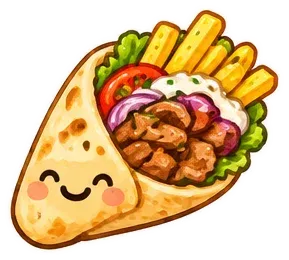
In Greece there are often chips tucked inside the pita. That's good news for a child about to try gyros for the first time.
- Taste
- salty, mild, tangy
- Texture
- soft, juicy, creamy



Read aloud to your child
Gyro is thin slices of juicy, roasted meat from Greece, often tucked into a warm pita bread. With it come tomato, onion and a white, fresh sauce called tzatziki. It smells of spices and the grill. Try folding the pita around the filling.
Gyros means roughly circle, or turning, in Greek. It’s about the spit. Meat is stacked in layers on a big vertical skewer that turns round and round in front of a hot grill, and the cook shaves thin slices off the outside as it browns.
For a child, that’s worth stopping to watch. A column of meat slowly spinning isn’t something you see every day.
What’s in the pita
A gyros pita is a warm, soft flatbread folded around slices of meat, usually pork or chicken in Greece, seasoned with oregano, garlic and paprika. Over the meat go tomato, red onion and tzatziki. And at many Greek takeaways there are chips inside too, right in the pita.
That last bit is good news. Plenty of children who are unsure about the rest perk up on hearing the chips are included.

The white sauce
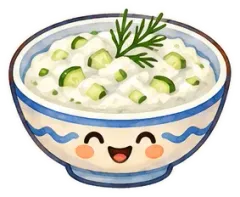
Tzatziki is a cool, white sauce of thick Greek yoghurt, grated cucumber, garlic and olive oil. It’s fresh and a little tangy. The garlic is what children notice. Raw garlic can be sharp, and some tzatziki is very sharp indeed.
Taste the sauce on its own with a cucumber stick. Then your child can tell it’s cucumber and yoghurt, two things they may already like. The garlic becomes a new taste on top of something familiar, rather than a whole unknown sauce.
Piece by piece
Gyros is easy to reassemble at home and just as easy to take apart when you’re out. Order a gyros plate instead of a pita and you’ll usually get everything separately: meat, chips, salad, tzatziki and pita in triangles. That suits a child who likes to see what they’re eating.
Then your child can build. Bread first. A little meat. A chip. Once it’s all familiar, they can try folding the bread round it and taking a bite of everything.
The meat is juicy and salty, with crisp brown edges where it was nearest the heat. It isn’t hot, but it is seasoned, and for a child used to mince in sauce it can taste like a lot. A small piece with tzatziki softens it.
On holiday and at home
Many Nordic children meet gyros on holiday in Crete, Rhodes or another Greek island. It’s sold from small takeaways, often late in the evening, cheap and filling. On holiday you’re allowed to eat on a bench with greasy fingers, and that makes food more exciting.
At home you can make something close in a frying pan. Thin strips of pork or chicken marinated in oil, lemon, oregano and garlic, cooked fast over high heat. Warm the pitas in the oven, make tzatziki together, and let your child grate the cucumber. It won’t be the same as from the spit, but it’ll be good.
The relatives
Gyros has close relatives. Doner kebab from Turkey, familiar from kebab shops all over Norway, and shawarma from the Middle East are made the same way, on a turning spit. The spices and sauces differ. If your child likes one, the others are only a small step away.
The bench memory
In Food World in Mumse, the gyro sits under Europe. If you had one on holiday, read about the spinning spit together and remember the evening you ate it on a bench.
 Tzatziki
 Kebab
 Shawarma
 Kofta
 Chips
 Greek salad