Trout
There are two trout in Norwegian food. One is caught in a mountain lake on a hike. The other lies in the fish counter as a pink fillet you could mistake for salmon. Either can be a way in.
- Taste
- mild, savoury
- Texture
- soft, juicy



Read aloud to your child
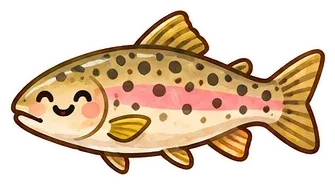
Trout live in clear rivers and lakes and have little spots on their silvery sides. Some trout are pink inside, a bit like salmon. The meat is soft and tastes mild and fresh. Many people in Norway fish for trout with a rod and line on mountain trips.
The first question about a whole trout is usually about the spots. Why has it got spots? Are they freckles? It’s a good question, because it means your child is looking at the fish instead of looking away.
Two kinds of trout
The trout at a Norwegian fish counter is usually farmed rainbow trout. The fillet is pink or orange with pale stripes and looks almost like salmon. The taste is mild and a little rich. If your child already eats salmon, this is a short step.
The trout in a mountain lake is brown trout. It’s smaller, has spots along its sides, and the flesh can be anything from pale to pink, depending on what it has eaten. A trout from a lake full of tiny crustaceans turns pink. One that has lived mostly on insects stays paler.
They’re two different experiences. One is a fillet from a shop. The other is a fish with a head, a tail and spots that somebody caught.

The one from the hike
Fishing for trout in a mountain lake or a stream is an old Norwegian outdoor tradition. It takes time, and often you catch nothing. But when something bites and a fish comes up out of the water, it’s an event.
A child who has watched their fish being cleaned, rinsed and laid in the pan often tastes it. It isn’t “fish” any more. It’s “my fish”.
If you don’t catch one yourselves, you can often buy trout whole. Then your child can see the spots, the fins and the small fatty fin near the tail that salmon and trout have and most fish don’t.
The whole fish trick
Fry the trout whole in butter, or bake it. Once it’s cooked, your child can help with the neatest trick a whole fish has to offer:
- Cut along the back with a knife.
- Lift the flesh off one side with a fork. It comes away in big, soft pieces.
- Take hold of the tail and lift. The whole skeleton comes up, head and all.
- Underneath is the other side, almost free of bones.
Children find this exciting, a bit like unwrapping something. Feel over the pieces before anyone tastes, though. A few small bones always stay behind.
Pan-fried, the skin goes crisp. Some children like the skin more than the fish.
Soured cream and cucumber
In Norway trout is often served with soured cream, sometimes stirred into the butter from the pan to make a quick sauce. Cucumber salad, boiled potatoes and dill usually come along. The soured cream is cold and tangy, the fish warm and mild. Some children dip, some want everything kept apart. Either is fine.
Rakfisk
In Valdres and other inland parts of Norway, trout or char is made into rakfisk. The fish is salted and left in brine for months. It isn’t cooked, and the smell is powerful. It’s a Norwegian tradition worth knowing about, but not a place to start. Ask your health visitor before young children taste it. Having a sniff is plenty for most.
When the head is the problem
A fish with a head and eyes is hard for a lot of children. No need to make anyone look. Turn the head away, or cut it off before the fish comes to the table. Other children want to see the eyes first and ask why the fish doesn’t close them. Fish have no eyelids. That’s a handy answer to have ready.
Trout sits with fish and seafood in Mumse. A small bite from the mountain lake or from the shop counts the same and earns a star.
 Salmon
 Poached fish with potatoes
 Saithe
 Soured cream
 Mackerel
 Dill