Tuna
The tuna in your cupboard fits in a small tin. The tuna in the sea can be longer than a grown-up is tall. Children often like the story before they like the fish.
- Taste
- salty, savoury
- Texture
- dry, stringy




Read aloud to your child
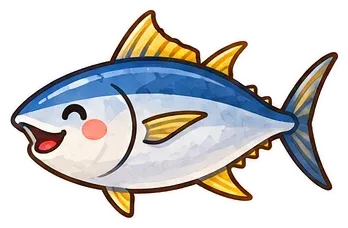
Tuna is a big, speedy fish that can swim very fast in the sea. Its body is round like a torpedo, and its back is dark blue. The meat is firm and pink or reddish, with a stronger taste than white fish. Did you know tuna are among the fastest fish in the sea?
A tin and a smell
Most children’s first tuna comes out of a small, flat tin. The ring pull clicks, and then the smell arrives, stronger than fresh fish. Inside is greyish-pink fish pressed together in water or oil.
The texture is where a lot of children stop. Tinned tuna is dry and stringy. It breaks into small fibres that settle in the mouth, a bit like boiled chicken. The taste is salty and fairly strong, closer to meat than to cod.
It helps to be honest about it. “It’s dry. Can you feel the threads?” Nobody is really meant to eat tuna from the tin with a spoon. It nearly always gets mixed with something.

Mixed into something
Most of the tuna children eat is tuna inside something else. That’s useful.
- Tuna mayo. Stirred with mayonnaise or soured cream, tuna turns soft and creamy and the fishiness fades. On bread or a crispbread, a small bite is easy.
- Pasta. Tuna in pasta with tomato sauce almost disappears into the sauce. Your child should know it’s there, or it isn’t really a tasting.
- Pizza. Scatter a little tuna on one slice of a pizza your child already likes. The rest stays as it was.
- Pasta salad with sweetcorn. The corn is sweet and familiar. The tuna sits in between.
Start with a lot of the familiar and a little tuna. A bit more next time.
A giant in the sea
Out in the ocean, tuna is nothing like a tin. It’s shaped like a torpedo and swims fast and far. The largest kind, the Atlantic bluefin, can grow over three metres long and weigh several hundred kilos.
Bluefin tuna used to be common off the Norwegian coast. Norwegian boats landed big catches in the 1950s, and then the fish all but vanished after years of overfishing. In recent years it has come back to Norwegian waters, and a small amount can be fished again. That’s a good story for a child: a fish that was gone, and returned.
Tinned tuna is usually one of the smaller species. The colour has the same explanation for all of them. Tuna have red flesh because they never stop swimming, and their muscles need a lot of oxygen.
Fried and raw
Some fish counters sell fresh tuna as thick, dark red steaks. Fried in a hot pan, it’s firm and juicy and nothing like the tinned kind. For a child who has said no to the tin, it can feel like meeting a different fish.
Tuna is also eaten raw in sushi. Raw fish hasn’t been cooked, and your health visitor can tell you what suits young children. Maki sushi with tinned tuna and mayonnaise exists too, and that’s cooked.
Smell first
Smell is often the first thing a child reacts to. Turn it into a game instead of a problem. Open a tin of tuna and a tin of mackerel in tomato sauce and sniff both. Which smells more of fish? Which smells of tomato? Nobody has to taste either for it to be worth doing. There are more games like that in tasting games at home and at nursery.
Tuna sits with fish and seafood in Mumse. A forkful of tuna mayo on a cracker is a tasting. It earns a star, wrinkled nose and all.
 Mackerel
 Bread with mackerel in tomato sauce
 Mayonnaise
 Maki sushi
 Pasta with tomato sauce
 Salmon