Tea
Dried leaves, flowers or berries in hot water. The water turns golden, brown or red and smells of anything from mint to apple. For a child, most of tea is smell.
- Taste
- mild, bitter
- Texture
- smooth





Read aloud to your child
Tea is made from dried leaves that steep in hot water. The water turns golden or brown and smells lovely. Tea first comes from Asia, where tea plants grow in green rows on hillsides. Feel the steam rising from the cup, and wait until it has cooled a little.
In Britain tea is so ordinary that it is easy to forget how strange it is to a small child. A cup of hot water that smells of something but does not look like food. Tea is mostly smell, and that is worth knowing when a child tries it for the first time. The smell is something they can get to know long before they take a sip.
Leaves in water
Real tea comes from the leaves of a tea bush grown in warm parts of Asia and Africa, in long green rows on hillsides. The leaves are dried, and in hot water they release colour, smell and flavour. Black tea turns dark brown, green tea pale and golden.
A lot of what we call tea does not come from the tea bush at all. Camomile is dried flowers. Peppermint is leaves from a mint plant. Fruit tea is dried fruit and berries. Rooibos comes from a South African bush and brews reddish brown. In everyday speech, it is all tea.
Black and green tea contain caffeine, so for children most people choose herbal tea, fruit tea or rooibos.
Watch the colour come
The loveliest part of tea for a child is watching it brew. Pour hot water into a glass cup and lower in a tea bag or infuser. The water is clear. Then colour starts to drift out, like smoke underwater. After a minute the whole cup has changed.
Different teas give different colours. Rooibos goes reddish brown, camomile pale yellow, rosehip pink or red. A little colour game that does not require anyone to taste anything.
Sniff the bags
Put out three or four teas and let your child smell the bags before they are opened. Peppermint smells fresh and almost cold. Camomile smells like a meadow. Fruit tea smells sweet and berry-ish. Some children have picked the one they want to taste before the kettle has boiled.
Open a bag and tip the contents onto a plate. What do they look like? Are there bits of flower? Of apple? Children like seeing what is inside.
Lukewarm, not hot
Tea is hot, and a child who burns their tongue on the first sip will not be in a hurry to try again. Let it cool to lukewarm, or top it up with a little cold water. Iced tea, cold with a squeeze of lemon, is another way in.
Many children are given tea when they are poorly, with honey and lemon. Honey should not be given to babies under one, so for the youngest, lemon is enough. That can make tea feel like a sick-day drink. It is worth offering it on an ordinary afternoon too.
Other tastes in the cup
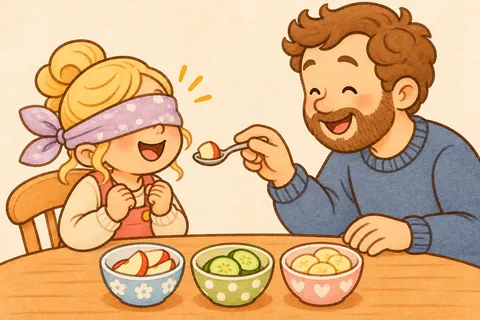
Ginger often goes into tea and gives it a warm, tingly taste. Apple tea tastes of apple, and hot chocolate is the other warm cup many children know. There are more ways to turn tasting into play in tasting games.
A sniff of the cup and a small sip make a taste. Tea is among the drinks in Mumse.
 Hot blackcurrant
 Mint
 Ginger
 Crackers
 Cinnamon
 Milk