Mint
Many children have tasted mint long before they've seen the plant. It's in the toothpaste. That helps and it doesn't, because plenty of children think it odd that something tasting of toothpaste should go on food.
- Taste
- mild, sweet
- Texture
- soft




Read aloud to your child
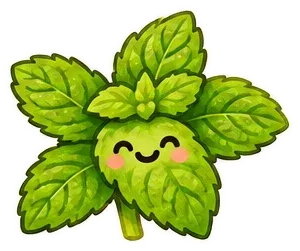
Mint is a green herb with small, wrinkly leaves that smell fresh and cool. Rub a leaf and you smell it right away. The taste is cool, like toothpaste or sweets, only milder. Mint grows almost by itself in the garden and spreads far and wide.
Tastes like the bathroom
Rub a mint leaf between two fingers and hold them under your child’s nose. Their face usually says it before they do: toothpaste.
They’re right. A lot of toothpaste tastes of mint, and so does chewing gum and a lot of boiled sweets. To a child, mint isn’t a herb at all. It’s a bathroom flavour. That’s a fine place to start, as long as you say it out loud.

Cold without being cold
The strange thing about mint is that it feels cold. Peppermint contains menthol, and menthol sets off the same nerves in the mouth that sense cold. The brain is told it’s chilly, even though the leaf has been sitting on the counter all day.
It’s the opposite of chilli, which makes the mouth think it’s burning. Plenty of children enjoy hearing that the tongue can be fooled both ways. Taste a mint leaf, then drink a glass of water. The water feels colder than it is.
Two kinds
There are lots of mints, but the two you’ll meet most are peppermint and spearmint. Peppermint is the strong one, full of menthol. Spearmint is gentler and a little sweeter, and it’s usually the one in a pot next to the other herbs at the shop.
For children, spearmint is the easier start. Smell both if you have them. The difference is obvious, and it makes a good sniffing game.
One leaf at a time
Mint is strong enough that a single leaf is a whole taste. Some ways in:
- In water. Drop a few leaves in a jug and leave it in the fridge for a while. The water tastes faintly of mint, and your child can fish out a leaf if they want.
- On fruit. A small chopped leaf over strawberries or watermelon. Sweet and cool together.
- As tea. Hot water over a couple of leaves. Let it cool to lukewarm before your child tries it.
- Straight from the plant. One small leaf from the top is enough.
Warn them beforehand that their mouth will feel cold. It’s harmless, but it can come as a surprise.
A plant that won’t stay put
Mint is one of the easiest things to grow. Almost too easy. It sends long runners underground, and new shoots appear well away from where it was planted, under the hedge and in the middle of the lawn. Lots of gardeners keep it in a bucket.
For a child it’s a satisfying plant to own. It doesn’t mind being picked, it comes back every year, and it’s always there when someone wants something to smell.
Mint and chocolate
Mint and chocolate are an old pairing, in bars, ice cream and after-dinner sweets. A child who likes mint chocolate likes mint, even if they turn down the leaf. Worth knowing, but not worth using as an argument. The leaf is a different experience, and it’s allowed to be.
When it tastes of teeth
If your child says mint tastes of toothpaste and doesn’t want more, that’s an honest answer. They’ve identified the flavour correctly. Keep the pot on the windowsill and let them sniff it on the way past.
One leaf is a taste. Mint sits with the mushrooms and herbs in Mumse, and the star is the same whether your child says yum or toothpaste.
 Tea
 Basil
 Tabbouleh
 Tzatziki
 Watermelon
 Parsley