Chilli
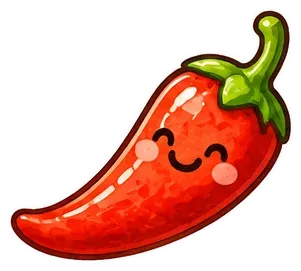
A small pointed fruit, red or green, that can burn on the tongue. It is not really a taste. It is a feeling, and your child should decide how much of it they want.
- Taste
- spicy
- Texture
- juicy, crunchy


Read aloud to your child
A chili pepper is a small, pointy fruit, often red or green, that grows on a bush. It tastes hot and can tingle on your tongue, so take just a tiny bite. Chilies first came from Central America. Feel whether your mouth gets warm, and have a sip of milk if it stings.
Chilli is not really a flavour. You feel it on the tongue, but not as sweet, salty or sour. You feel it as heat. That is why it is so hard for children, and why it needs a different approach from other food.
The body gets fooled
Chilli contains a substance called capsaicin. It sets off the same nerves in the mouth that notice heat. The brain is told the mouth is burning, even though it is not. That is why your face goes red, your eyes water and your nose starts to run. It is harmless and it passes.
It can help a child to know this. The food is not dangerous. The body believes something that is not true. Lots of children find it exciting that the tongue can be tricked.
Milk, not water
When it burns, water is the natural reaction. But water does little. Capsaicin does not dissolve in water and just gets spread around the mouth. Milk, yoghurt or sour cream work much better, because the fat and proteins in milk carry the capsaicin away.
Always have a glass of milk on the table when your child is going to taste something hot. Tell them it is there. A child who knows help is ready dares more.
From pepper to chilli
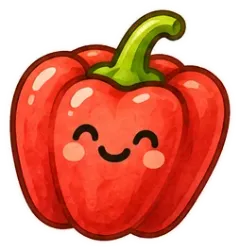
Chillies and sweet peppers are in the same family. A sweet red pepper has no heat at all. Some chillies are so mild you barely notice them, and others can make adults cry. That makes it possible to go in steps.
Start with sweet pepper. Then a mild chilli with the seeds and white membranes removed, since most of the heat sits in the membranes. A piece the size of a grain of rice is plenty. Your child may feel a little warmth. Or not. Next time the piece can be a bit bigger, or the chilli a bit hotter.
Never by stealth
The most important thing with chilli is never to trick your child. It is tempting to stir a little into dinner to get them used to it. But a child who gets burnt by something they did not know about learns that new food can be dangerous. That makes everything else harder.
Always say so. “This one is a bit hot. Do you want a tiny bit, or would you like to smell it first?” Let your child say no. Put chilli on the table separately, as flakes or sauce, so everyone takes what they want.
Wash your hands after cutting chilli, and make sure your child does not rub their eyes after touching it. It stings far more there than in the mouth.
It takes time
Getting used to heat takes a long time. Children in countries where chilli is everyday food start with tiny amounts and build up over years. There is no hurry. Every time your child dares to try is a step.
Further on
Red pepper is the safe starting point. Salsa comes in mild, medium and hot. Chilli con carne can be made mild with the chilli on the side. And ginger has a different kind of heat that tingles rather than burns.
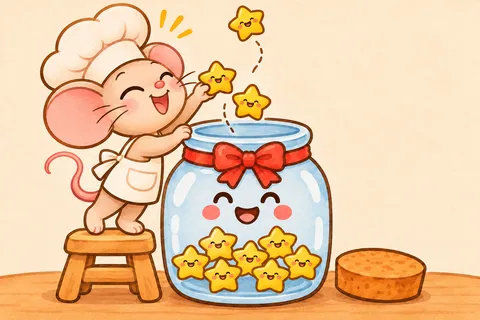
A piece the size of a grain of rice is a real taste. In Mumse chilli sits among the hot tastes, and the star is the same as for anything else.
 Salsa
 Ginger
 Coriander
 Couscous
 Nasi goreng