Mushroom
White mushrooms taste mild. Children rarely object to the taste. It's that fried mushrooms turn soft, wet and slippery, and that they don't look like food.
- Taste
- mild, savoury
- Texture
- soft, smooth, crunchy



Read aloud to your child
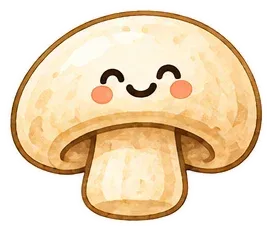
A mushroom, the common white kind, is small and round with a white cap and a short stalk. It does not grow in the forest here, but is grown in dark rooms, and it does not need sunlight. Raw it is firm and a little crunchy, fried it is soft and juicy. The taste is mild, and it smells a bit like soil and woods.
“Is it the taste, or is it that it’s slippery?”
That’s the most useful question you can ask a child who won’t eat mushrooms. The answer is nearly always the second. White mushrooms taste mild, a little woodsy, and few children mind that. But fried mushrooms are soft, wet and slide around the mouth, which is a feeling lots of children hate.
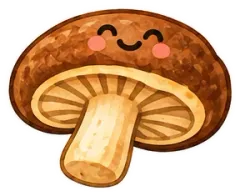
One mushroom, three textures
The good thing about mushrooms is that you can change the texture completely without changing the food:
Raw mushrooms are firm and slightly crunchy, a bit like an apple with no juice. Thin slices are mild and feel clean in the mouth. Lots of adults have never tried a raw mushroom and are surprised.
Crisp-fried mushrooms are thin slices cooked in a dry pan, no fat at first, until the water has cooked off and the slices are golden. Then a knob of butter and a pinch of salt at the end. They’re no longer slippery: chewy in the middle and crisp at the edges.
Finely chopped mushroom almost disappears into a sauce or mince dish. It adds flavour without any slippery pieces. That’s not trickery, as long as your child knows it’s there.
Under the cap
Turn a mushroom upside down. Under the cap are gills, thin walls like the pages of a tiny book. On a young white mushroom they’re pale pink. On an older one, brown, almost black.
Snap a raw mushroom in half. It breaks cleanly, white and dense inside. Smell it. It smells mildly of soil. Now smell a cooked one. It smells stronger. Which does your child prefer sniffing?
That’s not tasting. But a child who has snapped, sniffed and peeked under the cap knows the mushroom better than before.
Steps that suit mushrooms
- A mushroom hunt at the shop. White, chestnut, portobello, maybe chanterelles in autumn. Just look and sniff.
- Slice them yourselves. Mushrooms are soft enough for a child to cut with a butter knife.
- One raw slice. Thin, cold, crisp.
- One crisp-fried slice. Next to the raw one. Which crunches more?
- Mushrooms on pizza. Lots of children pick them off. Next time, leave one slice and taste it on its own.
Neither plant nor animal
White mushrooms are grown indoors, in dark rooms, on a mix of straw and compost. They don’t need sunlight, because fungi don’t make food from light the way plants do. A mushroom isn’t a plant at all. Fungi are a kingdom of their own, and scientists think they’re more closely related to animals than to plants.
Which means a mushroom is a little more related to you than to broccoli. Lots of children enjoy repeating that at the dinner table.
Mushrooms in the forest
Picking mushrooms in the woods is another matter. Some mushrooms are poisonous and can look like edible ones. Never eat mushrooms you have picked yourselves unless someone who really knows mushrooms has checked them; in Norway, volunteer mushroom-checking stations open in the autumn for exactly this. Shop-bought white mushrooms are safe.
Ask what feels yucky
Ask what feels yucky and take the answer seriously. If it’s slipperiness, try raw or crisp-fried. If it’s the look, chop finely. If it’s the smell, try raw, which smells least.
Don’t hide mushrooms in the sauce to trick your child. Let them hunt for one slice on purpose instead.
In Mumse every taste earns a star, even when the mushroom was too slippery. On the mushroom’s page you can see the thumb from each time, and you may notice it moving.
 Chanterelle
 Omelette
 Traybake pizza
 Chicken stew
 Stir-fry