Paella
Plenty of Nordic children meet paella on holiday in Spain. It arrives in a pan almost too big for the table, looking like a treasure map.
- Taste
- mild, salty, savoury
- Texture
- soft, crunchy, grainy


Read aloud to your child
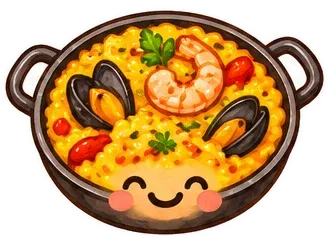
Paella is a yellow rice dish from Spain, made in a big, flat pan. The rice gets its color from saffron, an expensive and fragrant spice. On top there may be chicken, vegetables or seafood. Can you find the crispy rice at the bottom of the pan? That part is the best.
A paella pan is big, flat and shallow, with two handles. The word itself means pan in the language of Valencia, where the dish comes from. The rice lies in a thin layer across the whole pan, yellow from saffron, with meat or shellfish scattered over it like things on a map.
That’s where a child stops. Not at the rice, but at what’s on it.
The things sticking up
In a seafood paella at a Spanish beach restaurant there may be whole prawns with shells and black eyes, mussels gaping open and rings of squid. For an adult that’s the holiday. For a five-year-old it’s animals looking back at you.
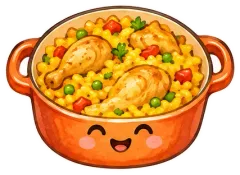
The original paella from Valencia has no seafood. It’s made with chicken, often rabbit, flat green beans and large white beans, and it’s traditionally cooked over an open fire on Sundays, often outdoors. If you’re ordering for your child, a chicken and vegetable paella is a calmer starting point than one crowded with whole shellfish.
The rice by itself
Paella rice is short-grain and cooked in stock, not water. It’s soft, slightly grainy and full of flavour, saltier and richer than plain boiled rice. Saffron adds a mild taste that’s hard to describe. A bit like hay, a bit like honey.
A spoonful of just rice is a good first step. Put it on a plate with nothing else. The colour is the first thing your child sees, and yellow is rarely frightening.
Hunt for the treasure at the bottom
The best part of paella, many Spaniards will tell you, is at the bottom of the pan. Once the rice has absorbed the stock, it’s left on the heat a little longer until the base toasts and turns crisp and caramelised. That’s the socarrat.
This can become a game. Give your child a spoon and ask them to find the crispy rice. It crunches and tastes almost like toast, and children who are unsure about soft rice often like it. Once the spoon is scraping the bottom, your child is already tasting.
Shellfish as a project of its own
If your child likes prawns at home, the ones in the paella aren’t far off. But they look different, hot and orange and still in their shells. Take one out, peel it together and show that it’s the same thing. Mussels can wait at the edge of the plate until curiosity arrives. It doesn’t have to be this holiday.
Eat it from the pan
In Valencia families often eat straight from the pan, each from their own section, with wooden spoons. The pan goes in the middle and everyone eats from the edge in front of them. It’s a good way to eat with children. Your child has their own slice of the pan and can push the prawns over to you.
At home afterwards
Paella is easy to make at home after the holiday, and you don’t need a proper paella pan. A large frying pan will do. Your child can stir saffron into a little warm water and watch the colour bloom. Made with chicken and peas, it’s quite close to the rice and chicken breast your child already eats.
Home from Spain
If you come home with a new favourite, or just one spoonful of crispy rice that went well, paella can sit on the shelf in Mumse until you cook it yourselves.
 Spanish omelette
 Prawns
 Nasi goreng
 Chicken and rice
 Peas