Pad thai
Pad thai is one of the dishes many Nordic children first meet on holiday in Thailand. The noodles are familiar. The rest of the plate isn't always.
- Taste
- sweet, tangy, salty
- Texture
- soft, chewy, crunchy



Read aloud to your child
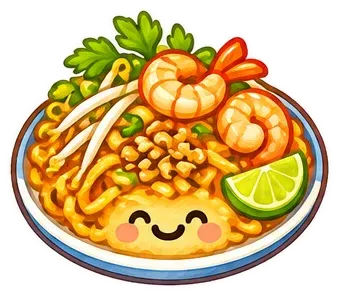
Pad thai is a noodle dish from Thailand. Thin rice noodles are fried in a hot wok with egg and crushed peanuts, and people often squeeze lime juice over the top. It is a little sweet and a little sour, and it smells wonderful. Feel how soft the noodles are, and how the crunchy nuts give a little crunch.
The rice noodles in pad thai are flat, slippery and a little chewy, and they cling together in small clumps. That’s the part your child will recognise. Spaghetti and packet noodles are among the safest foods many children have.
What isn’t familiar is everything else. A forkful of pad thai can carry egg, tofu, prawns or chicken, crunchy bean sprouts, a green stalk of garlic chives and crushed peanuts. And over all of it a sauce that is sweet, sour and salty at the same time.
A taste that’s three things
The sauce is the least expected part. It’s usually made from tamarind, a sour brown fruit, with fish sauce for salt and palm sugar for sweetness. Then lime is squeezed over. For adults the balance is the whole point. For a child it can be confusing: expect noodles that taste of butter and salt, and pad thai suddenly tastes sweet and sour as well.
One small thing that helps, if you’re cooking at home: taste the sauce on its own. A drop on a spoon. Is it sweet? Sour? Both? Children often enjoy working out what something is when they’re allowed to be detectives rather than eaters.
Take the plate apart
Pad thai is easy to separate. Noodles, egg and chicken can sit in their own piles, with the bean sprouts and lime wedge at the edge.
- Noodles first. Soft and slippery. Notice how long they are. Some children like to slurp one in whole.
- Bits of egg. The egg is scrambled in the wok in small pieces and tastes like scrambled egg.
- One bean sprout. It’s cold and crunchy and tastes of almost nothing. That’s partly the point: it crunches.
- Squeeze the lime yourself. Your child holds the wedge and squeezes it over their own little pile of noodles. Sour is less alarming when you decide how much.
The peanuts usually sit in a small heap on top. Whole nuts and large pieces can be a choking risk for small children; crush them finely or leave them off, and ask your health visitor if you’re unsure.
Street food first
In Thailand pad thai is above all street food. It’s cooked in a large wok over fierce heat, right in front of you, in a few minutes. It was promoted as a kind of national dish in the 1930s and 40s, when the Thai government wanted a dish that was distinctly Thai and that everyone could afford. Rice noodles fitted the bill.
Beside the plate there are usually little pots of chilli flakes, sugar, fish sauce and vinegar with chilli. Everyone seasons their own. So the dish itself is often fairly mild, and it’s easy to order it without chilli for a child.
Thailand is one of the most popular long-haul holidays for Scandinavian families, so many children meet pad thai there, or at a Thai restaurant back home. Holidays are a good place for new food. Your child is hungry after swimming, everything is new anyway, and there’s no weekday dinner that has to run smoothly.
From noodles to pad thai
If your child likes packet noodles, you’re halfway there. The next step might be noodles fried with egg, then noodles with a squeeze of lime. Pad thai is only a couple of steps on. If noodles in soup go down well, ramen is another way forward.
From the holiday
If you ate pad thai on holiday, you can search for it in Mumse, put it on your child’s shelf and take a photo of the plate. Then your child has both the star and the memory.
 Nasi goreng
 Peanuts
 Stir-fry
 Prawns
 Udon