Cress
Cress may be the only food a child can sow, watch grow and harvest on the kitchen counter before they've forgotten they sowed it. It takes about a week.
- Taste
- bitter, spicy
- Texture
- crunchy, juicy




Read aloud to your child
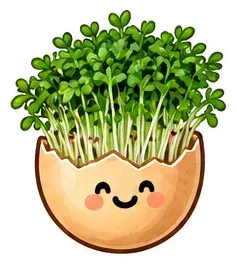
Cress is tiny sprouts with thin white stems and little bright green leaves. It grows amazingly fast: put the seeds on wet paper or cotton wool, and you can snip cress after just a week. Many people sow it in an empty eggshell at Easter. The taste is sharp and a little peppery, and it is lovely on an egg sandwich.
An eggshell and some cotton wool
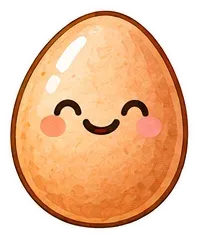
You need almost nothing. An empty eggshell, a bit of cotton wool or kitchen paper, water and a packet of cress seeds. Dampen the cotton wool, sprinkle the seeds on top, sit the shell in an egg cup and put it on the windowsill.
The next day some seeds will have a tiny white root. After two or three days the first shoots are up. After about a week there’s a green tuft on top of the egg, ready to snip. Many children draw a face on the shell first, so the cress becomes hair.
In Norway, cress in an eggshell is an Easter tradition, but it works any time of year. It just needs light and a child who remembers to water it.
Small, but it bites
This is where a lot of parents get a surprise. Cress looks harmless. It’s pale green and almost fluffy. But the taste is sharp and peppery, a bit like mustard. It arrives after a moment and prickles on the tongue.
That’s because cress is related to mustard, radishes and cabbage, which share the same sharp edge. Some children like it more than you’d expect. Others spit it straight out. Either is fine, and it’s worth warning them that it’s a little hot.
Smaller portions than you think
One sprig of cress is enough. It’s tiny but full of flavour, which is why it’s rarely eaten on its own and usually scattered over something else:
- Egg and cress. A slice of egg on bread with a few sprigs on top, a classic in Britain and at Norwegian Easter alike. The mild egg softens the sharpness.
- With cheese on bread. Cheese and cress go well together.
- In a salad. A little cress mixed into iceberg lettuce gives a salad some taste.
- On its own, straight from the shell. For the child who grew it, this is often where it happens.
The one they grew
Children who’ve helped make food are more likely to taste it. Cress is the most extreme version of that. Your child has sown it, watered it and checked on it every morning. It’s their cress.
Plenty of children want to do the snipping too. Let them. It may be a bit uneven. That doesn’t matter.
If you sow several shells, you can taste at five days, seven days and ten days. See whether it tastes the same each time. It’s a small tasting experiment your child can run entirely by themselves.
When it stings
If the cress was too strong, let your child rinse their mouth and notice that it passes. Tell them it was brave. Cress doesn’t get milder by being hidden in food. It gets milder by being tasted a little and often, perhaps with a bite of egg alongside.
And the next batch is only a week away.
A sprig from the eggshell is a taste. In Mumse cress sits among the herbs, and the photo your child can take when tasting might as well show the eggshell with its green hair.
 Egg
 Chives
 Parsley
 Iceberg lettuce
 Smørrebrød
 Mustard