Sweet and sour chicken
Sweet and sour chicken is two tastes arguing in the same sauce. That's exactly what makes it fun to try.
- Taste
- sweet, tangy, salty
- Texture
- crunchy, juicy, smooth




Read aloud to your child
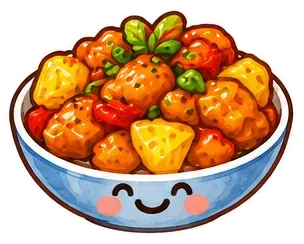
Sweet and sour chicken is little pieces of chicken in a shiny sauce that is both sweet and a little tangy. It is cooked in Chinese kitchens all over the world, often with pineapple and peppers. The sauce is red or orange and sticks nicely to the chicken. Taste it: is it more sweet or more sour?
Try the sauce on its own, with a teaspoon. First comes the sweetness, almost like jam. Then, a second later, the sour, with a little prickle. Last, a bit of salt from the soy sauce. Three tastes one after another in the same spoonful, and many children notice them if you ask.
That’s the nice thing about sweet and sour chicken. It’s a tasting lesson that happens to taste good.
Sauce first
Sweet and sour sauces turn up in many Chinese kitchens. The glossy red one with pineapple that most people in the Nordics know is closely tied to Chinese restaurants outside China, where it has been on menus for a long time, often with pork instead of chicken.
The sauce is sugar and vinegar, often with ketchup or tomato, a little soy sauce and cornflour to thicken it and make it shine. The colour comes from the tomato, and in some places from food colouring. It’s thick enough to cling round the chicken like a glaze.
Crisp that turns soft
The chicken is usually coated in batter and deep-fried before the sauce goes on. Straight from the fryer the pieces are crisp, a lot like chicken nuggets. After a few minutes in the sauce, the coating goes soft and chewy.
That matters to children. A child who likes crunch may find the soggy coating strange. Ask for the sauce on the side where you can, or make it at home and spoon the sauce over the grown-ups’ plates first. Your child gets crisp chicken and a small bowl of sauce for dipping, and decides how much.

Bits of something familiar
The dish usually has pineapple, pepper and onion in it. For a child, that’s a little treasure hunt. The pineapple is yellow and sweet, the red pepper crunchy or soft depending on how long it cooked, the onion glossy and almost see-through.
Move one piece of each to the edge of the plate. Your child can try pineapple they may already know and notice it tastes different warm. Hot pineapple is sweeter and softer than cold. That’s a small discovery on its own.
More sweet or more sour
Ask the question Mumse asks: is it more sweet or more sour? It’s a good question because the answer changes. Some sauces are almost all sugar, others are sharp with vinegar. Your child becomes the judge, not the one who has to eat.
A game for home: put out a bowl of sugar water and a bowl of water with a drop of vinegar. Taste each, then the sauce. Can your child find both? It takes five minutes and makes the sauce less of a mystery.
With rice
Sweet and sour chicken nearly always comes with plain rice. The rice is a safe spot. Put a spoonful of rice and one piece of chicken side by side and let your child mix them or keep them apart. Either is fine.
A strong sauce can take a few goes before it feels familiar. That’s normal, and it’s why small tastes many times work better than a lot at once. There’s more on that in the guide to how many times children need to taste something.
Next time you order
Sweet and sour chicken is under Asia in Food World in Mumse. Read about the shiny sauce together before you order, and let your child guess what it tastes of most. Afterwards you can see who was right.
 Pineapple
 Stir-fry
 Chicken tikka masala
 Chicken and rice
 Pad thai