Rosemary
Rosemary is a herb you smell more than you eat. The leaves are as tough as pine needles and the flavour is strong. That makes it a good herb to start with the nose.
- Taste
- bitter, mild
- Texture
- dry, crunchy





Read aloud to your child
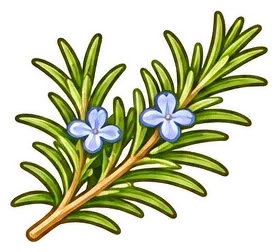
Rosemary grows as a small bush in the warm lands by the Mediterranean. The twigs are stiff and woody, with narrow leaves like green needles, silvery grey underneath. Sometimes tiny pale blue flowers sit on them. The smell is strong and fresh, like a forest in summer. Rub a leaf and smell your fingers.
Ask what it smells of
Hold a sprig of rosemary under your child’s nose and ask what it smells like. The answers can surprise you: Christmas tree, forest, summer, Grandma’s garden. None of them is wrong.
Rosemary has one of the strongest smells on the spice rack. That makes it hard for lots of children to eat, but easy to get to know.

Needles, not leaves
A rosemary sprig looks like a twig from a conifer. The leaves are narrow, tough and dark green on top, silvery grey underneath. They prickle a bit. Rosemary grows as a shrub in the warm, dry lands around the Mediterranean, and it likes sunshine far more than a Nordic winter.
The name comes from Latin and is usually translated as “dew of the sea”. It’s a lovely thing to tell a child, and it makes the plant more interesting than “the green bits on the potatoes”.
Nose first
With rosemary it’s fine to spend a few days smelling before anyone tastes:
- Rub a needle. Roll it between your fingers and sniff. The smell stays on your fingers for ages.
- A sprig in the oven. Lay a whole sprig on a tray of potatoes. When the oven door opens, the smell fills the kitchen.
- Compare with dill and basil. Which one smells most? Which does your child prefer?
- Rosemary water. A sprig in a jug of water gives a faint taste, far milder than the needle.
A child who has smelled rosemary many times will recognise it in food. That’s half the work done.
Rosemary potatoes
For many children the easiest way in is roast potatoes. Wedges or cubes of potato, a little oil, salt and a few rosemary needles, then into the oven until they’re golden and crisp at the edges.
In the oven, rosemary gets milder and crisper. It still tastes, but less sharply. Children who like chips often like rosemary potatoes, especially when the rosemary is chopped finely so there are no tough needles in the mouth.
If your child doesn’t want the needles, tuck whole sprigs between the potatoes and lift them out before serving. The flavour stays, with nothing to pick at. Tell them it was there.
Strong in small amounts
Rosemary isn’t a herb anyone eats by the handful. One needle is enough to get the whole flavour: slightly bitter, resinous and fresh. There’s no reason to give a child a whole sprig to chew.
It also helps to taste rosemary with something mild. On a bit of bread with oil, or on a roast potato. Then it’s a taste of rosemary rather than an ambush.
When it’s too much
Rosemary divides adults too. If your child finds it too strong, that’s a reasonable answer. Let the sprig be something they get to smell whenever you cook with it. The smell does most of the work.
One rosemary needle on a roast potato is a taste. In Mumse rosemary sits among the herbs, and the star arrives just the same if the thumb points down.
 Potato
 Chicken thigh
 Basil
 Chips
 Parsley
 Olives