Redcurrant
Redcurrants are among the prettiest things in a Norwegian garden, and among the sourest. Children are drawn to the colour and flinch at the taste.
- Taste
- tangy, sweet
- Texture
- juicy, grainy



Read aloud to your child
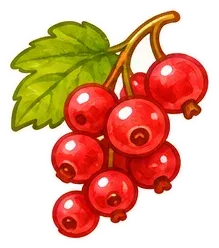
Redcurrants are small, shiny, red berries hanging in long rows on a thin stem, like jewels on a string. They grow on bushes in gardens. Each berry is see-through, so you can almost look inside. The taste is fresh and quite tart, so your face might scrunch up. Try pulling the berries off the stem with your teeth.
Redcurrants hang in long, thin strings, one round bead after another. They are so glossy and clear that you can see the seeds inside when the sun shines through. To a child they look like something from a jewellery box, and small hands want to pick them.
Then comes the taste. Redcurrants are sour, and you notice straight away. The mouth puckers, the eyes squeeze, and your child looks at you as if you have played a trick on them.
The face is part of it
Sour flavours are harder for many children than sweet ones, and that is entirely normal. It does not mean your child cannot come to like redcurrants. It does mean the first taste is rarely a yes.
Make the face something you share. Each eat a berry and look at each other. Who pulls the oddest face? Some children find it so funny they want another, just to feel it again. That is a fine reason to taste.
Talk about the flavour without dressing it up. “Yes, it’s sour. Did you feel it at the sides of your tongue?” A child who is told something is lovely while it tastes sharp soon stops trusting what you say.

Stripping the stalks
Redcurrants are easiest to eat off the stalk, but it is more fun to remove the stalk yourself. There is a good trick: pull the string through the prongs of a fork. The berries tumble into the bowl and the stalk stays caught in the fork. Children manage it from a young age, and it takes long enough for them to get to know the berries.
Some prefer to pull the berries off with their teeth, straight from the stalk. That works too, a few at a time.
Softening the sour
Redcurrants do not have to be tasted on their own. Pair them with something mild so that the sourness is an edge rather than the whole experience:
- On yoghurt. A few berries on plain yoghurt. The white calms the red.
- On a pancake. With a pinch of sugar, or next to something sweet your child already knows.
- As jelly. Redcurrant jelly is clear and red, and in Norway it turns up both with roast meat and on bread. It is sweeter than the berries, but the flavour is the same.
- From the freezer. Redcurrants you have picked and frozen yourselves are hard little beads that thaw in the mouth. The sourness arrives gradually.
A bush in the garden
Plenty of Norwegian gardens have a redcurrant bush, often an old one somebody planted long ago. The berries ripen in July and August, and one bush can produce more than a family manages to eat. If you have one, or know someone who does, picking is a good place to start. Your child sees where the berries come from, feels how easily they come off, and maybe eats a couple while the bowl fills up.
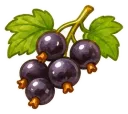
Redcurrants are related to blackcurrants and gooseberries. The three often grow in the same garden and taste very different. That can make for a nice summer tasting: one berry of each.
It takes time
Sour berries are one of those flavours that take a while. It is not unusual for a child to need many tastes before redcurrants are all right, and some never become fond of them. There is more about how many times children need to taste something in the guide.
In Mumse every taste earns a star, whatever the thumb. With redcurrants that matters. Tasting something you know is sour takes courage.
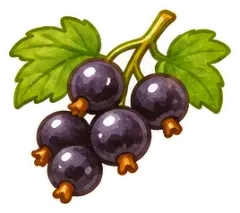 Blackcurrant
 Red berry pudding with cream
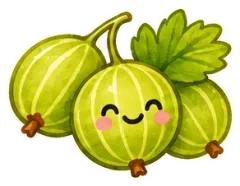 Gooseberry
 Raspberry
 Cordial
 Custard