Blackcurrant
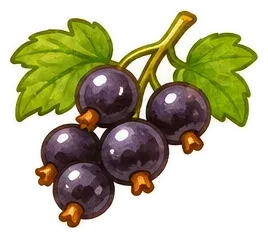
Blackcurrants are small and almost black, and they smell stronger than anything else in the fruit garden. Many children know the flavour from squash and jam but have never tasted a fresh berry.
- Taste
- tangy, sweet, bitter
- Texture
- juicy, chewy



Read aloud to your child
Blackcurrants are small, almost black berries that grow in bunches on garden bushes. The skin is tight and shiny, and the smell is strong and rather special. The taste is bold, tart and sweet all at once, so your mouth wakes up. They are often used for juice and jam. Count the berries on one stem, how many are there?
You smell it first
Walk past a blackcurrant bush on a warm day and you notice it before you see it. The smell is strong, spicy and a bit strange, and it comes as much from the leaves as from the berries. That smell is often what a child reacts to first, long before the taste.

A flavour they already know
The curious thing about blackcurrants is how many children already know the flavour well. They have had blackcurrant cordial, blackcurrant jam, or a mug of hot blackcurrant on a cold day, which is a winter staple in Norway. A fresh berry is something else. It is much sharper, it has a taut skin that needs chewing, and inside there are lots of tiny seeds.
That is a useful starting point. A child who likes the cordial already has the flavour somewhere in their memory. What is new is the texture and the intensity.
Say it out loud: “This is what’s in the squash, just without the sugar and the water.” It makes the berry less of a stranger.
One berry is plenty
A single blackcurrant has more flavour than several other berries put together. Sour, sweet and slightly bitter, with the smell rising into your nose as you chew. So start small. One berry. Or half a berry, pressed against the tongue.
These can help too:
- Smell a leaf. Rub a blackcurrant leaf between your fingers and sniff. The smell is familiar before the berry reaches anyone’s mouth.
- Mix with something mild. A few crushed blackcurrants in yoghurt turn it purple and give it flavour. Your child watches the colour change.
- From the freezer. Blackcurrants you have picked and frozen yourselves are small, hard and slow to thaw. The sourness arrives bit by bit.
- Next to blueberries. Blueberries look almost the same but taste much milder. Two dark berries side by side make it easier to talk about what is different.
Picking in July
Blackcurrants grow on bushes, and lots of Norwegian gardens have one or two. The berries hang in small clusters and ripen around July. It is easier to pick whole clusters and take the berries off afterwards than to pick them one at a time.
Picking is good for a child who is not ready to taste. They get to feel the berries, the smell and the colour on their fingers. Blackcurrants stain purple, so wear something old.
Blackcurrants and redcurrants
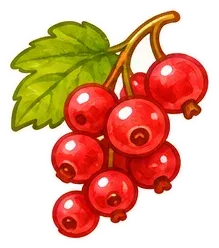
Blackcurrants and redcurrants are relatives and often grow side by side. Redcurrants are red, translucent and fresh. Blackcurrants are black, opaque and much more powerful. A child who has tasted one may be curious about the other. Ask which was more sour.
When it is too much
Blackcurrants divide people, adults included. It is fine for your child to find them too strong. That is not failure. It means they have tasted something properly.
Do not push another berry once your child has said stop. Leave the bush be, or leave the berries in the freezer. Next time may be easier, especially if they have had the cordial in between and know what it is.
You can put blackcurrants on the shelf in Mumse. Your child gets a star on every day they dare, and after five days of tasting they turn into gold food, whichever thumbs were chosen.
 Redcurrant
 Hot blackcurrant
 Blueberry
 Cordial
 Red berry pudding with cream
 Blackberry