Cordial
Red, yellow or nearly black in the bottle, much paler in the glass. Cordial is one of the few drinks a child can mix entirely by themselves, and that is where the fun lies.
- Taste
- sweet, tangy
- Texture
- smooth





Read aloud to your child
Fruit cordial is a sweet, colorful drink made by mixing concentrated fruit syrup with water. It is often red from berries, or yellow and orange from fruit. Feel how sweet and cold it is in your mouth. It is made from the juice of berries such as strawberries, raspberries and blackcurrants. What color is your drink?
Cordial is a drink with a recipe, and the recipe is printed on the bottle. This much cordial, that much water. Hardly any children have read it. To most of them, a glass is too weak, too strong or just right, and what counts as right is something they can work out for themselves.
British readers will know it as squash. In Norway it is saft, and it is usually made from berries.

Berries in a bottle
Cordial is made from berries or fruit cooked or steamed until the juice runs out. It is sweetened and bottled. What sits in the fridge is concentrated, thicker and much stronger than what ends up in the glass, and it tastes of almost too much of everything.
It can be made at home too, often in late summer when the berries ripen. For that people often use a steam juicer, a pan in three parts. Water boils in the bottom, the berries sit in a basket on top, and the steam draws the juice out. It runs out through a little tube. Blackcurrants, redcurrants and raspberries are the usual choices. If someone in the family has a steam juicer tucked away in a cupboard, it is worth borrowing one autumn.
Weak, strong and in between
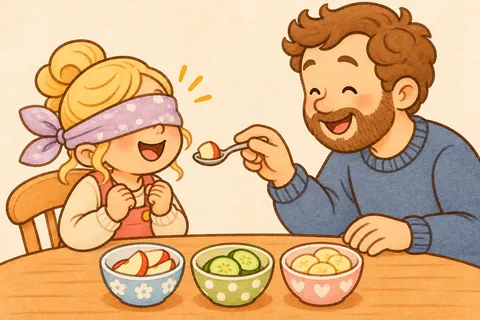
The cordial game is a simple one. Put out three glasses. One with very little cordial, practically coloured water. One mixed as the bottle says. One far too strong. Let your child taste all three.
There is nearly always a clear favourite, and it is not always the one you expect. Some children like the weak one because it tastes fresh. Others want it strong enough to cling to the tongue. That tells you something about how your child experiences sweet and sour, and it is an easy way to talk about it.
Afterwards your child can mix their own glass. Cordial from the bottle, water from the tap, a spoon to stir. There will be spills. It will usually be stronger than you would have made it. But it is their own glass, and that is a good reason to taste.
Colour and berry
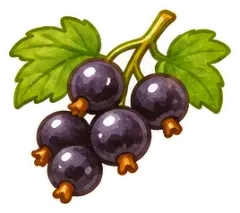
Cordial usually takes its colour from the berry. Blackcurrant is dark purple. Redcurrant is clear red. Raspberry is pinkish red. There is also yellow cordial from citrus and almost colourless elderflower.
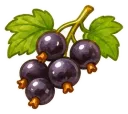
A fun variation: taste with eyes closed and guess the berry. If you have real berries in the freezer, taste the berry and the cordial one after the other. Is it the same taste? The berry is sharper and has skin and seeds. The cordial is sweeter and smooth. Same berry, two forms.
Red cordial in a plastic cup
In Norway cordial often turns up where something else is going on, such as a birthday party, a community work day or a trip. That makes it easy to taste, because a child’s mind is elsewhere.
Cordial does not have to be a reward or a party drink. It can be one taste among many. That is rather the point.
The berries behind it
Blackcurrants make the dark, strong cordial, and served hot it becomes hot blackcurrant. Redcurrants are tart and give a clear red drink. Raspberries are sweeter and more fragrant.
Cordial is among the drinks in Mumse. A glass your child mixed themselves, and one sip of it, earns a star.
 Ice lolly
 Blackcurrant
 Hot blackcurrant
 Water
 Jelly
 Cherry