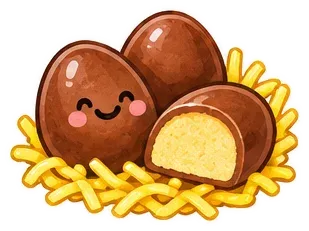
Marzipan egg
Little marzipan eggs coated in chocolate, made for Easter. Lots of children nibble off the chocolate and put the rest down. Marzipan is a grown-up flavour dressed as a sweet.
- Taste
- sweet, bitter
- Texture
- soft, chewy




Read aloud to your child
Marzipan eggs are little oval eggs made of marzipan, often coated in chocolate and decorated for Easter. They are soft inside with a crisp chocolate shell outside. See how small and sweet this egg is.
The Easter egg is opened, and inside are chocolates, gummy men and a couple of marzipan eggs. An hour later the chocolate has gone, the gummy men have gone, and the marzipan egg is still there with one small bite out of its coat. A familiar sight in many homes.
Almonds and sugar
Marzipan is ground almonds and sugar kneaded into a dense, soft paste. A little bitter almond is often added, which gives the typical strong marzipan taste. In Norway, marzipan eggs coated in chocolate are an Easter staple, Norwegian Easter eggs being cardboard eggs filled with sweets. At Christmas the same marzipan comes shaped as a pig, and it is often the prize for finding the almond in the rice pudding.
Marzipan also turns up as the lid on cream cakes. Marzipan cake is a fixture at Norwegian birthdays and confirmations, and many children peel off the lid before eating the rest. In Britain it is more likely to be met as the layer under the icing on a Christmas cake.

Stronger than it looks
To an adult who has eaten marzipan all their life, it tastes sweet and gently of almond. To a child it often tastes powerful, almost perfumed. That is the bitter almond. It brings a deep, slightly bitter note unlike anything else they have tried.
The texture is unusual too. Marzipan is dense, chewy and sticky, and it does not melt like chocolate. It has to be chewed, and the flavour grows the longer you chew.
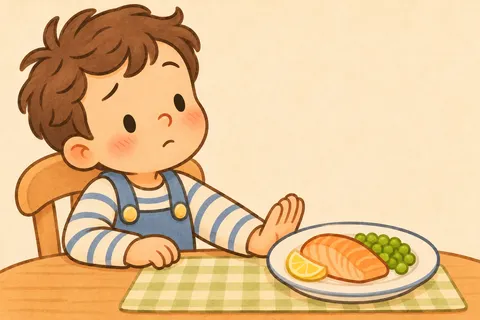
No wonder so many children say no. Marzipan is a grown-up flavour in sweet form, and it is completely normal for children to start liking it only when they are much older.
Shape it like clay
One of the best ways to get to know marzipan has nothing to do with eating. It shapes like modelling clay. It can be rolled, pressed, coloured with food colouring and made into animals, fruit and figures. It holds its shape and firms up a little over time.
Let your child shape an egg, a pig, a carrot. Their fingers get sticky and they smell it. Maybe they lick their fingers afterwards. Maybe not. Either way, it is part of getting to know it.
Taste the starting point
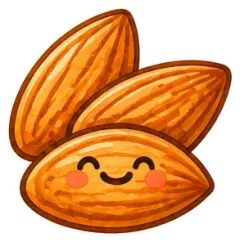
If your child is curious, taste what marzipan is made from. A couple of almonds, ideally blanched and skinned. They taste mild and nutty, a long way from strong marzipan. The bitter almond is what makes the difference.
That shows clearly that marzipan is almonds with something added. A small lesson in how flavours are built from several parts.
Sweet, but not easy
Marzipan is a good reminder that sweet does not mean easy. A sweet can be as hard to taste as broccoli, and a child who dares to bite into marzipan is just as brave as one who bites into a vegetable.
From almond to marzipan
Almonds are the foundation. Norwegian rice pudding is where the marzipan pig appears at Christmas. Knekk uses almonds in a completely different form, and the kokosbolle has a chocolate coat with something unexpected inside.
One bite through the chocolate into the marzipan earns a star in Mumse, and a thumbs down afterwards is perfectly fine.
 Almonds
 Chocolate
 Orange
 Christmas brittle
 Hazelnut
 Chocolate marshmallow treat