Chocolate marshmallow treat
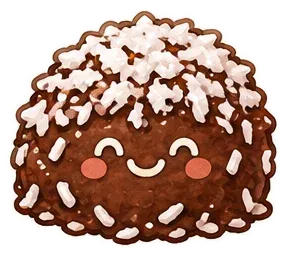
A round treat with chocolate and coconut outside and soft white foam inside. Norwegians call it a kokosbolle. Children think they know what it is until they bite.
- Taste
- sweet
- Texture
- soft, creamy




Read aloud to your child
This treat has a soft, fluffy marshmallow centre under a thin coat of chocolate and coconut. It is round and light as a cloud inside. Feel how soft it is when you bite, and how the coconut tickles a little. Did you know the filling is whipped so much that it is full of tiny air bubbles?
A kokosbolle looks like something your child already knows. Brown, round, chocolate. The first bite says otherwise. The shell cracks thinly, and then the teeth sink into something white and fluffy that is nothing like chocolate at all.
That is what makes it interesting. It is a small practice run at meeting something different from what you expected.
What is the white stuff
Inside is a foam of sugar, often with egg white, whipped until it is full of tiny bubbles. It is soft, light and a little sticky, and it melts quickly. Outside is a thin layer of chocolate and a coat of desiccated coconut, and underneath there is often a thin biscuit. Similar treats exist across Scandinavia and beyond, and a British child might think of a chocolate teacake, only rounder and furrier.
So there are several quite different things in one treat: a crisp chocolate shell, dry coconut flakes that tickle, a foam that is almost a cloud, and often a biscuit at the bottom. Many grown-ups have forgotten how odd that is the first time.
Cut it in half
If your child is unsure, cut it in half with a knife before anyone tastes. Then you can see the shell, the foam, the base and how thin the chocolate is. Your child knows what is coming, and the first bite is no longer an ambush.
Some children want to taste the foam alone first, with a finger or a teaspoon. Others want to scrape off the coconut. Both are fine. There is no correct way to eat one.
The coconut
Desiccated coconut is tiny dry flakes. They tickle the tongue and lodge between the teeth. Lots of children dislike the feel even though the taste is mild and sweet.
It can help to show where coconut comes from. A whole coconut is a fun thing to have on the kitchen counter. It is hard and hairy and sloshes when you shake it, because there is water inside. Cracking one open together is an entire afternoon.
Not a prize
“Try the fish and you can have a kokosbolle” is a sentence most parents have heard themselves say. The child then learns that the fish is something to get through and the treat is the good bit. The kokosbolle does better as one flavour among many, on a Saturday or at a birthday party.
More coconut and foam
The Norwegian custard bun has coconut on top and custard inside. A marzipan egg has chocolate outside and something entirely different inside. Jelly is another sweet thing with a texture that surprises.
The kokosbolle is among the sweets in Mumse. There, it is courage that counts: your child earns a star for tasting something new, and the rewards in the jar are never sweets.
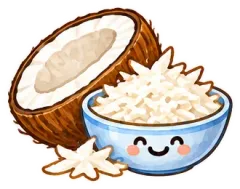 Coconut flakes
 Candyfloss
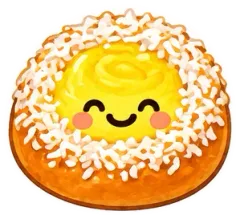 Custard bun
 Cream bun
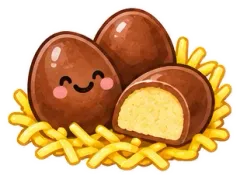 Marzipan egg