Fruit salad
Apple, grapes, orange and banana chopped into one bowl. Every piece is familiar, but together they can turn into something a child does not recognise.
- Taste
- sweet, tangy
- Texture
- juicy, soft



Read aloud to your child
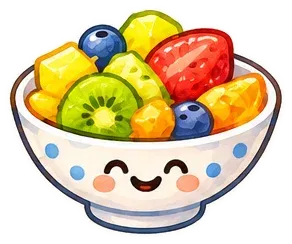
Fruit salad is many kinds of fruit cut into pieces and mixed in a bowl, for example apples, grapes, orange and banana. It is juicy, fresh and colourful, and each bite tastes a little different. You can hunt for your favourite or pick out the colours one by one. How many kinds of fruit can you find?
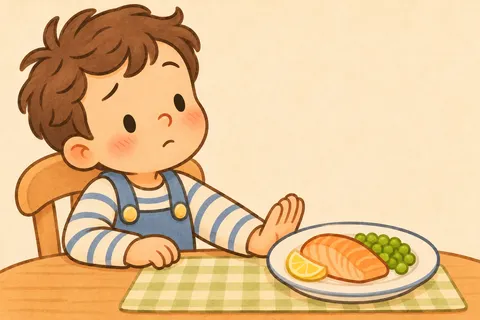
It looks so simple. Your child eats apples, eats bananas, eats grapes. Then you tip them all into one bowl and the answer is no. Your child is not being awkward. The fruit salad has done something to the fruit.
The juice gets everywhere
When fruit is cut and mixed, juice runs. Orange gives up the most, and soon the apple tastes faintly of orange, the banana a bit sour, and everything is wet. Banana also turns soft and slippery at the edges and may go brown.
For a child who likes each thing to taste like itself, that is a lot. Every piece is familiar, but none of them is quite as usual. Saying no is rather logical.
Build your own
A good answer is not to mix. Cut the fruit and lay it out in separate piles on a plate, or in little bowls. Your child picks what they want and makes their own salad. Maybe it is just banana and apple. That is a fruit salad too.
Next time, one pile can be something new. A cube of mango, a slice of kiwi, a few pomegranate seeds. Your child decides whether it goes in their bowl.
A colour hunt
Fruit salad is a good place to play with colours. How many can you find? Red, green, yellow, orange, purple. Pick out all the yellow pieces. Eat one red piece and one green. Which is sweetest?
Children who are unsure about tasting are often happy to sort. Picking up and moving a piece is a way of getting to know it. After holding a piece of mango a few times, tasting it is not so far away.
Grapes and little ones
Whole grapes can get stuck in a small child’s throat. Cut them lengthways into halves or quarters, and ask your health visitor what suits your child’s age.
With or without something on top
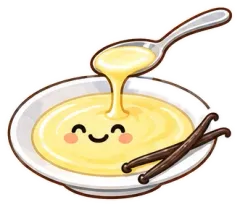
In Norway fruit salad often comes with vanilla custard, cream or ice cream. That makes it a pudding, and for some children the custard is what makes the salad interesting. For others it is one more thing mixed in. Serve it on the side and let your child decide.
It is easy to see fruit salad as a way of getting more fruit into a child. Nothing wrong with that, but it is not the aim here. The aim is for each fruit to become a little more familiar, whether it ends up in the salad or not.
Fruit on its own
Apple and banana are the usual base. Kiwi and mango are good next steps, and each has its own page on tasting it by itself.
Every fruit in the bowl has its own place in Mumse. One piece of a new fruit is enough for a star.
 Green grapes
 Kiwi
 Orange
 Watermelon
 Pineapple