Crisps
Thin slices of potato fried until they crunch. Many children like crisps, but not all of them, and the reasons behind a no are often good ones.
- Taste
- salty
- Texture
- crunchy, dry




Read aloud to your child
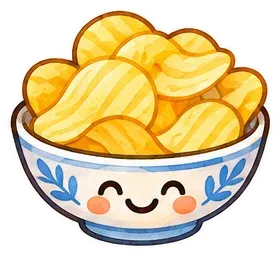
Potato chips are paper-thin slices of potato fried until they are crisp as glass. When you bite one, it crunches loudly, and it tastes salty. They are light as a feather and sometimes leave crumbs on the table. Did you know they were invented long ago by a cook who sliced potatoes as thin as he could? Listen for the crunch.
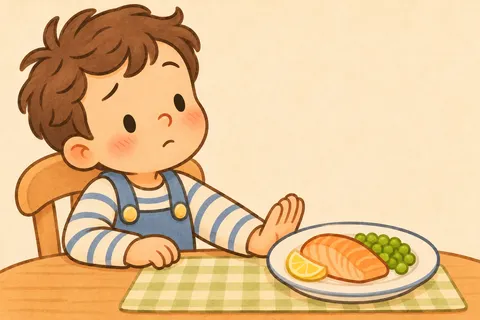
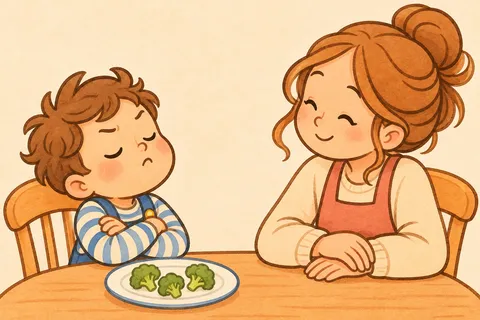
Nobody expects to need help getting a child to try crisps. And yet there are children who sit holding a single crisp and looking at it, while everyone else at the table crunches away. It is worth understanding why.
The noise in your head
When you bite a crisp, the sound does not just come in through your ears. It travels through your jaw and teeth, and inside your head it is much louder than it is for the person sitting next to you. For most people that is part of the fun. For a child who is sensitive to sound, it can be unpleasant, a bit like chewing on something that is breaking.
It helps to let your child hold a crisp up to their ear and snap it with their fingers first. Then the sound comes from outside, and they know what is coming.
Sharp edges
A crisp is as thin as paper, and when it breaks it has edges. They can prick the roof of the mouth and the gums, and a shard in the wrong place is felt straight away. A child who has had that happen once may well be careful afterwards. They simply remember how it felt.
Start with the large, whole crisps and let your child bite from the edge. The broken bits at the bottom of the bag are harder to control in the mouth.
Flavour on the outside
Ready salted crisps taste of potato, salt and a little oil. That is the mildest kind. Then come all the others: salt and vinegar, cheese and onion, paprika, prawn cocktail, chilli. The flavour sits as a powder on the surface and hits the tongue at once. A child who likes plain crisps may get a nasty surprise from vinegar and become wary of the whole bowl.
If you want to try new flavours, put out one crisp of each on a plate and keep them apart. That way your child knows exactly what they are picking up, and a sour surprise does not spoil the plain ones.
Thick and thin
Crisps feel different depending on how thick they are. Ordinary thin ones are light and almost melt. Ridged crisps crunch more. The thick, hard ones sold as kettle chips are close to biting a crispbread. For a child who likes one kind, the others are a small new thing, which is a nice low step.
The same potato
Crisps are potato, and that is what makes them a bridge. A boiled potato has the same flavour underneath, just soft and warm. Chips are potato cooked another way, crisp outside and soft inside. Lompe, a soft Norwegian flatbread, is potato and flour baked flat. And if your child loves the crunch, nachos give the same feeling with corn instead.
You could slice a raw potato very thinly together, so your child sees where crisps come from. There is more on taking a no seriously in the guide to when they say no.
A crisp with a new flavour takes courage too. In Mumse it earns a star, and a thumbs down counts just as much as a thumbs up.
 Popcorn
 Cheese puffs
 Guacamole
 Flatbread
 Lompe