Porridge
Porridge barely tastes of anything. What children have opinions about is the texture: too thick, too runny, lumpy, slimy. Luckily texture is the easiest thing to change.
- Taste
- mild, sweet
- Texture
- creamy, soft, grainy





Read aloud to your child
Porridge is made from rolled oats that simmer in milk or water until they turn soft and warm. Oats grow as grain in fields, and the flakes are flattened grains. The porridge is creamy and mild, and you can add cinnamon, berries or a little butter. Feel how it warms your tummy on a cold morning.
Cold morning, still dark, a pan on the hob. In Norway, as in Scotland, oat porridge is what many families have from October to April, and for some children it is the first thing they eat every day. For others it is the first thing they refuse.
Thick, thin, lumpy, slimy
Porridge is oats cooked in water or milk. It tastes mild, slightly sweet, a little like grain. That is not where the trouble lies.
The trouble is that porridge can turn into so many things. Cooked long with fine oats, it goes smooth and almost gluey. Cooked briefly with jumbo oats, it is grainy and chewy. Left on the table for ten minutes, it sets. It can have lumps. It can grow a skin.
A child who once got slimy porridge can remember it for a long time. The sliminess comes from the oats themselves: they contain a fibre that turns smooth and sticky as it cooks.

Change one thing
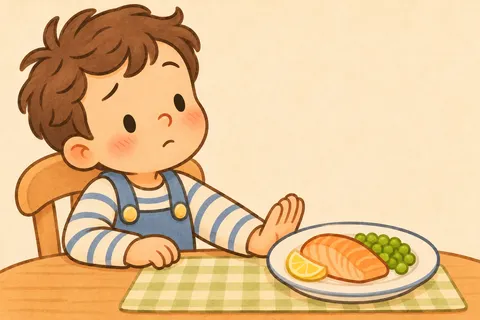
If your child dislikes porridge, ask what is wrong with it. The answer is often something you can fix.
Too thick? Pour a little cold milk over it in the bowl. It loosens and cools at the same time.
Too slimy? Use jumbo oats and cook them for less time. The porridge will be grainier.
Too hot? Children’s mouths are often more sensitive than ours. Stir it, or let them blow.
Too boring? Read on.
The porridge bar
Put the pan on the table with little bowls around it: blueberries, mashed banana, grated apple, cinnamon, raisins, a pinch of sugar, a spoon of yoghurt. Your child builds their own bowl.
Two things happen. Your child decides what goes on, and tasting something you chose yourself is less scary. And there are lots of small tastes of whatever is on top. One morning they try cinnamon for the first time, simply because the bowl was there.
Let them cook it
Porridge is one of the easiest things a child can make. Measure oats and liquid with a cup, stir with a wooden spoon, and watch the thin turn thick. They can taste along the way once it has cooled a bit. Porridge you made yourself is a different thing to taste.
The butter eye
Norwegians drop a knob of butter in the middle of their porridge and call it a butter eye. It melts into a small yellow pool. It is best known on the rice porridge eaten on Saturdays and at Christmas, but plenty of people put one on oats too. For a child it is a small show: watch the butter melt, then eat from the edge in towards the middle.
Cold oats
Oats can be cold, too. Stir them into yoghurt or milk, leave them in the fridge overnight, and in the morning you have a kind of cold porridge. Thick and soft, and not slimy. Some children who refuse hot porridge eat this happily.
When it turns into a battle
If porridge becomes a fight every morning, take a break. Breakfast can be bread or yoghurt for a few weeks. The porridge can come back one weekend morning, with nobody saying anything about it.
Berries, yoghurt and a cold spoon
Porridge is a good place for other tastes to sit, in plain sight and in small amounts. A spoon of yoghurt on top makes it cooler and a little tangy. Blueberries leave purple streaks when stirred in. And a splash of cold milk is something many children want to pour themselves.
Put it all on the table and call it a porridge buffet. Many children make up fixed rules, like banana first, cinnamon after, and the cinnamon in a pattern. Let them.
Porridge is on the breakfast shelf in Mumse. Your child earns a star for tasting it, even on the mornings it was slimy. About Mumse.
 Rice porridge
 Cinnamon
 Blueberry
 Oat milk
 Banana
 Skyr