Minestrone
Minestrone means something like 'big soup' in Italian. There's no single recipe. Whatever is in the kitchen goes into the pot, along with beans and a little pasta.
- Taste
- mild, tangy, savoury
- Texture
- soft, grainy, juicy



Read aloud to your child
Minestrone is an Italian vegetable soup full of little pieces. You will often find carrot, beans, tomato and tiny pasta shapes. It tastes mild and cosy, and every spoonful is a new surprise. Every family in Italy makes it a little differently, with whatever is in season.
Minestrone is less a recipe than a habit. In Italy every region, and nearly every family, makes its own. The usual start is onion, carrot and celery softened slowly in olive oil. Then tomato, stock or water, beans and whatever vegetables are around: courgette, cabbage, potato, green beans. Small pasta shapes or rice go in towards the end. In Genoa, pesto is often stirred through. Plenty of people finish it with grated parmesan.
The name fits. Minestra is soup, and the ending -one makes it bigger. Big soup. It’s full of things.
Lots of little things
For a child, minestrone is easy and hard at once. It’s mild and often slightly tangy from the tomato, with nothing hot in it. But there are lots of different pieces, and some might be new.
Most children know pasta. Carrot and potato too. It’s the beans, and perhaps the courgette, that are strangers.
The beans
The beans in minestrone are usually white or speckled borlotti, soft and floury inside. For a child who has never eaten beans, the texture can be a surprise: a smooth skin, and inside, something close to mashed potato.
A child who eats baked beans already knows that texture. They’re similar beans in a different sauce. Tell them.
If your child is unsure, lift the beans out and put them beside the bowl. They can squeeze one between finger and thumb and feel how soft it is. That’s tasting with the hands rather than the mouth, and it counts too.
The pasta
Minestrone often has small pasta: short tubes, little shells or stars. The pasta is what gets many children to try the soup at all. It’s familiar, it’s soft, and it has soaked up the flavour of everything around it.
If you have different shapes in the cupboard, let your child choose which goes in. A soup with stars is not the same as a soup with tubes, even if everything else is identical. Having picked something makes it easier to taste it.
Tomato and basil
There’s tomato in most minestrone, but it isn’t tomato soup. The tomato adds tang and colour. The vegetables and beans are the main event.
A leaf of basil torn over the bowl is a small new taste that belongs with the tomato. Let your child smell the leaf before tearing it. It smells strong and fresh.
A soup to cook together
Because there’s no fixed recipe, minestrone is a good one to make with children. They can choose vegetables at the shop or from the fridge, cut the soft ones like courgette with a child’s knife, count beans into the pot, and pick the pasta.
A child who helped make the soup has seen and handled every vegetable in it. They know what’s there, and it’s less of a stranger when it arrives at the table. Even so, a new soup can take several tries before it feels safe.
Close relatives
If your child likes pasta with tomato sauce, minestrone is a short step: pasta and tomato, with vegetables and beans, in a bowl. And if vegetable soup goes down well, minestrone is vegetable soup with pasta.
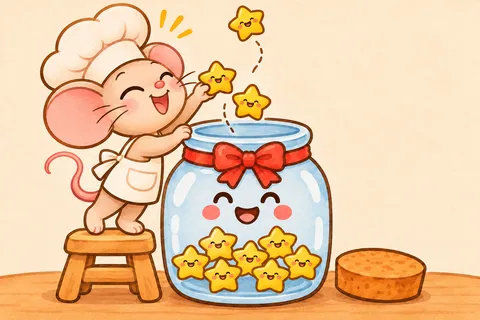
One bean, squeezed first and then tasted, is enough for a star in Mumse. The star is the same whatever your child thinks of the bean.
 Macaroni
 Lentil soup
 Pesto
 Baked beans
 Basil