Hawaiian pizza
Few pizzas start as many arguments as this one. Pineapple on pizza. For a child the question is simpler: can sweet and salty live in the same mouthful?
- Taste
- sweet, salty, tangy
- Texture
- juicy, soft, stringy



Read aloud to your child
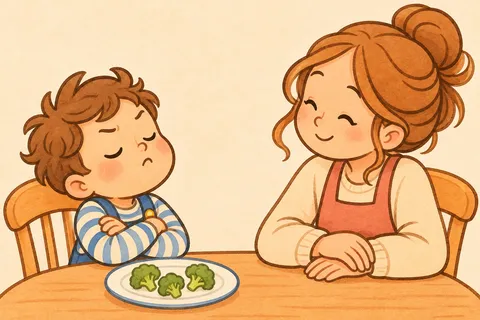
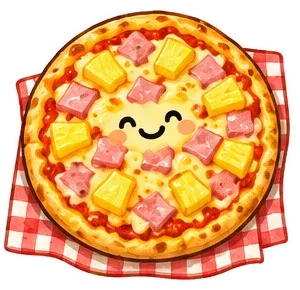
Hawaiian pizza has ham and pineapple on top of tomato sauce and cheese. It was invented in Canada, not in Hawaii. The pineapple is sweet and juicy, and the ham is salty, so it makes a funny mix.
Not from Hawaii
Start with the story, because children tend to like it. Hawaiian pizza wasn’t invented in Hawaii. The usual account is that Sam Panopoulos, who had moved to Canada from Greece, put tinned pineapple on a pizza at his restaurant in Chatham, Ontario, in 1962. He wanted to try something different, and people ordered it. The name came from the brand on the tin.
So: an Italian dish, made by a Greek man, in Canada, named after islands in the Pacific. It has been around.
Two flavours that pull in different directions
Underneath, it’s an ordinary pizza with tomato sauce and cheese, plus ham and pieces of pineapple. That’s all. And yet some adults love it and others think fruit has no business anywhere near a pizza.
Children often find it easier than grown-ups do. Most like sweet things, and pineapple is a fruit many already know. What might be new is sweetness sitting on top of salt.
They know this combination better than they think. Ketchup is sweet and salty. Sweet and sour chicken plays on the same contrast, just without cheese.
On a pizza it becomes very clear. The ham is salty and slightly smoky. The pineapple is sweet, a little sharp and very juicy. The cheese holds it together.
Try tasting each one alone first. A piece of pineapple. A piece of ham. Then a bite with both. What happens when they meet? There isn’t a wrong answer.
Hot pineapple is a different fruit
A child who loves pineapple from a bowl may be surprised by pineapple from the oven. It’s hot, soft and wet. It’s sweeter, and its juice has run a little into the cheese around it.
For some, that’s exactly the appeal. For others it feels like fruit in the wrong place. Both reactions are reasonable.
A simple tasting game: put a cold piece and a hot piece side by side. Which is sweeter? Which is softer? Which one would you choose?
When the pineapple gets picked off
If your child removes every bit of pineapple, it might be the heat and wetness, or simply that fruit doesn’t belong on pizza in their world. That’s not a failure. They’ve looked at it, touched it and smelled it.
It can help to start with one or two pieces on a big pizza rather than a pizza covered in them, or to put the pineapple on one square of a traybake pizza. The guide on when they say no has more.
A turn for the grown-ups
There are adults who refuse Hawaiian pizza without ever having tried it. That can be a nice thing to do together: you taste a piece with pineapple, your child tastes something else that’s new to them. Both of you have been brave.
Mumse, our tasting app, rewards courage rather than liking the food. A slice of Hawaiian pizza earns a star there, even when the thumb points down. More about Mumse.
 Pineapple
 Pizza
 Ham
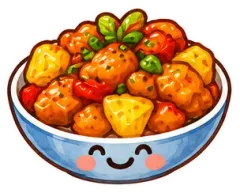 Sweet and sour chicken
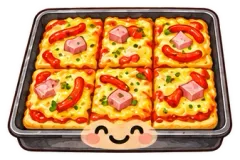 Traybake pizza
 Pide